
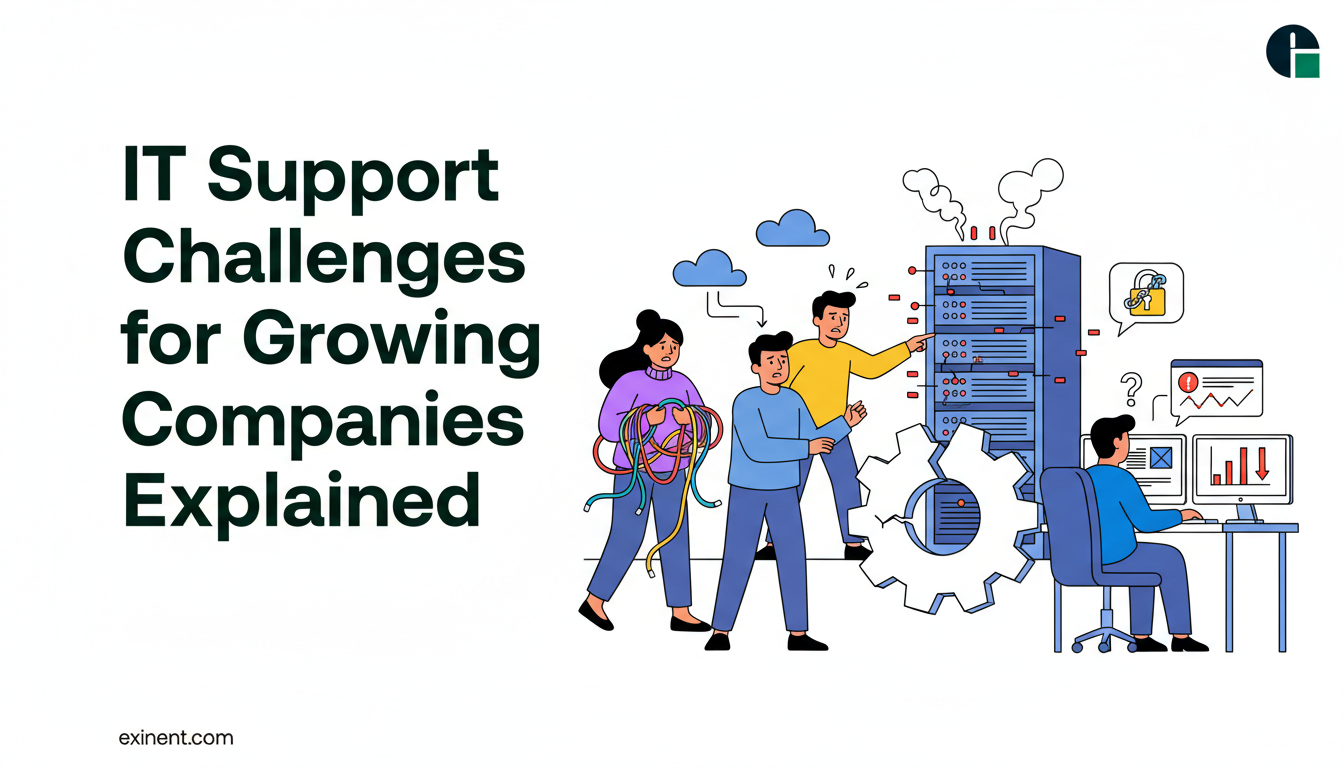
In today’s fast-paced digital era, IT support plays a pivotal role in helping businesses operate smoothly and remain competitive. For small startups, basic tech setups and quickly patched systems might suffice. But once a company begins to grow — whether through more employees, diversified processes, or expanded customer bases — the complexity of its IT needs can increase exponentially. Unfortunately, many growing organizations struggle to keep up, leading to operational bottlenecks, frustrated employees, and frustrated customers.
In this blog post, we’ll explore the key IT support challenges that fast-growing businesses face, why these challenges matter, and practical strategies for overcoming them.
Why Strong IT Support Matters as You Scale
Effective IT support is not just a cost center—it is an enabler of growth. When your technology stack is stable and well-supported, your teams can move faster and deliver better results.
Key benefits of robust IT support
- Higher productivity
- Fewer outages and disruptions
- Faster resolution of issues via responsive help desk and remote support
- Stronger security and compliance:
- Proactive patching and monitoring
- Clear policies for access control, data protection, and incident response
- Better employee experience:
- Smooth onboarding and offboarding
- Consistent device management and application access
- Predictable IT costs:
- Standardized tools and licenses
- Strategic planning instead of reactive spending on emergencies
For growing companies, strong IT support becomes a competitive advantage, not just a back‑office function.
The Business Benefits of Strong IT Support
Before diving into challenges, it’s important to understand the value of reliable IT support for growing businesses.
1. Increased Productivity
Fast issue resolution minimizes downtime and keeps employees focused.
2. Enhanced Security
Proactive monitoring reduces cyber threats and data breaches.
3. Scalable Infrastructure
Well-managed systems grow with your business instead of breaking under pressure.
4. Predictable Costs
Strategic IT planning prevents expensive emergency fixes.
5. Improved Customer Experience
Reliable systems ensure smooth operations and uninterrupted service delivery.
When IT is aligned with business strategy, it becomes a growth driver—not a constraint.
Key IT Support Challenges for Growing Companies
1. Keeping Up With Rapidly Expanding Infrastructure
One of the most significant challenges for growing companies is managing an increasingly complex IT infrastructure. As businesses add more employees, devices, and software systems, ensuring that everything works together seamlessly becomes a significant burden.
Without a scalable support model, even routine tasks — such as setting up new user accounts, configuring devices, or updating software — can consume disproportionate amounts of time and resources. What once took minutes for a small team can take hours or days as the company scales.
Solution: To manage expanding systems, many organizations turn to Managed IT Services, which provide professional oversight and proactive maintenance of a company’s technology environment. These services help reduce downtime, improve performance, and allow internal teams to focus on core business goals rather than firefighting tech issues. Learn more about what these services offer here managed-it-services
2. Recruiting and Retaining Skilled IT Staff
Another major hurdle for growing companies is finding and keeping talented IT professionals. The tech talent market is fiercely competitive, with specialists often receiving multiple job offers and premium salaries.
For a scaling business, hiring a dedicated internal support team can be expensive and time-consuming. Once hired, it may take months for new personnel to understand the company’s systems, workflows, and unique challenges — time that many startups and expanding companies simply don’t have.
Solution: Outsourcing IT functions or using scalable staffing models like part-time specialists and external consultants can help. These arrangements provide access to expertise without the commitment and overhead of full-time hiring.
3. Balancing Immediate Needs With Long-Term Strategy
In small companies, IT issues tend to be reactive: fix a printer, restore a connection, troubleshoot a login problem. But as a business grows, IT support must shift from day-to-day problem solving to strategic planning.
Balancing urgent needs with long-term goals — such as digital transformation, cloud adoption, and cybersecurity advancement — is not easy. Too much focus on “putting out fires” can leave companies vulnerable or lagging behind in tech innovations.
Solution: Implementing formal IT planning cycles, roadmaps, and performance metrics can help organizations strike that balance. Regular reviews with internal stakeholders and external partners ensure that IT supports both present and future needs.
4. Supporting Remote and Hybrid Workforces
The rise of remote and hybrid work models adds another layer of complexity. Supporting employees who work from various locations — often using different devices and networks — can stretch an internal support team thin.
Remote support demands tools and protocols that are different from traditional in-office setups, including secure VPN access, remote monitoring tools, and efficient communication channels.
Solution: Investing in robust remote support systems — including IT helpdesk solutions that facilitate ticketing, remote troubleshooting, and automated tracking — is essential. These tools centralize issues and help teams respond more quickly and efficiently: https://example.com/it-helpdesk-solutions
5. Managing Software Licensing and Compliance
As companies scale, they often adopt more software tools — for productivity, communication, analytics, finance, and more. Each additional license introduces complexity: tracking renewals, managing access rights, and ensuring compliance with legal and regulatory standards.
Failing to manage software licensing properly can lead to unexpected costs, audits, or even security vulnerabilities.
Solution: A centralized asset management strategy helps businesses track all software subscriptions and licenses. Regular audits, automated alerts for renewals, and clear ownership of licenses within teams are practices that reduce headaches and unforeseen expenses.
6. Protecting Against Cybersecurity Threats
Growth often attracts attention — including attention from cybercriminals. Larger networks, more users, and more data mean a larger attack surface. Phishing attacks, ransomware, DDoS threats, and data breaches have become all too common.
Small companies might survive occasional security lapses, but for a growing business, a single significant breach can cause substantial financial loss and reputational damage.
Solution: A proactive cybersecurity strategy is no longer optional. This includes regular security assessments, employee training on safe practices, multi-factor authentication, endpoint protection, and continuous monitoring. Partnering with experienced security providers or integrating cybersecurity within managed IT offerings can further strengthen defenses.
7. Ensuring High Availability and Minimal Downtime
Downtime directly impacts productivity and revenue. As operations scale, even brief outages in email systems, customer portals, or cloud applications can disrupt workflows and damage trust.
Yet many growing companies lack the robust infrastructure and failover systems that larger enterprises take for granted.
Solution: Investing in redundancy — such as backup internet connections, cloud failover systems, and disaster recovery plans — ensures continuity. Monitoring tools that alert teams to issues before they escalate can also dramatically reduce downtime
Final Thoughts
Growing companies face a unique set of IT support challenges that require thoughtful planning, scalable systems, and a strategic approach. From managing infrastructure and securing systems to supporting hybrid workforces and balancing short-term tasks with long-term goals, technology can either accelerate growth or become a persistent bottleneck.
The key is not just to react to problems as they arise, but to build a resilient support structure that anticipates challenges, integrates smart tools, and leverages external expertise when needed.
Whether through Managed IT Services, internal strategy enhancements, or advanced support platforms, scaling IT doesn’t have to be a headache — it can be a powerful growth driver.
FAQ’S :
What are the biggest IT support challenges for growing companies?
The biggest IT support challenges include limited internal IT staff, rising cybersecurity threats, outdated infrastructure, and increasing helpdesk tickets. As teams grow, user requests can increase by 30–50%, overwhelming small IT departments. Scaling systems, maintaining uptime, and managing remote employees also become complex. Without proper planning, IT issues can slow business growth.
Why do growing companies struggle with scaling IT infrastructure?
Growing companies often expand faster than their IT systems. Adding new users, devices, and cloud tools without upgrading servers or network capacity leads to downtime and performance issues. For example, a company that doubles its workforce may see network traffic increase by 60% or more. Without scalable cloud or hybrid solutions, performance bottlenecks are common.
How does rapid hiring impact IT support performance?
Rapid hiring increases onboarding tasks such as account setup, device configuration, and software access management. Each new employee can require 3–5 IT setup tasks. If processes are manual, IT teams fall behind. This can delay productivity and increase security risks if access controls are not properly managed.
What cybersecurity risks do growing businesses face?
Growing businesses face phishing attacks, ransomware, data breaches, and insider threats. Small to mid-sized companies account for over 40% of cyberattack targets globally. Weak password policies, unpatched systems, and lack of endpoint monitoring increase risk. Without proactive monitoring and employee training, security gaps expand as the company scales.
Is outsourcing IT support better than building an in-house team?
Outsourcing IT support can reduce costs by 20–40% compared to maintaining a full in-house team. Managed IT providers offer 24/7 monitoring, faster response times, and access to certified specialists. However, in-house teams provide more direct control. The best choice depends on budget, complexity, and growth rate.
How much does IT support typically cost for a growing company?
IT support costs vary by size and service level. Small to mid-sized businesses typically spend $75–$150 per user per month for managed IT services. In-house IT salaries can range from $60,000 to $120,000 annually per technician. Cloud tools, cybersecurity software, and hardware upgrades add to the total IT budget.
How can growing companies reduce IT downtime?
Companies can reduce IT downtime by implementing proactive monitoring, regular system updates, and cloud backups. Automated patch management and endpoint protection tools lower failure rates. Setting clear SLAs (Service Level Agreements) ensures faster issue resolution. A documented disaster recovery plan can reduce downtime by up to 50%.
What are the best IT support practices for scaling businesses?
Best practices include standardizing software, automating onboarding, using cloud-based collaboration tools, and conducting quarterly security audits. Implementing role-based access control improves security. Tracking KPIs such as ticket resolution time and system uptime helps measure performance. Regular IT strategy reviews align technology with business growth goals.
When should a growing company upgrade its IT systems?
A company should upgrade IT systems when downtime increases, performance slows, or security incidents rise. If helpdesk tickets grow by more than 25% in a quarter, infrastructure may be overloaded. Frequent server crashes, slow cloud applications, and storage limits are warning signs. Proactive upgrades prevent costly disruptions later.