
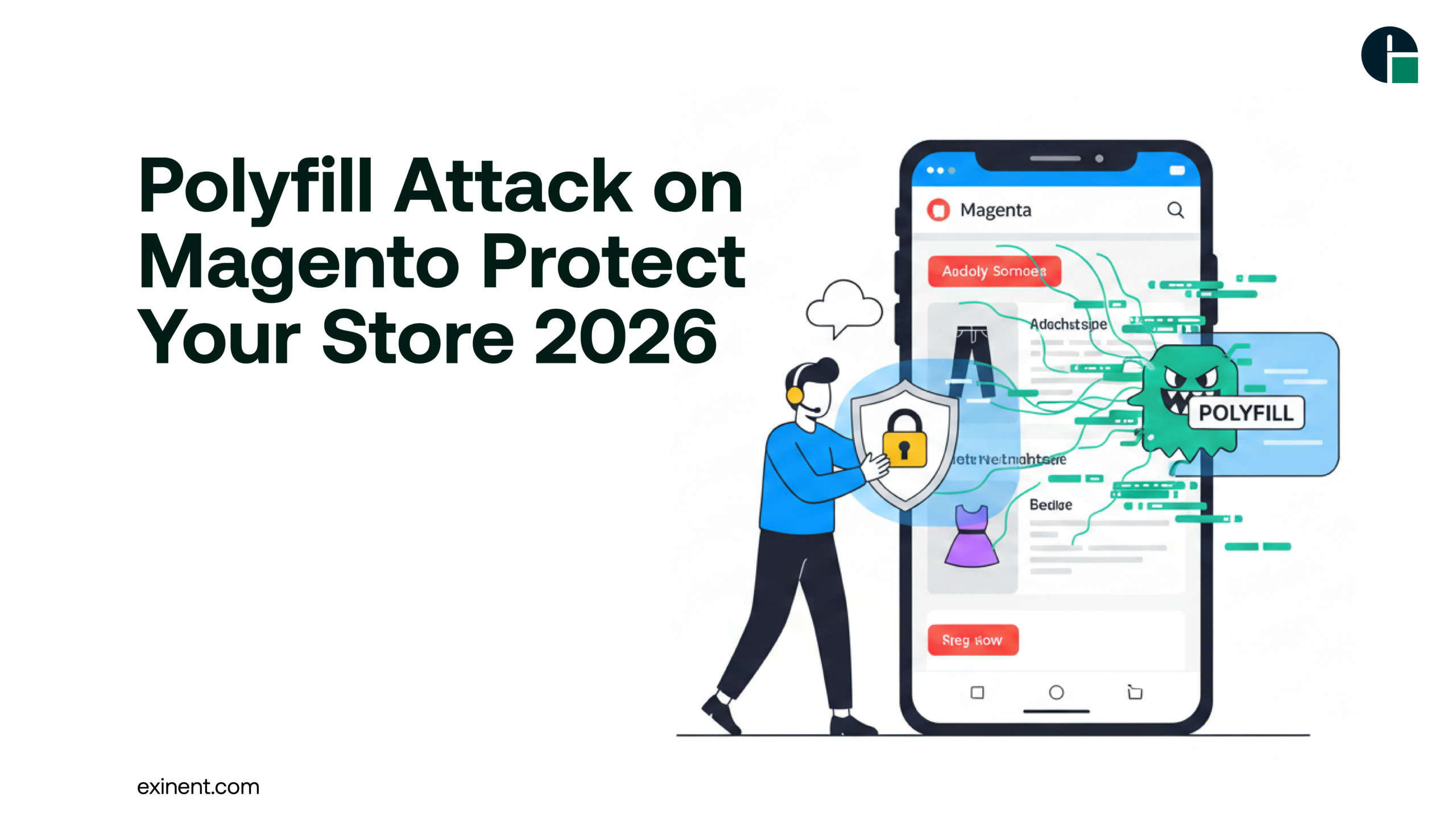
As eCommerce continues to evolve, so do cyber threats targeting online stores. One emerging security concern in 2026 is the Polyfill attack, which has raised alarms for Magento store owners worldwide. While polyfills are designed to enhance browser compatibility, attackers have found ways to exploit them—turning a helpful tool into a serious vulnerability.
In this blog, we’ll break down what a Polyfill attack is, how it affects Magento websites, and what you can do to protect your business.
What Is a Polyfill Attack?
A polyfill is a piece of JavaScript code used to provide modern functionality on older browsers that do not natively support certain features. Developers commonly use services like polyfill libraries to ensure consistent user experiences across devices.
A polyfill attack occurs when a third-party polyfill script is compromised or maliciously altered. Since many websites load these scripts from external CDNs (Content Delivery Networks), attackers can inject harmful code into the script—affecting every site that relies on it.
Why It’s Dangerous
- It runs client-side, making it harder to detect
- It can steal sensitive data (login credentials, payment info)
- It impacts multiple websites simultaneously
- It bypasses traditional server-side security measures
Benefits of Understanding Polyfill Attacks
Being aware of Polyfill attacks helps store owners:
- Prevent data breaches
- Maintain customer trust
- Ensure compliance with security standards
- Avoid SEO penalties caused by malicious redirects
- Improve overall website performance and safety
How Polyfill Attacks Impact Magento Stores
Magento is a powerful and widely used eCommerce platform, but its flexibility and reliance on third-party integrations can also introduce risks.
Here’s how a polyfill attack can affect your Magento store:
1. Customer Data Theft
Injected scripts can capture user inputs such as:
- Login credentials
- Credit card details
- Personal information
2. Payment Skimming (Magecart-style Attacks)
Attackers can modify checkout pages to skim payment data in real time, similar to Magecart attacks.
3. SEO & Reputation Damage
Malicious scripts can:
- Redirect users to spam or phishing sites
- Inject hidden content affecting SEO rankings
- Damage trust and brand credibility
4. Performance Issues
Compromised scripts may slow down your website or cause unexpected behavior, impacting user experience and conversions.
Why Magento Stores Are Vulnerable
Magento is a powerful and flexible eCommerce platform—but like any system, it depends on external resources.
- Heavy use of third-party extensions and scripts
- Dependence on external CDNs
- Complex frontend architecture (especially with custom themes)
- Delayed updates or poor patch management
Even a secure Magento backend can be compromised through a vulnerable frontend script.
How to Protect Your Magento Store from Polyfill Attacks
Protecting your store requires a combination of proactive monitoring, best practices, and expert support.
1. Avoid Untrusted Third-Party Scripts
Only use trusted and verified sources for polyfills and scripts. Avoid loading scripts directly from unknown or public CDNs.
Best Practice:
- Host critical scripts locally instead of relying on external sources
2. Implement Content Security Policy (CSP)
A Content Security Policy (CSP) helps restrict which scripts can run on your website.
Benefits:
- Prevents execution of unauthorized scripts
- Reduces risk of XSS and polyfill attacks
Magento supports CSP configuration, and enabling it can significantly enhance frontend security.
3. Regular Security Audits
Conduct frequent security audits to identify vulnerabilities in:
- Third-party integrations
- JavaScript files
- Extensions and themes
Working with a professional Magento Development Company ensures your store is regularly monitored and secured against evolving threats.
4. Keep Magento and Extensions Updated
Outdated software is a major security risk.
Action Steps:
- Install the latest Magento patches
- Update all extensions and plugins
- Remove unused or unsupported modules
Security patches often include fixes for vulnerabilities that attackers exploit.
5. Use Subresource Integrity (SRI)
Subresource Integrity (SRI) ensures that external scripts haven’t been tampered with.
It works by verifying the script’s hash before execution.
Why It Matters:
- Detects modified or malicious scripts
- Prevents execution if integrity fails
6. Monitor Website Activity
Use security tools to monitor:
- Unusual traffic spikes
- Unexpected script behavior
- Changes in frontend code
Real-time monitoring helps detect attacks early before they cause major damage.
7. Implement Web Application Firewall (WAF)
A WAF adds an extra layer of protection by filtering malicious traffic.
Key Benefits:
- Blocks suspicious requests
- Protects against known attack patterns
- Enhances overall site security
8. Partner with Security Experts
Magento security is complex, especially with evolving threats like polyfill attacks. Partnering with experts ensures:
- Continuous monitoring
- Rapid threat detection
- Professional incident response
A trusted Magento Development Company can help implement advanced security measures tailored to your business.
Best Practices for Long-Term Security
- Enable Web Application Firewalls (WAF)
- Use HTTPS across your entire site
- Implement two-factor authentication (2FA)
- Regularly back up your store
- Train your team on cybersecurity awareness
Conclusion
Polyfill attacks represent a growing threat in the evolving cybersecurity landscape of 2026. While they exploit something as simple as browser compatibility scripts, their impact can be severe—ranging from data theft to complete store compromise.
By adopting proactive security measures, minimizing third-party dependencies, and staying updated, Magento store owners can significantly reduce their risk.
Call to Action
Protecting your eCommerce store requires expertise and constant vigilance. If you’re looking to secure and optimize your Magento platform, consider partnering with a trusted team like Exinent. Their tailored solutions help safeguard your business while ensuring seamless performance and scalability.