
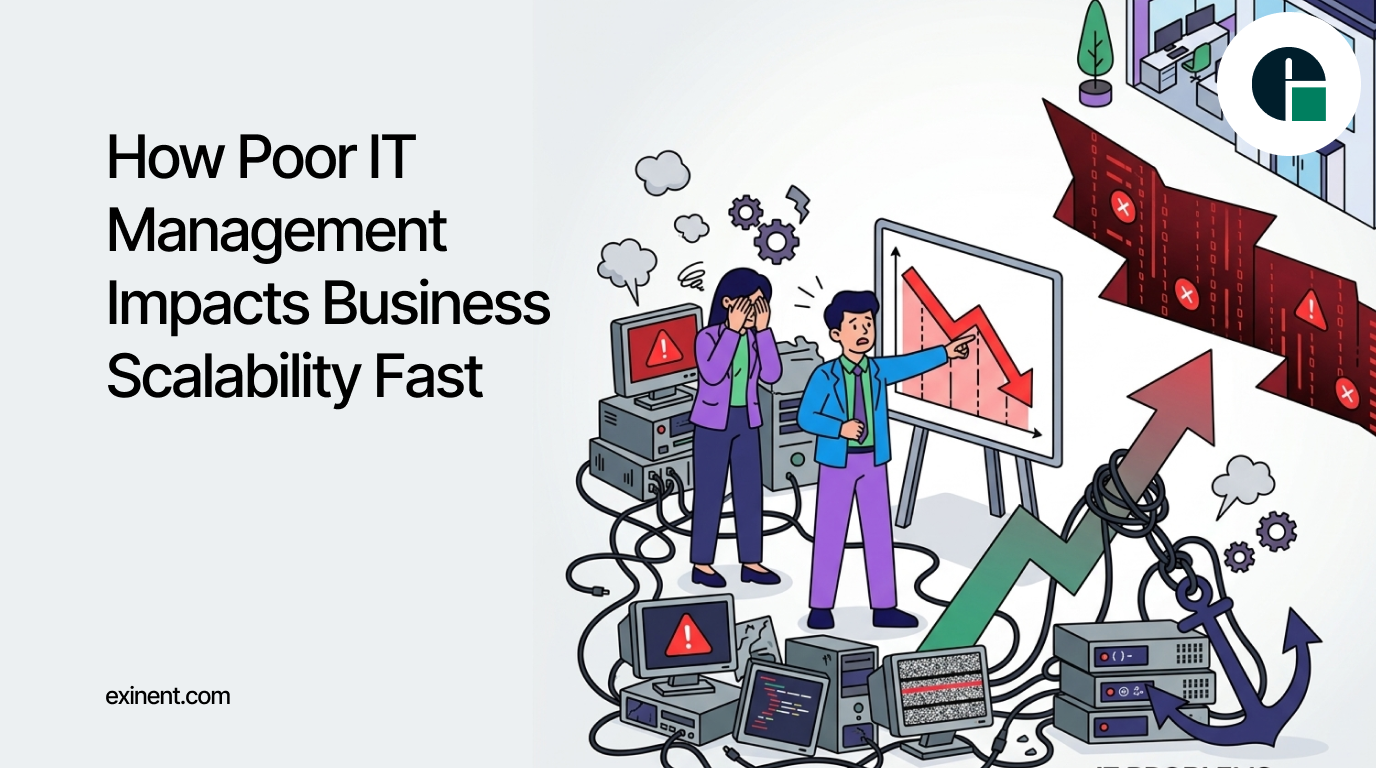
In today’s digital-first economy, businesses rely heavily on technology to grow, compete, and innovate. However, poor IT management can silently hinder progress and prevent organizations from scaling efficiently. Whether it’s outdated infrastructure, lack of strategic planning, or inadequate security practices, weak IT management creates bottlenecks that limit growth potential.
This blog explores how poor IT management affects business scalability, along with practical solutions and best practices to overcome these challenges.
What Is IT Management in Business?
IT management refers to the process of overseeing all technology resources within an organization, including hardware, software, networks, and data systems. Effective IT management ensures that systems run smoothly, securely, and efficiently to support business goals.
When IT is managed poorly, it leads to inefficiencies, downtime, and increased operational costs—directly impacting scalability.
How Poor IT Management Impacts Business Scalability
1. Increased Downtime and Operational Disruptions
Frequent system failures and downtime are common signs of poor IT management. When systems are not properly maintained or updated:
- Productivity drops
- Customer experience suffers
- Revenue opportunities are lost
For growing businesses, even minor disruptions can have significant consequences, especially when scaling operations across multiple locations or platforms.
2. Lack of Scalable Infrastructure
Scalability requires flexible and adaptable IT infrastructure. Poor IT planning often results in:
- Rigid systems that cannot handle increased workloads
- Outdated software that doesn’t integrate with modern tools
- Limited cloud adoption
Without scalable systems, businesses struggle to expand operations or accommodate growth in customers and data.
3. Security Vulnerabilities and Data Risks
Weak IT management often leads to poor cybersecurity practices. This exposes businesses to:
- Data breaches
- Compliance violations
- Financial losses
A single security incident can damage brand reputation and halt business growth. As companies scale, the volume of sensitive data increases, making robust security even more critical.
4. Inefficient Resource Allocation
Without proper IT oversight, businesses often overspend on unnecessary tools or underutilize existing resources. This leads to:
- Wasted budget
- Redundant systems
- Poor ROI on technology investments
Efficient IT management ensures that resources are aligned with business objectives, enabling smarter scaling.
5. Slow Decision-Making Due to Poor Data Management
Scalable businesses rely on accurate, real-time data for decision-making. Poor IT management can result in:
- Data silos
- Inaccurate reporting
- Delayed insights
This slows down strategic decisions and limits the ability to respond quickly to market changes.
Key Benefits of Effective IT Management
Before diving into the challenges, it’s important to understand what businesses gain from strong IT management:
1. Improved Operational Efficiency
Efficient IT systems automate workflows, reduce manual tasks, and streamline processes.
2. Enhanced Data Security
Proper IT management ensures robust cybersecurity measures, protecting sensitive data from breaches.
3. Better Decision-Making
Reliable systems provide accurate data insights, enabling informed business decisions.
4. Scalable Infrastructure
Cloud solutions and modern IT frameworks allow businesses to scale resources as needed.
Challenges Caused by Poor IT Management
When IT management is neglected, several issues arise that directly impact scalability.
1. System Downtime and Performance Issues
Frequent outages or slow systems can disrupt operations and reduce productivity. Downtime not only affects internal workflows but also damages customer trust.
2. Lack of Integration Between Systems
Disconnected tools and platforms create inefficiencies. Teams may struggle to access data or collaborate effectively, slowing down business processes.
3. Security Vulnerabilities
Weak IT management increases the risk of cyberattacks, data breaches, and compliance violations. These incidents can lead to financial losses and reputational damage.
4. Inability to Scale Resources
Without proper planning, IT systems may fail to handle increased workloads during growth phases, resulting in performance issues and lost opportunities.
5. High Maintenance Costs
Outdated infrastructure requires frequent repairs and maintenance, increasing operational costs over time.
Solutions and Best Practices for Better IT Management
To overcome these challenges, businesses must adopt strategic IT practices.
1. Invest in Scalable Infrastructure
Adopt cloud-based solutions that allow flexible resource allocation. This ensures your systems can handle growth without disruptions.
2. Regular System Monitoring and Maintenance
Proactive monitoring helps identify issues before they escalate. Regular updates and maintenance keep systems running smoothly.
3. Strengthen Cybersecurity Measures
Implement firewalls, encryption, and regular security audits to protect business data.
4. Integrate Business Systems
Use integrated platforms and APIs to ensure seamless communication between tools and departments.
5. Partner with IT Experts
Outsourcing IT management can provide access to specialized expertise and advanced tools. Businesses can leverage professional solutions like
Managed IT Services to improve efficiency and scalability.
6. Develop a Long-Term IT Strategy
Align IT goals with business objectives to ensure technology supports growth rather than limiting it.
Why Businesses Should Prioritize IT Management
Ignoring IT management is no longer an option in a digital-first world. Companies that prioritize IT:
- Scale faster and more efficiently
- Reduce operational risks
- Improve customer satisfaction
- Gain a competitive advantage
On the other hand, businesses that neglect IT often struggle to keep up with market demands.
Conclusion
Poor IT management is one of the biggest barriers to business scalability. It leads to inefficiencies, security risks, and missed opportunities. In contrast, a well-managed IT infrastructure empowers businesses to grow, adapt, and compete effectively.
To achieve long-term success, businesses must treat IT as a strategic asset—not just a support function. Investing in the right tools, processes, and expertise will ensure your business is ready to scale without limits.
FAQ’S :
What is poor IT management in a growing business?
Poor IT management happens when a company’s technology systems are not properly maintained, updated, or aligned with business goals. This can include outdated software, weak cybersecurity, slow support, and inefficient infrastructure. Over time, these issues reduce productivity and limit business growth.
How does poor IT management affect business scalability?
Poor IT management makes it difficult for businesses to handle growth efficiently. Systems may crash under higher workloads, employees may face downtime, and customer experiences can suffer. Businesses often struggle to expand operations when their IT infrastructure cannot support increasing demand.
Can outdated IT infrastructure slow down company growth?
Yes, outdated IT infrastructure can significantly slow down business growth. Older systems often have slower performance, limited integration capabilities, and higher maintenance costs. Companies using outdated technology may also face more security risks and operational delays.
Why is IT scalability important for modern businesses?
IT scalability allows businesses to grow without major disruptions or expensive system replacements. Scalable IT systems can handle increased users, data, and workloads efficiently. This helps companies expand faster while maintaining performance and customer satisfaction.
What are the biggest risks of poor IT management?
The biggest risks include cybersecurity breaches, data loss, downtime, reduced employee productivity, and higher operational costs. Poor IT management can also damage customer trust and lead to compliance issues. In some cases, businesses lose revenue because systems cannot support growth.
How can poor cybersecurity impact business scalability?
Weak cybersecurity can cause data breaches, ransomware attacks, and service interruptions that slow business operations. Recovery costs from cyberattacks can reach thousands or even millions of dollars. Businesses with poor security practices often struggle to scale safely and maintain customer confidence.
What are the signs your business IT systems are not scalable?
Common signs include frequent downtime, slow software performance, rising IT costs, poor system integration, and delayed technical support. Employees may also struggle with productivity because systems cannot handle increased workloads. These issues usually indicate the need for IT upgrades.
How do managed IT services help improve business scalability?
Managed IT services provide proactive monitoring, system maintenance, cybersecurity, and technical support. They help businesses reduce downtime and improve operational efficiency. Many companies use managed IT providers to scale faster without hiring large in-house IT teams.
Is investing in better IT management worth it for small businesses?
Yes, better IT management helps small businesses improve efficiency, security, and long-term growth. Modern IT solutions reduce downtime and automate many processes. Investing early can prevent expensive technical problems as the business expands.
What are the best practices for scalable IT management?
Best practices include using cloud-based systems, performing regular security updates, monitoring network performance, and planning for future growth. Businesses should also automate backups and work with experienced IT professionals. Regular IT audits help identify problems before they affect scalability.