
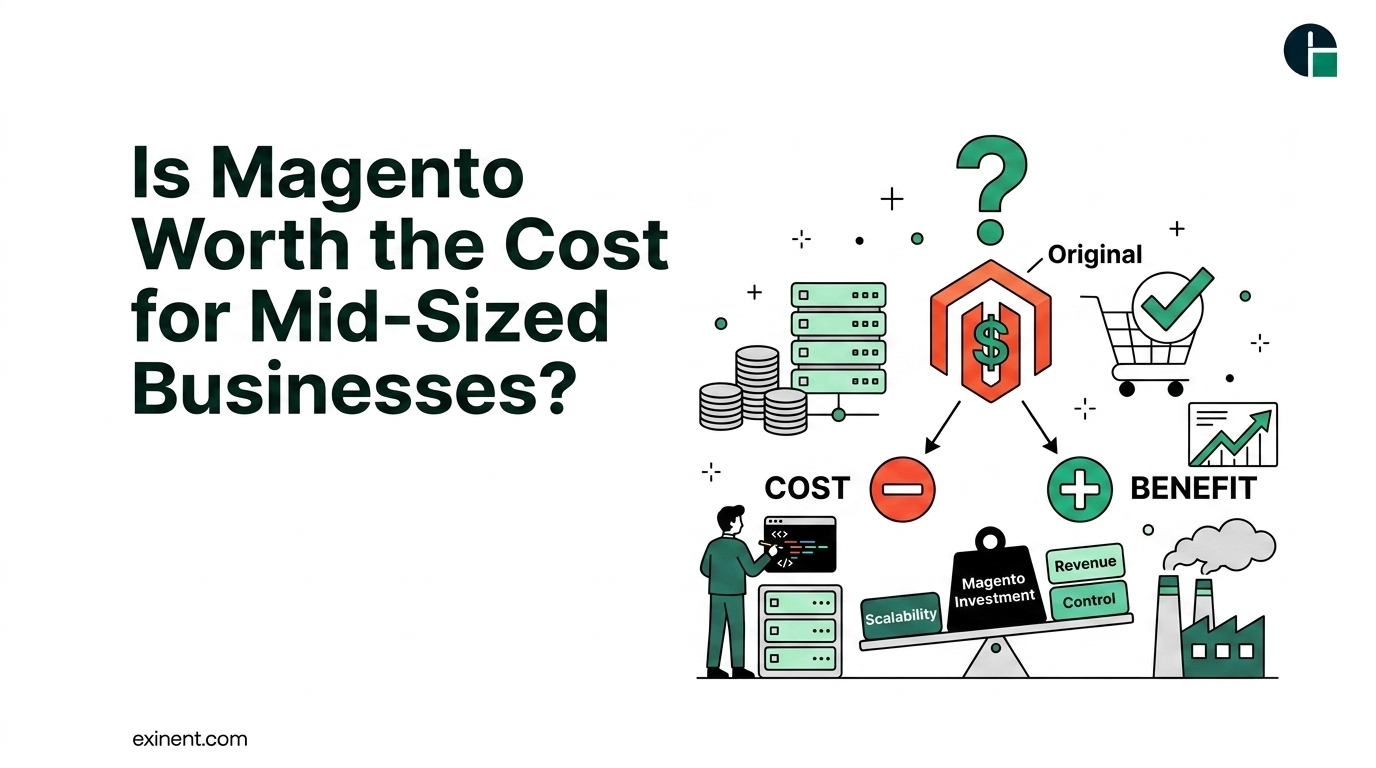
For growing ecommerce businesses, choosing the right platform is one of the most important decisions. A platform affects website performance, customer experience, scalability, marketing capabilities, and long-term operational costs. Magento Development, now known as Adobe Commerce, is often viewed as a premium ecommerce solution. But many mid-sized businesses wonder whether the platform is truly worth the investment.
The answer depends on your business goals, growth plans, and technical requirements.
Why Magento Remains Popular
Magento is widely known for its flexibility and scalability. Unlike many hosted ecommerce platforms, Magento gives businesses complete control over their store’s functionality, design, and integrations. According to Adobe, Magento supports multi-store management, advanced personalization, AI-powered product discovery, and enterprise-level scalability.
For mid-sized businesses that are expanding rapidly, these capabilities can provide a major competitive advantage.
Magento is especially useful for businesses that:
- Manage large product catalogs
- Need custom checkout experiences
- Operate multiple stores or brands
- Require B2B ecommerce functionality
- Need advanced integrations with ERP or CRM systems
- Expect significant growth in traffic and sales
Unlike simpler ecommerce platforms, Magento is built for complex ecommerce operations. This makes it attractive for ambitious mid-sized businesses that want flexibility beyond standard templates and plugins.
Understanding Magento Costs
One of the biggest concerns businesses have about Magento is cost. Magento Open Source itself is free to download, but that does not mean running a Magento store is inexpensive. Total costs usually include:
- Website development
- Hosting infrastructure
- Security and maintenance
- Extensions and integrations
- Ongoing technical support
- Performance optimization
Industry reports note that Magento’s total cost of ownership is often higher than SaaS platforms because businesses must manage hosting, custom development, and maintenance separately.
However, comparing Magento only by upfront costs can be misleading. The real value comes from long-term scalability and customization.
The Advantages for Mid-Sized Businesses
1. Scalability for Growth
One of Magento’s strongest advantages is scalability. Adobe Commerce is designed to support large catalogs, multiple storefronts, and heavy traffic volumes. Adobe reports that the platform can scale to millions of SKUs and very high transaction volumes.
For mid-sized businesses planning aggressive growth, Magento can grow alongside the company without requiring a complete replatform later.
2. Advanced Customization
Magento allows businesses to customize nearly every aspect of their ecommerce experience. Businesses can create unique product pages, checkout workflows, promotions, and integrations tailored to their operations.
This level of flexibility is difficult to achieve with many simpler ecommerce platforms. According to ecommerce experts, Magento’s modular architecture and API-first approach make it ideal for complex ecommerce environments.
3. Strong B2B Features
Many mid-sized companies operate in both B2C and B2B markets. Magento includes advanced B2B capabilities such as company accounts, custom pricing, quote management, and bulk ordering.
These features can eliminate the need for expensive third-party systems and help businesses streamline operations.
4. Multi-Store and International Support
Magento is an excellent choice for businesses expanding internationally or managing multiple brands. It supports multiple currencies, languages, and storefronts from a single admin panel.
For growing ecommerce companies, this flexibility can significantly reduce operational complexity.
The Challenges Businesses Should Consider
Despite its advantages, Magento is not the right fit for every business.
Higher Development Costs
Magento development requires experienced developers. Poor implementation can lead to slow performance, security issues, and expensive maintenance problems. Reddit discussions from ecommerce professionals frequently mention that Magento’s complexity increases development costs compared to platforms like Shopify.
This is why choosing the right development partner is critical.
Working with an experienced magento development company can help businesses avoid costly mistakes and ensure the platform is optimized for long-term performance.
Maintenance and Hosting Requirements
Magento requires ongoing updates, security patching, and server optimization. Businesses also need reliable hosting infrastructure because underpowered hosting can negatively impact speed and SEO performance.
For businesses without technical resources, this can become challenging.
Longer Setup Time
Magento projects generally take longer to launch than SaaS ecommerce solutions. Depending on customization needs, implementations may require several weeks or months. However, many businesses see this as a worthwhile investment for long-term scalability and flexibility.
When Magento Is Worth the Investment
Magento is usually worth the cost for mid-sized businesses when:
- Ecommerce is a core revenue channel
- The business needs advanced customization
- Growth projections are significant
- Multiple integrations are required
- The company operates in B2B ecommerce
- International expansion is planned
- Long-term scalability matters more than low startup costs
For businesses with simple ecommerce needs, Shopify or WooCommerce may provide a faster and cheaper solution. But for companies with complex operations and ambitious growth plans, Magento often delivers better long-term value.
Why Mid-Sized Businesses Choose Magento
Many mid-sized businesses select Magento because it offers:
- High scalability
- Advanced customization
- Strong security
- Multi-store capabilities
- B2B support
- Excellent performance potential
- Integration flexibility
Magento is particularly useful for businesses expecting rapid growth or operating in competitive markets where customer experience matters.
The platform’s flexibility allows businesses to create unique shopping experiences that help improve customer retention and brand loyalty.
If implemented properly, Magento can become a long-term asset that supports both revenue growth and operational efficiency.
Final Thoughts
Magento is not the cheapest ecommerce platform, but it remains one of the most powerful and scalable solutions for growing businesses. Mid-sized companies that need customization, flexibility, and enterprise-level functionality can benefit significantly from Magento’s capabilities.
The key is approaching Magento as a long-term investment rather than simply a website expense. With the right strategy, infrastructure, and development team, Magento can become a strong foundation for sustainable ecommerce growth.
If your business is planning to scale aggressively, manage complex operations, or create a highly customized shopping experience, Magento may absolutely be worth the cost.
FAQ’S :
What is Magento, and why do mid-sized businesses use it?
Magento is a powerful eCommerce platform designed for businesses that need advanced customization, scalability, and multi-store management. Mid-sized businesses often choose Magento because it supports large product catalogs, complex workflows, and high traffic volumes.
Is Magento worth the cost for a mid-sized business?
Magento is often worth the investment for mid-sized businesses that need flexibility and long-term growth. While the upfront cost is higher than many alternatives, its advanced features and scalability can provide better value over time.
How much does Magento cost for a mid-sized business?
Magento costs vary depending on the edition, hosting, development, and maintenance requirements. A typical mid-sized business may spend anywhere from a few thousand dollars for basic implementations to tens of thousands for custom Magento projects.
What are the main benefits of Magento for growing businesses?
Magento offers extensive customization, strong security, SEO-friendly architecture, and support for multiple stores from a single dashboard. It also handles large inventories and high transaction volumes effectively, making it suitable for growing businesses.
How does Magento compare to Shopify for mid-sized businesses?
Shopify is easier to set up and manage, while Magento provides greater customization and control. Businesses with complex requirements, custom integrations, or large product catalogs often find Magento more suitable despite its higher cost.
What are the hidden costs of running a Magento store?
Hidden costs can include hosting, security updates, extensions, third-party integrations, developer fees, and ongoing maintenance. Businesses should consider both initial development costs and long-term operational expenses before choosing Magento.
Is Magento good for SEO and online marketing?
Yes, Magento includes features that support SEO, such as customizable URLs, metadata, sitemaps, and mobile-friendly design options. It also integrates well with marketing tools, analytics platforms, and customer engagement solutions.
What are the risks of choosing Magento for a mid-sized company?
Magento can require significant technical expertise and ongoing maintenance. Businesses without dedicated development resources may face higher management costs and longer implementation times compared to simpler eCommerce platforms.
How long does it take to implement a Magento store?
The implementation timeline depends on project complexity. A basic Magento store may take a few weeks, while highly customized stores with integrations and unique features can take several months to launch.
What is the best way to reduce Magento development costs?
Businesses can reduce costs by clearly defining requirements, limiting unnecessary customizations, choosing reliable extensions, and working with experienced Magento developers. Regular maintenance and performance optimization can also help avoid expensive issues later.