
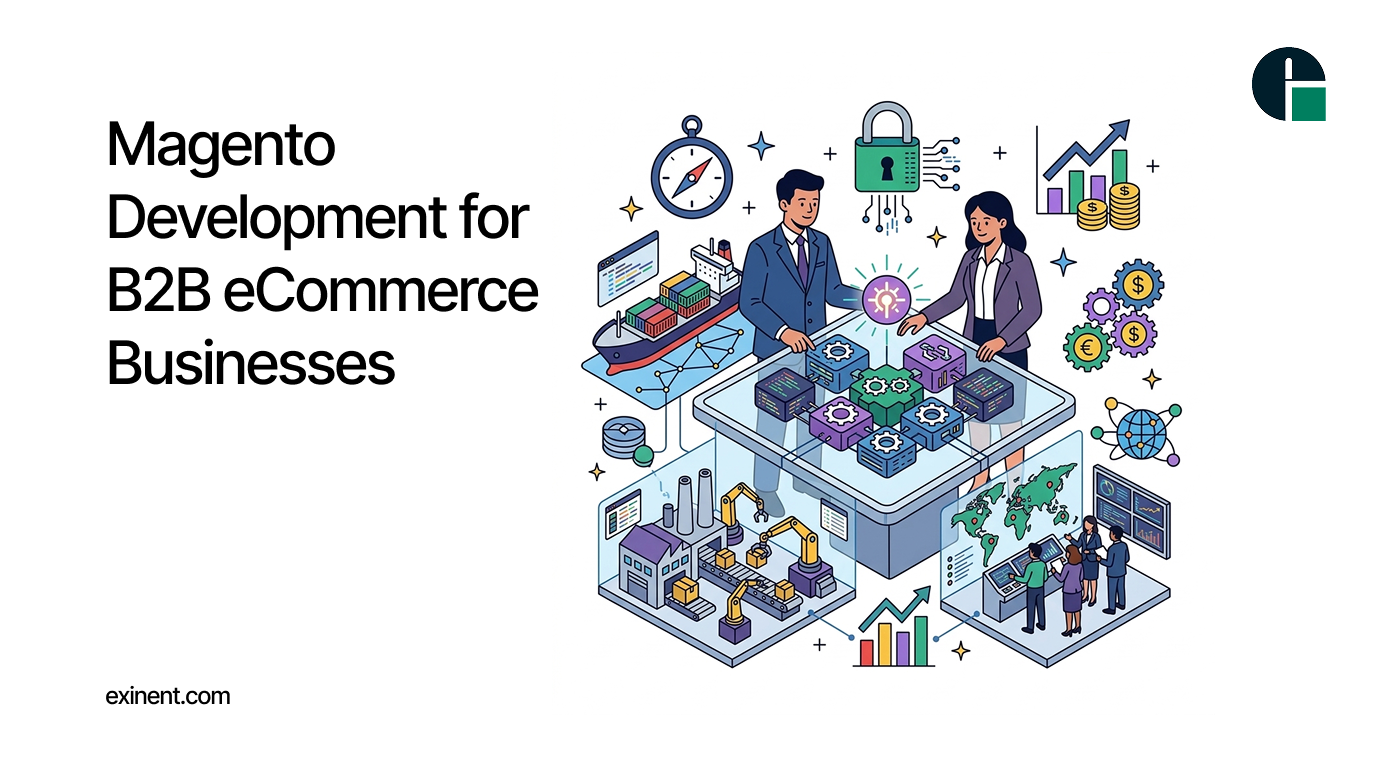
The B2B eCommerce market has evolved significantly over the past few years. Traditional methods of managing wholesale orders through emails, phone calls, and spreadsheets are rapidly being replaced by powerful digital commerce platforms. Businesses now expect streamlined purchasing experiences, personalized pricing, automated workflows, and seamless integrations with existing enterprise systems. This is where Magento Development emerges as one of the most trusted and scalable eCommerce platforms for B2B organizations.
Magento, now known as Adobe Commerce, provides a comprehensive set of features designed specifically to meet the complex requirements of B2B businesses. Whether you are a manufacturer, distributor, wholesaler, or supplier, Magento offers the flexibility and scalability needed to build a robust online sales channel that supports business growth.
Why B2B Businesses Choose Magento
Unlike traditional eCommerce platforms that primarily focus on B2C sales, Magento includes advanced B2B capabilities that help organizations manage large product catalogs, custom pricing structures, and multiple customer accounts efficiently.
One of Magento’s biggest strengths is its ability to support complex business processes. B2B buyers often require negotiated pricing, bulk ordering, quote management, and approval workflows. Magento enables businesses to automate these processes, reducing manual effort while improving customer satisfaction.
Additionally, Magento offers a highly customizable architecture that allows businesses to tailor their online stores according to their unique operational requirements.
Key Magento Features for B2B eCommerce
1. Company Accounts and Multiple Buyers
B2B purchasing often involves multiple stakeholders within a single organization. Magento allows companies to create corporate accounts with multiple users, each having specific roles and permissions.
This feature enables purchasing managers, finance teams, and administrators to collaborate effectively while maintaining control over procurement processes.
2. Custom Pricing and Catalogs
Unlike B2C customers who typically see the same pricing, B2B customers often receive customized pricing based on contracts, order volume, or customer relationships.
Magento allows businesses to create personalized catalogs and pricing structures for different customer groups. This ensures that each customer receives the appropriate products and prices without manual intervention.
3. Quote Management
Many B2B transactions involve negotiation before finalizing an order. Magento’s quote management functionality enables customers to request quotes directly through the website.
Sales representatives can review, modify, and approve quotes quickly, helping businesses close deals faster while maintaining pricing flexibility.
4. Bulk Ordering Capabilities
B2B customers frequently purchase products in large quantities. Magento simplifies bulk purchasing through quick order forms, SKU-based ordering, and streamlined checkout processes.
These features save time for buyers and encourage larger order volumes.
5. Advanced Inventory Management
Managing inventory across multiple warehouses and distribution centers can be challenging. Magento provides advanced inventory management capabilities that help businesses track stock levels, prevent overselling, and optimize fulfillment operations.
This improves operational efficiency while ensuring customers receive accurate product availability information.
Benefits of Magento Development for B2B Businesses
Enhanced Customer Experience
Modern B2B buyers expect the same convenience they experience when shopping online as consumers. Magento provides intuitive navigation, personalized experiences, and mobile-friendly interfaces that make purchasing easier and more efficient.
A better customer experience often translates into increased customer loyalty and higher revenue.
Scalability for Business Growth
As businesses expand, their eCommerce platform must be capable of handling increased traffic, larger product catalogs, and higher transaction volumes.
Magento’s scalable architecture allows organizations to grow without worrying about platform limitations. Whether serving hundreds or thousands of customers, Magento can accommodate evolving business requirements.
Seamless Third-Party Integrations
B2B companies often rely on ERP systems, CRM platforms, accounting software, and inventory management solutions.
Magento supports integration with various enterprise applications, enabling businesses to automate data synchronization and streamline operations across departments.
This reduces manual data entry and minimizes the risk of errors.
Improved Security
Security is a critical concern for B2B organizations handling sensitive customer and transaction data.
Magento offers robust security features, including secure payment processing, role-based access controls, and regular security updates. These features help protect both businesses and their customers from potential cyber threats.
The Importance of Professional Magento Development
While Magento offers extensive capabilities, successful implementation requires technical expertise and strategic planning. A poorly designed Magento store can lead to performance issues, integration challenges, and a suboptimal user experience.
Partnering with an experienced Magento Development Company can help businesses maximize the platform’s potential. Professional developers understand Magento’s architecture, customization options, and best practices for creating high-performing B2B eCommerce solutions.
Businesses looking for expert Magento services can explore Exinent’s Magento Development Company offering.
Additionally, organizations seeking comprehensive eCommerce solutions can benefit from professional E-commerce Development Services available at Exinent
Future of B2B Commerce with Magento
The future of B2B eCommerce is driven by automation, personalization, artificial intelligence, and data-driven decision-making. Magento continues to evolve by introducing innovative features that help businesses stay competitive in an increasingly digital marketplace.
From AI-powered product recommendations to advanced analytics and omnichannel experiences, Magento provides the foundation businesses need to adapt to changing customer expectations and market demands.
Organizations that invest in modern B2B eCommerce platforms today will be better positioned to improve operational efficiency, strengthen customer relationships, and drive long-term growth.
Conclusion
Magento has established itself as one of the leading platforms for B2B eCommerce businesses. Its powerful feature set, flexibility, scalability, and enterprise-level capabilities make it an ideal solution for manufacturers, wholesalers, distributors, and suppliers.
By leveraging Magento’s advanced B2B functionality and partnering with experienced development professionals, businesses can create seamless purchasing experiences, automate complex workflows, and achieve sustainable growth in the competitive digital commerce landscape.
As B2B buying behavior continues to evolve, Magento remains a strategic investment for organizations looking to build a future-ready eCommerce presence.
FAQ’S :
What is Magento development for B2B eCommerce businesses?
Magento development for B2B eCommerce involves building and customizing a Magento-based online store to support wholesale operations. It includes features like custom pricing, bulk ordering, company accounts, and ERP integrations. These capabilities help businesses streamline complex B2B sales processes.
Why is Magento a good choice for B2B eCommerce websites?
Magento is designed to handle complex catalogs, customer groups, and pricing structures. It offers advanced B2B features, high scalability, and extensive customization options. This makes it suitable for manufacturers, distributors, and wholesalers with unique business requirements.
What B2B features are available in Magento?
Magento provides company accounts, custom catalogs, negotiated pricing, quick order forms, purchase approvals, and quote management. These features simplify procurement processes and improve the buying experience for business customers. Many are available in Adobe Commerce editions.
How much does Magento development for a B2B store cost?
Magento B2B development costs typically range from $10,000 to $100,000+ depending on project complexity. Factors affecting cost include custom integrations, design requirements, extensions, and development hours. Enterprise-level projects usually require a larger investment.
How long does it take to develop a Magento B2B eCommerce website?
A standard Magento B2B store may take 8–16 weeks to develop. More complex projects with ERP, CRM, or PIM integrations can take several months. The timeline depends on customization requirements, testing, and data migration needs.
Can Magento integrate with ERP and CRM systems for B2B businesses?
Yes, Magento supports integration with popular ERP and CRM platforms. Businesses commonly connect systems such as SAP, Microsoft Dynamics, Salesforce, and NetSuite. These integrations improve inventory management, order processing, and customer data synchronization.
Is Magento suitable for large B2B product catalogs?
Yes, Magento is built to manage large product catalogs with thousands of SKUs. It offers advanced filtering, inventory management, and performance optimization features. This makes it ideal for wholesalers and distributors with extensive product ranges.
What are the benefits of custom Magento development for B2B companies?
Custom Magento development allows businesses to tailor workflows, pricing models, and customer experiences. It supports unique requirements that standard eCommerce platforms may not offer. This flexibility can improve operational efficiency and customer satisfaction.
What are the common challenges in Magento B2B development?
Common challenges include complex integrations, large data migrations, performance optimization, and custom feature development. Proper planning and experienced Magento developers help reduce risks. Regular testing also ensures a stable and secure launch.
What are the best practices for Magento B2B eCommerce development?
Best practices include optimizing site performance, implementing strong security measures, and ensuring mobile responsiveness. Businesses should also integrate key systems, automate workflows, and regularly update the platform. Ongoing maintenance helps keep the store secure and efficient.