
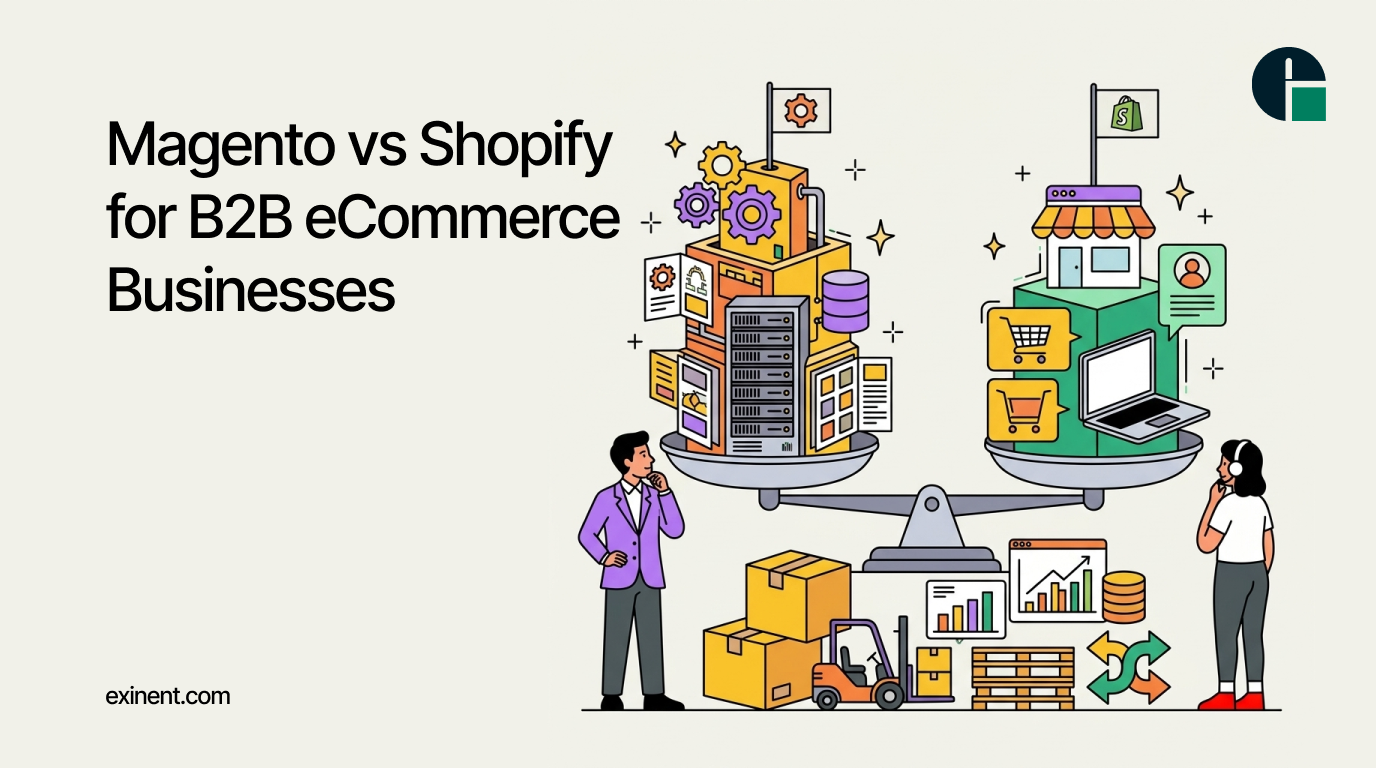
Choosing the right eCommerce platform is one of the most important decisions for any B2B business. Unlike B2C stores, B2B eCommerce requires advanced functionality such as custom pricing, bulk ordering, account-based purchasing, inventory management, and seamless integrations with ERP and CRM systems.
Two of the most popular platforms for online businesses are Magento and Shopify. Both offer powerful features, but they serve different business needs and growth strategies. Understanding the strengths and limitations of each platform can help you make the right decision for your B2B operations.
Understanding Magento and Shopify
Magento, now known as Adobe Commerce, is a highly customizable eCommerce platform designed for businesses that require flexibility and scalability. It provides extensive control over store functionality, user experience, and integrations.
Shopify is a cloud-based E-commerce Development Services platform known for its ease of use and quick deployment. Shopify Plus, the enterprise version of Shopify, offers additional capabilities specifically designed for larger and B2B-focused businesses.
Both platforms support B2B selling, but their approaches differ significantly.
Customization and Flexibility
When it comes to customization, Magento is the clear winner.
Magento offers complete control over the storefront, checkout process, product catalogs, pricing rules, and backend operations. Businesses can create highly personalized buying experiences tailored to specific customer groups, industries, or purchasing requirements.
For organizations with complex workflows and unique operational needs, Magento provides the flexibility to build virtually any functionality required.
Shopify, on the other hand, focuses on simplicity. While Shopify Plus offers customization options through apps and APIs, it still operates within a more structured ecosystem. This approach reduces development complexity but may limit businesses that require highly customized B2B experiences.
For businesses seeking tailored solutions, partnering with professional E-commerce Development Services can help determine which platform aligns best with long-term goals.
B2B Features and Functionality
B2B businesses often require specialized capabilities that go beyond standard online selling.
Magento includes powerful native B2B features such as:
- Company accounts
- Custom catalogs
- Shared purchasing lists
- Quote management
- Negotiated pricing
- Purchase approvals
- Credit limits
These features make Magento particularly attractive for wholesalers, distributors, and manufacturers.
Shopify Plus has significantly improved its B2B capabilities in recent years. It now supports company profiles, customer-specific pricing, payment terms, and wholesale storefronts. However, many advanced features may still require third-party applications or custom development.
For businesses with highly complex purchasing processes, Magento generally provides greater functionality out of the box.
Scalability and Performance
Scalability is essential for growing B2B businesses.
Magento is designed to handle large product catalogs, extensive customer databases, and complex transactions. It performs exceptionally well for enterprises managing thousands of products and multiple customer segments.
However, Magento requires proper hosting, optimization, and ongoing maintenance to achieve optimal performance.
Shopify offers a fully hosted infrastructure that automatically handles security, updates, and server management. This makes scaling much easier from an operational perspective. Businesses can focus on sales and growth rather than technical maintenance.
For companies with limited IT resources, Shopify’s managed environment can be a significant advantage.
Integration Capabilities
B2B businesses rely heavily on integrations with systems such as:
- ERP platforms
- CRM software
- Accounting tools
- Warehouse management systems
- Inventory management solutions
Magento excels in integration flexibility. Its open-source architecture allows developers to connect virtually any third-party application or internal system.
Shopify also supports numerous integrations through its app marketplace and APIs. While integration is generally straightforward, highly customized enterprise-level integrations may require additional development effort.
Businesses with complex technology ecosystems often prefer Magento because of its greater control and customization capabilities.
Cost Considerations
Budget plays a major role in platform selection.
Magento typically involves higher upfront and ongoing costs. Expenses may include:
- Licensing fees (for Adobe Commerce)
- Hosting
- Development
- Maintenance
- Security management
While the investment can be significant, Magento often delivers greater long-term value for businesses with complex requirements.
Shopify offers predictable monthly pricing and lower maintenance costs. Since hosting, security, and updates are included, businesses can launch and manage their stores with fewer technical resources.
For small and mid-sized B2B businesses looking for a cost-effective solution, Shopify Plus may provide a faster return on investment.
Ease of Management
One of Shopify’s biggest strengths is its user-friendly interface.
Non-technical teams can easily manage products, orders, customer accounts, and marketing campaigns without extensive training. This simplicity helps businesses operate efficiently and reduce administrative overhead.
Magento offers greater functionality but comes with a steeper learning curve. Managing the platform often requires technical expertise or support from experienced developers.
Companies that prioritize ease of use may find Shopify more appealing, while organizations seeking extensive control may prefer Magento.
Security and Compliance
Security is critical in B2B eCommerce, where transactions often involve large orders and sensitive customer information.
Shopify provides built-in security features, SSL certificates, PCI compliance, and regular updates as part of its hosted service.
Magento also offers robust security capabilities but requires businesses to manage updates, hosting security, and compliance measures independently.
Organizations with dedicated IT teams can effectively manage Magento security, while businesses seeking a hands-off approach may benefit from Shopify’s managed environment.
Which Platform Is Best for Your B2B Business?
The answer depends on your business needs.
Choose Magento if:
- You need advanced customization.
- Your sales processes are highly complex.
- You require extensive ERP and CRM integrations.
- You manage large product catalogs and customer groups.
- You want complete control over your eCommerce environment.
Choose Shopify Plus if:
- You want a faster launch.
- Ease of management is a priority.
- Your B2B requirements are relatively straightforward.
- You prefer a fully hosted solution.
- You want lower maintenance responsibilities.
Businesses evaluating both platforms often work with experts offering E-commerce Development Services to assess technical requirements, growth objectives, and operational workflows before making a final decision.
Conclusion
Both Magento and Shopify are powerful platforms for B2B eCommerce businesses. Magento stands out for its flexibility, advanced B2B functionality, and enterprise-level customization. Shopify excels in simplicity, ease of use, and streamlined management.
The right choice depends on your business size, budget, technical requirements, and future growth plans. By carefully evaluating your needs and long-term strategy, you can select a platform that supports sustainable growth and delivers exceptional experiences for your B2B customers.
FAQ’S :
What is the difference between Magento and Shopify for B2B eCommerce businesses?
Magento is a highly customizable eCommerce platform designed for complex business requirements, while Shopify is a hosted solution focused on ease of use. Magento offers greater flexibility for custom B2B workflows, whereas Shopify provides faster deployment and lower maintenance requirements.
Which is better for B2B eCommerce: Magento or Shopify?
The best platform depends on your business needs. Magento is often preferred for large enterprises with complex pricing, catalogs, and integrations. Shopify is ideal for businesses seeking a user-friendly platform with faster setup and lower technical overhead.
Is Magento more expensive than Shopify for B2B stores?
Yes, Magento generally has higher upfront and ongoing costs. Expenses may include hosting, development, maintenance, and extensions. Shopify uses a subscription-based model, making costs more predictable for many B2B businesses.
How does Magento handle B2B features compared to Shopify?
Magento includes advanced B2B features such as custom pricing, company accounts, purchase orders, and quote management. Shopify supports B2B functionality through Shopify Plus and apps, but some advanced features may require additional integrations.
Which platform is easier to manage for a B2B eCommerce business?
Shopify is typically easier to manage because it handles hosting, security, and updates automatically. Magento requires more technical expertise and ongoing maintenance but offers greater control over customization and functionality.
Can Magento and Shopify integrate with ERP and CRM systems?
Yes, both platforms support ERP and CRM integrations. Magento offers extensive customization options for complex integrations, while Shopify provides integrations through APIs, apps, and third-party connectors for popular business systems.
What are the scalability differences between Magento and Shopify?
Both platforms are scalable, but they approach growth differently. Magento provides full control over infrastructure and performance optimization. Shopify scales automatically through its cloud-based architecture, making it easier to handle increasing traffic and orders.
Is Shopify Plus a good alternative to Magento for B2B commerce?
Shopify Plus can be a strong alternative for businesses that want enterprise-level features without managing infrastructure. However, companies with highly customized B2B requirements may find Magento’s flexibility better suited to their needs.
What are the risks of choosing the wrong B2B eCommerce platform?
Selecting the wrong platform can lead to higher operational costs, limited scalability, integration challenges, and poor customer experiences. Businesses should evaluate customization needs, budget, growth plans, and internal technical resources before deciding.
How do I choose between Magento and Shopify for my B2B business?
Start by assessing your budget, technical resources, customization requirements, and growth goals. Choose Magento if you need extensive customization and complex B2B capabilities. Choose Shopify if you prioritize ease of use, faster deployment, and simplified management.