
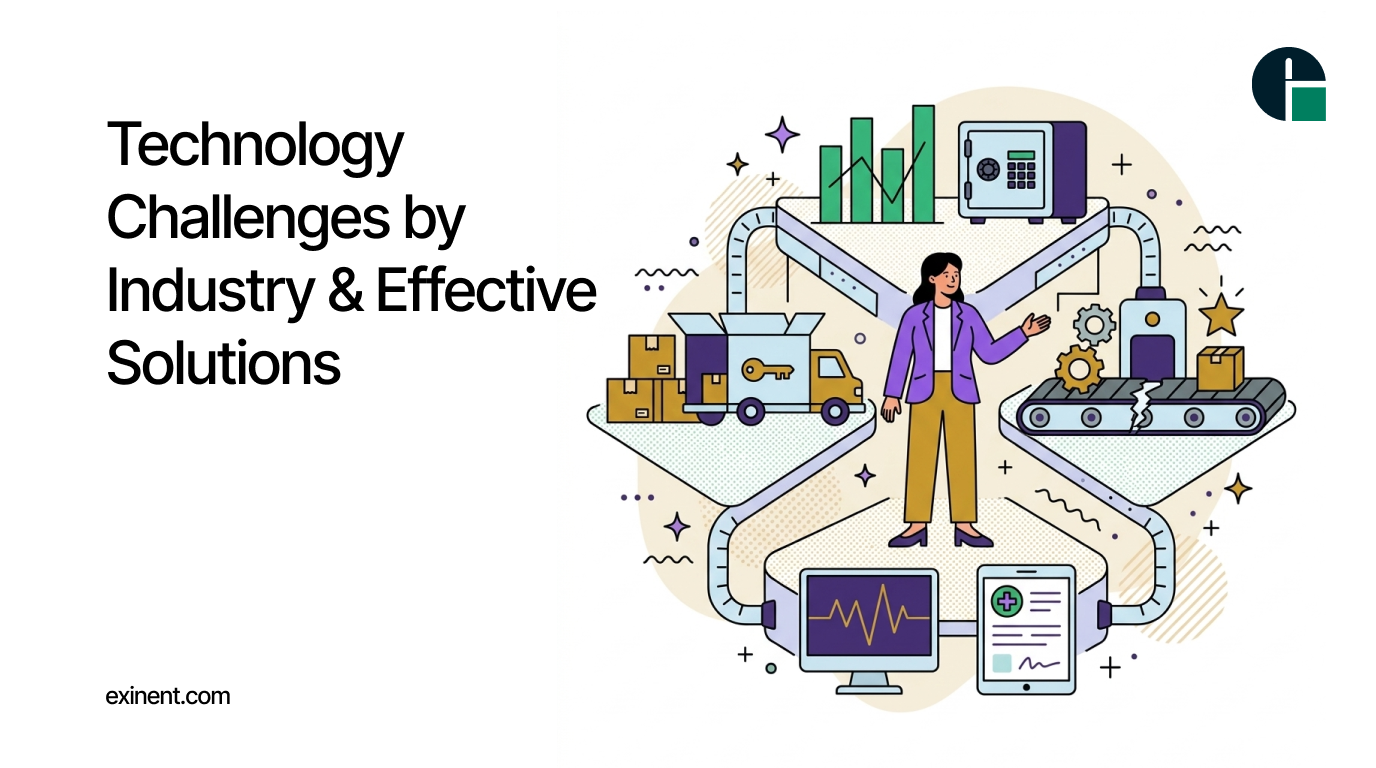
Technology has become the backbone of modern business operations. From healthcare and manufacturing to retail and finance, organizations rely on digital tools to improve efficiency, customer experiences, and decision-making. However, every industry faces unique technology challenges that can slow growth, increase costs, and create security risks.
Understanding these challenges and implementing the right solutions is essential for staying competitive in today’s digital landscape. This article explores the most common technology challenges across different industries and practical ways businesses can overcome them.
1. Healthcare: Data Security and Compliance
Healthcare organizations manage vast amounts of sensitive patient information. Protecting this data while complying with regulations remains one of the industry’s biggest challenges. Cyberattacks targeting healthcare providers continue to increase, making data protection a top priority.
How to Solve It
- Implement advanced cybersecurity measures, including multi-factor authentication and endpoint protection.
- Conduct regular security audits and risk assessments.
- Encrypt patient records and sensitive communications.
- Partner with reliable Managed IT Services providers to monitor systems and maintain compliance.
By taking a proactive approach, healthcare organizations can reduce vulnerabilities and improve patient trust.
2. Manufacturing: Legacy Systems and Operational Technology Risks
Many manufacturing companies still depend on aging infrastructure and legacy systems. While these systems may continue functioning, they often create security vulnerabilities and integration challenges when connecting modern technologies. IT and operational technology (OT) convergence has expanded the attack surface for manufacturers.
How to Solve It
- Gradually modernize outdated infrastructure.
- Adopt cloud-based monitoring and management tools.
- Implement OT-specific cybersecurity controls.
- Develop a phased digital transformation strategy.
Modernizing systems improves productivity while reducing security and maintenance costs.
3. Retail: Omnichannel Integration Challenges
Today’s consumers expect seamless shopping experiences across websites, mobile apps, and physical stores. However, many retailers struggle to integrate inventory, customer data, and sales channels effectively.
How to Solve It
- Use centralized commerce platforms.
- Integrate customer relationship management (CRM) systems.
- Implement real-time inventory tracking.
- Leverage analytics tools to understand customer behavior.
A unified technology ecosystem helps retailers deliver better customer experiences and improve operational efficiency.
4. Financial Services: Cybersecurity and Fraud Prevention
Financial institutions are among the most targeted industries for cybercrime. The rise of AI-powered attacks, phishing schemes, and identity fraud has increased pressure on banks and financial service providers to strengthen their security frameworks.
How to Solve It
- Deploy AI-powered threat detection systems.
- Implement continuous identity verification processes.
- Regularly update security protocols and software.
- Train employees to recognize emerging threats.
Organizations that focus on cyber resilience can minimize disruptions and protect customer assets more effectively.
5. Education: Digital Learning Infrastructure
Educational institutions have rapidly embraced online and hybrid learning models. However, many schools and universities face challenges related to infrastructure scalability, network performance, and cybersecurity.
How to Solve It
- Upgrade network infrastructure to support remote learning.
- Adopt secure cloud-based learning management systems.
- Provide cybersecurity awareness training for students and staff.
- Utilize managed support services to ensure system reliability.
Reliable technology infrastructure enables better learning experiences and uninterrupted access to educational resources.
6. Logistics and Transportation: Real-Time Visibility
Supply chain disruptions have highlighted the importance of real-time visibility. Logistics companies often struggle with fragmented systems, limited tracking capabilities, and inefficient communication between stakeholders.
How to Solve It
- Implement Internet of Things (IoT) tracking solutions.
- Use cloud-based supply chain management platforms.
- Integrate data across transportation, warehousing, and inventory systems.
- Leverage predictive analytics for demand forecasting.
Improved visibility helps organizations make faster decisions and reduce operational delays.
7. Technology Companies: Talent Shortages and Rapid Innovation
Technology companies face intense pressure to innovate while managing growing talent shortages. Skills gaps in areas such as AI, cloud computing, cybersecurity, and data analytics continue to affect organizations worldwide.
How to Solve It
- Invest in employee training and upskilling programs.
- Partner with specialized technology providers.
- Automate repetitive processes where possible.
- Create a culture of continuous learning and innovation.
Organizations that prioritize workforce development are better positioned to adapt to emerging technologies.
Also Read :
Managed IT Services: A Complete Guide for Growing Businesses
Cloud Migration Challenges and How to Overcome Them
Cybersecurity Best Practices for Modern Enterprises
The Role of Managed IT Services in Overcoming Technology Challenges
Regardless of industry, many organizations lack the internal resources needed to manage increasingly complex technology environments. This is where Managed IT Services can provide significant value.
Managed service providers offer:
- 24/7 IT monitoring and support
- Cybersecurity management
- Cloud infrastructure support
- Disaster recovery planning
- Compliance assistance
- Strategic technology consulting
By outsourcing IT management to experienced professionals, businesses can focus on their core operations while ensuring their technology infrastructure remains secure and efficient.
Conclusion
Technology challenges vary by industry, but common issues such as cybersecurity threats, legacy systems, skills shortages, and integration complexities affect organizations across the board. Research consistently shows that cybersecurity risks, workforce readiness, and digital transformation barriers remain among the most pressing concerns for businesses today.
The key to overcoming these obstacles lies in adopting modern solutions, investing in employee development, and partnering with trusted technology experts. Businesses that proactively address their technology challenges will be better equipped to improve efficiency, enhance customer experiences, and maintain a competitive advantage in an increasingly digital world.