
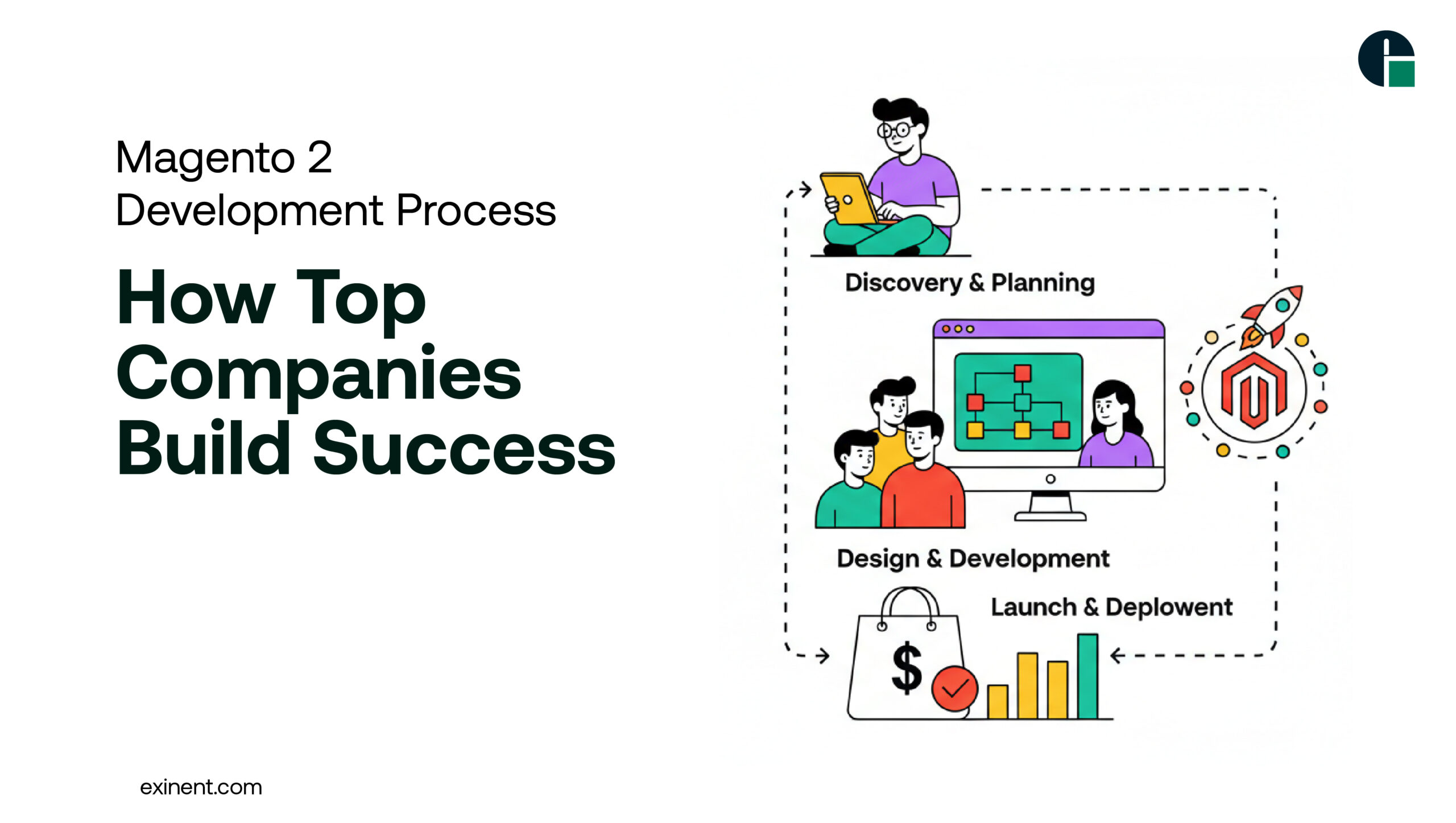
Magento 2 has become the gold standard for building scalable, feature-rich eCommerce stores. From enterprise brands to fast-growing startups, thousands of businesses choose Magento 2 for its flexibility, performance, and power to support multichannel and global commerce. However, the success of any Magento 2 store depends not only on the platform but also on how it is developed. Top agencies follow a structured, strategic development process that ensures high performance, smooth user experience, and long-term scalability.
In this blog, we break down the Magento 2 development process used by the top companies, revealing what makes their approach reliable and results-driven.
1. Requirement Analysis and Discovery
Every strong Magento 2 project begins with a discovery phase. Leading Magento development teams spend time understanding:
- Business goals and KPIs
- Customer journey and target audience
- Competitive benchmarks
- Required features, extensions, and integrations
- Budget, deadlines, and launch plan
Rather than jumping straight into development, they create a clear roadmap and identify what functionalities deliver value. This helps prevent scope creep and ensures the store aligns perfectly with business requirements.
2. Store Architecture Planning & UX Strategy
Top Magento partners know that eCommerce success depends on usability and customer-centric design. Before writing a single line of code, they develop:
- Sitemap & page hierarchy
- Wireframes for key pages
- UX flow for checkout, search, product pages, and cart
- Mobile-first layout
A high-performing Magento 2 store must be intuitive, fast, and conversion-optimized. That’s why experts emphasize UX/UI design before front-end development begins.
3. Magento 2 Theme Design and Development
Once the architecture and UX are approved, the visual design is crafted with brand personality in mind. Whether custom theme development or existing theme customization, top companies ensure:
- Pixel-perfect implementation
- Responsive layouts
- Accessibility standards
- Consistent branding
During front-end development, special focus is placed on reducing page weight and using clean code to enhance performance — a major ranking factor in SEO.
4. Backend Development and Custom Module Creation
Magento’s real power lies in its backend. Top development companies treat backend engineering as the heart of the project, handling:
- Catalog and product structure
- Payment gateways and shipping providers
- ERP, CRM, and marketing tool integrations
- Custom API development
- Checkout optimization
- Multi-store and multilingual setups
When built by experts, Magento modules increase store capabilities without affecting performance. This is where hiring an experienced Magento development company becomes critical — custom functionality must be implemented securely and efficiently.
5. Data Migration and SEO-Safe Store Setup
Migrating from an existing platform? Top Magento developers carefully transfer:
- Product data
- Customer database
- Order history
- Reviews and content
- Discounts, taxes, and configurations
They also preserve or improve SEO by managing redirects, canonical URLs, URL structure, and metadata. This prevents ranking loss during migration and supports organic growth from day one.
6. Performance Optimization
A well-designed Magento 2 store must load quickly, even with large catalogs. Elite development teams implement:
- Server-level caching (Varnish)
- CDN integration
- Image & code minification
- Optimized database queries
- Redis and Elasticsearch configuration
- Lazy loading and lightweight theme structure
High performance leads to higher conversions, higher SEO rankings, and lower bounce rates.
7. Quality Assurance and Testing
No store goes live without thorough QA. The testing phase covers:
- Functional testing
- Device & browser compatibility
- Payment and checkout flow
- Security testing
- API and integration testing
- Usability testing
- Load testing under peak traffic
Top companies run automated + manual QA to eliminate bugs before launch.
8. Deployment and Go-Live
A professional Magento 2 launch isn’t a one-click deployment — it’s a coordinated operation. Teams follow:
- Staging environment final checks
- Backup and rollback planning
- Minimal downtime deployment
- DNS provisioning
- Post-launch monitoring
Once the store goes live, all monitoring tools are activated to track uptime, performance, and user behavior.
9. Ongoing Support, Maintenance, and Growth
Magento 2 success isn’t just about development — it’s an ongoing journey. Leading agencies provide:
- Continuous performance tuning
- Security patch updates
- Extension upgrades
- Bug resolution
- Feature enhancements
- CRO (Conversion Rate Optimization)
- Marketing automation support
Long-term partnerships ensure the platform grows alongside business needs. This is why many brands choose a full-service Magento development company in USA to maintain momentum and drive revenue.
Final Thoughts
Magento 2 has the power to transform eCommerce businesses, but only when built with the right strategy and technical expertise. The top Magento companies follow a structured, data-driven development process — from discovery and UX planning to performance optimization and continuous support.
If you’re planning to launch, migrate, or upgrade your Magento 2 store, partnering with seasoned experts is the key to ensuring scalability, security, and revenue growth. A disciplined development process makes the difference between a basic website and a high-performing eCommerce engine built to scale.
FAQ’s :
What is the Magento 2 development process followed by top companies?
Top Magento agencies follow a structured process including discovery, UX/UI design, custom development, extensions, integrations, QA testing, deployment, and optimization. This ensures fast, scalable, and secure eCommerce stores.
How does the Magento 2 development process work from start to launch?
It starts with business analysis and requirement gathering, followed by design and custom module development. After that, developers integrate payment, shipping, and third-party systems, test performance, and deploy to production.
What are the benefits of using a proven Magento 2 development process?
A proven process gives a high-performing store with fewer bugs, better conversion rates, fast load time, and strong security. It also reduces development risk and ensures long-term scalability.
How long does a Magento 2 development project usually take?
A standard Magento store takes 8–12 weeks, while complex enterprise builds may take 4–6 months. Timeline depends on custom features, catalog size, integrations, and design scope.
How much does Magento 2 development cost if done by top companies?
Magento 2 development costs typically range from $25,000 to $200,000+ depending on features, custom development needs, B2B ecommerce requirements, and cloud infrastructure. Hourly rates vary by region and developer expertise.
What are the biggest challenges or risks during Magento 2 development?
Common risks include performance issues, poorly coded custom modules, unstable integrations, and security vulnerabilities. Following coding standards, stress testing, and partner-certified extensions minimizes risk.
Why do top companies use Agile for Magento 2 development?
Agile provides fast iterations, weekly progress tracking, and flexibility to change requirements during the project. It reduces delays and ensures the store meets real business needs before launch.
How do top Magento companies ensure performance optimization?
They apply caching, CDN integration, code profiling, image compression, Elasticsearch tuning, and database indexing. This makes the store load fast even during high traffic.
Do Magento 2 projects need ongoing maintenance after launch?
Yes. After launch, stores need upgrades, security patches, extension updates, performance tuning, and bug fixes. Continuous support prevents downtime and keeps the store secure and conversion-focused.
How do I choose the right Magento 2 development partner?
Look for certified Magento experts, proven case studies, strong UX/UI capabilities, and experience in your industry. Request a detailed roadmap, tech stack, cost breakdown, and post-launch support plan before signing.