
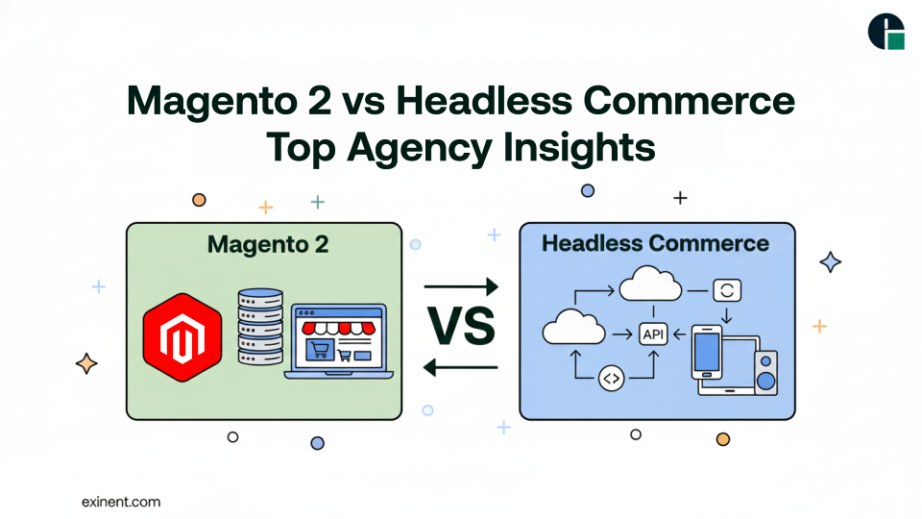
Ecommerce brands today face an important decision: Should they stay with Magento 2’ traditional architecture or move toward modern headless commerce? With customer expectations skyrocketing, page speed becoming a ranking factor, and omnichannel experiences becoming essential, choosing the right approach can greatly impact growth and scalability.
Top ecommerce agencies around the world analyze this question every day. Their recommendations usually depend on a company’s business stage, goals, customization needs, and long-term technical strategy. In this detailed comparison, we break down Magento 2 vs Headless Commerce while highlighting what industry-leading experts suggest for each scenario.
Understanding Magento 2: A Robust All-in-One Platform
Magento 2 is one of the most powerful ecommerce platforms available. It offers a traditional monolithic architecture, meaning the frontend and backend are tightly connected. This structure provides consistency, reliability, and strong built-in ecommerce features for merchants.
Key Strengths of Magento 2
- Comprehensive Built-In Features
Magento 2 includes native functionalities such as product management, layered navigation, checkout features, discount configurations, and customer management—all ready to use out of the box. This helps reduce development time and simplifies ecommerce operations. - Strong Community & Extensions
With thousands of extensions, plugins, and integrations, Magento 2 allows brands to scale easily. Merchants also benefit from the support of a global developer community and certified partners. - Flexibility for Customization
Magento’s codebase allows limitless customization. For businesses needing advanced features, marketplaces, or multi-store setups, Magento offers unmatched flexibility. - Improved Performance Over Magento 1
Magento 2 is significantly faster and more secure, supporting modern caching, database optimization, and mobile-optimized themes.
What Is Headless Commerce?
Headless commerce separates the frontend (presentation layer) from the backend (ecommerce engine). This gives brands the freedom to build custom storefronts using frameworks like React, Vue.js, Next.js, or Angular, while the backend handles operations through APIs.
Key Advantages of Headless Commerce
- Faster, More Dynamic Frontend
With headless, brands can build lightning-fast user experiences that feel like modern apps—crucial for conversion rates and SEO. - Omnichannel Capabilities
APIs allow businesses to deliver consistent shopping experiences across mobile apps, smart devices, social platforms, and physical stores. - Creative Design Freedom
Headless gives developers full control over the UI/UX, enabling fully custom, immersive customer experiences. - Future-Proof Architecture
Businesses can upgrade their frontend or backend independently. This makes scaling easier and reduces long-term technical debt.
Magento 2 vs Headless Commerce: A Side-by-Side Comparison
| Feature | Magento 2 (Traditional) | Headless Commerce |
|---|---|---|
| Architecture | Monolithic | Decoupled / API-driven |
| Performance | Fast, but theme-dependent | Extremely fast with modern JS frameworks |
| Customization | High | Unlimited |
| Development Cost | Medium to high | Higher initial investment |
| Maintenance | Straightforward | Requires ongoing dev support |
| Omnichannel Support | Limited | Excellent |
| Time to Market | Faster | Slower initially, faster later |
| Best For | Small–medium brands | Growth-oriented or enterprise brands |
What Top Agencies Recommend
Leading ecommerce agencies analyze business size, complexity, traffic volumes, and UX goals before making recommendations. Here’s what most agree on:
Choose Magento 2 When:
✔ You need a solid, reliable ecommerce platform with all essential features
✔ You want lower upfront development costs
✔ You prefer using Magento themes and extensions
✔ You operate a small to medium-sized business
✔ You want faster deployment with proven results
Many experts recommend Magento 2 to brands that do not need complete frontend freedom or omnichannel operations. Working with a trusted magento development company ensures the site is optimized for speed, security, and scalability.
Choose Headless Commerce When:
✔ You want ultimate UI/UX customization
✔ You prioritize website speed and app-like experiences
✔ You need omnichannel delivery (web, mobile app, marketplaces, kiosk, etc.)
✔ You are scaling rapidly or already enterprise-level
✔ You have modern frontend development resources
Headless is the future for brands wanting unmatched performance and innovation. Agencies often recommend it for retailers with high traffic, global presence, and long-term digital transformation goals.
Hybrid Approach: Magento 2 + Headless (Magento as the Backend)
Many top-tier agencies now combine both worlds by using Magento 2 as the backend while building a headless frontend using React or Vue.
This approach gives:
- Magento’s powerful ecommerce engine
- A lightning-fast headless storefront
- API-led flexibility for future expansion
It offers the best balance of performance, control, and long-term scalability.
Which Approach Is Best for Your Business?
The decision depends on three major factors:
1. Your Business Size and Budget
Small businesses benefit from Magento 2’s ready-to-use features. Enterprises benefit from headless freedom and omnichannel power.
2. Your Long-Term Vision
If you plan heavy customization, headless provides the scalability you need.
3. Your Technical Resources
Magento 2 requires fewer specialized development skills, whereas headless demands modern JavaScript expertise.
Partnering with an experienced magento development company in USA helps brands evaluate their current system, future growth, and customer expectations to make the right choice.
Conclusion
Both Magento 2 and Headless Commerce are powerful solutions—but each fits different business models. Magento 2 is ideal for brands wanting an all-in-one, scalable ecommerce platform with fast deployment. Headless Commerce is best for brands seeking complete creative freedom, omnichannel scalability, and cutting-edge performance.
Top agencies recommend carefully analyzing business goals, budget, and long-term growth plans before choosing. With the right development partner, your ecommerce platform can become a strategic asset—driving conversions, improving user experiences, and supporting long-term expansion.
FAQ’s :
1. What is the difference between Magento 2 and Headless Commerce?
Magento 2 is a full-stack eCommerce platform with both front-end and back-end included, while Headless Commerce separates the front-end from the back-end. Magento 2 is easier to set up, while headless gives more flexibility and speed. Agencies usually recommend headless for complex or omnichannel needs.
2. Is Headless Commerce better than Magento 2 for performance?
Headless Commerce often delivers faster page loads because the front-end is built with modern frameworks like React or Vue. Magento 2 can also be optimized, but it’s generally slower compared to a well-built headless setup. Top agencies recommend headless for brands prioritizing speed.
3. When do top agencies recommend staying on Magento 2 instead of going headless?
Agencies suggest staying on Magento 2 if your store has moderate customization, limited channels, or a smaller budget. It’s also the better fit if you want a traditional theme-based approach. Magento 2 is more cost-effective for mid-sized brands.
4. What are the benefits of choosing Headless Commerce over Magento 2?
Headless Commerce offers faster performance, easier omnichannel integration, and better front-end freedom. It also supports progressive web apps (PWAs) for app-like shopping experiences. Agencies recommend it for scaling, automation, and multi-store setups.
5. Is Magento 2 cheaper than Headless Commerce?
Yes, Magento 2 is usually cheaper to build and maintain because it requires fewer development layers. Headless Commerce involves building separate front-end frameworks, which increases cost. Agencies say headless can cost 30–70% more depending on complexity.
6. How do I know if my store should upgrade from Magento 2 to Headless Commerce?
If you need faster mobile speed, custom UX, or advanced integrations, headless may be the better choice. Brands with heavy content, multi-store needs, or API-driven workflows also benefit. Agencies recommend an audit before migrating.
7. What are the risks of switching from Magento 2 to a headless setup?
The main risks are higher development cost, longer build time, and dependency on API performance. You also need experienced developers to manage the architecture. Agencies warn that poorly built headless systems can become harder to maintain.
8. Can Magento 2 work in a headless architecture?
Yes, Magento 2 can be used as a headless backend through its GraphQL and REST APIs. Many agencies recommend this hybrid approach for brands that want flexibility without leaving Magento. It combines Magento’s strong backend with a modern front-end stack.
9. Which is better for SEO: Magento 2 or Headless Commerce?
Both can perform well, but headless offers better Core Web Vitals when built correctly. However, Magento 2 has built-in SEO features that work out of the box. Agencies say the winner depends on build quality, not the platform alone.
10. How long does it take to migrate from Magento 2 to a headless commerce setup?
Most agencies estimate 3–6 months depending on design, custom features, and the front-end framework. Multi-store setups or complex integrations can take longer. Planning, testing, and API mapping are key to reducing delays.