
In today’s cloud-centric enterprise world, cyber threats are constantly evolving, and businesses must stay one step ahead to protect their digital assets. Microsoft Secure Score is a powerful tool that helps organizations assess and improve their security posture across Microsoft 365 environments. Whether you’re a small business or a large enterprise, understanding Secure Score and its associated improvements can empower your security teams to make informed, prioritized decisions.
What Is Microsoft Secure Score?
Microsoft Secure Score is a security analytics tool provided by Microsoft that measures your organization’s security posture relative to recommended security controls. It works by evaluating your configurations and activities against Microsoft’s security best practices, generating a numerical score that reflects your current security status.
Secure Score serves two essential purposes:
- Assessment: It provides a baseline measurement of how secure your Microsoft 365 environment is at any given time.
- Recommendation: It suggests practical actions you can take to improve your security, ranked by impact level.
In essence, Microsoft Secure Score turns abstract security concepts into tangible, actionable insights.
How Secure Score Works
Microsoft Secure Score continuously monitors your tenant for:
- Identity and access management configurations
- Device security settings
- Data protection policies
- Threat protection detection rules
- App and information governance
Each area includes a set of controls and improvement actions. Some actions are simple (e.g., enabling multi-factor authentication), while others might involve deploying advanced security features or implementing stricter access policies.
When you complete a recommended action, your score increases. The score is dynamic, changing as your environment evolves or as Microsoft updates its recommendations in response to new threat intelligence.
Why Secure Score Matters
1. Prioritized Security Improvements
One of the biggest challenges organizations face is knowing where to start when it comes to cybersecurity. Secure Score helps answer that by prioritizing improvements based on the potential risk reduction.
For example, implementing multi-factor authentication (MFA) yields a higher impact than other lower-risk. Secure Score clearly shows this so your teams can focus first on high-impact improvement recommendations.
2. Visibility and Accountability
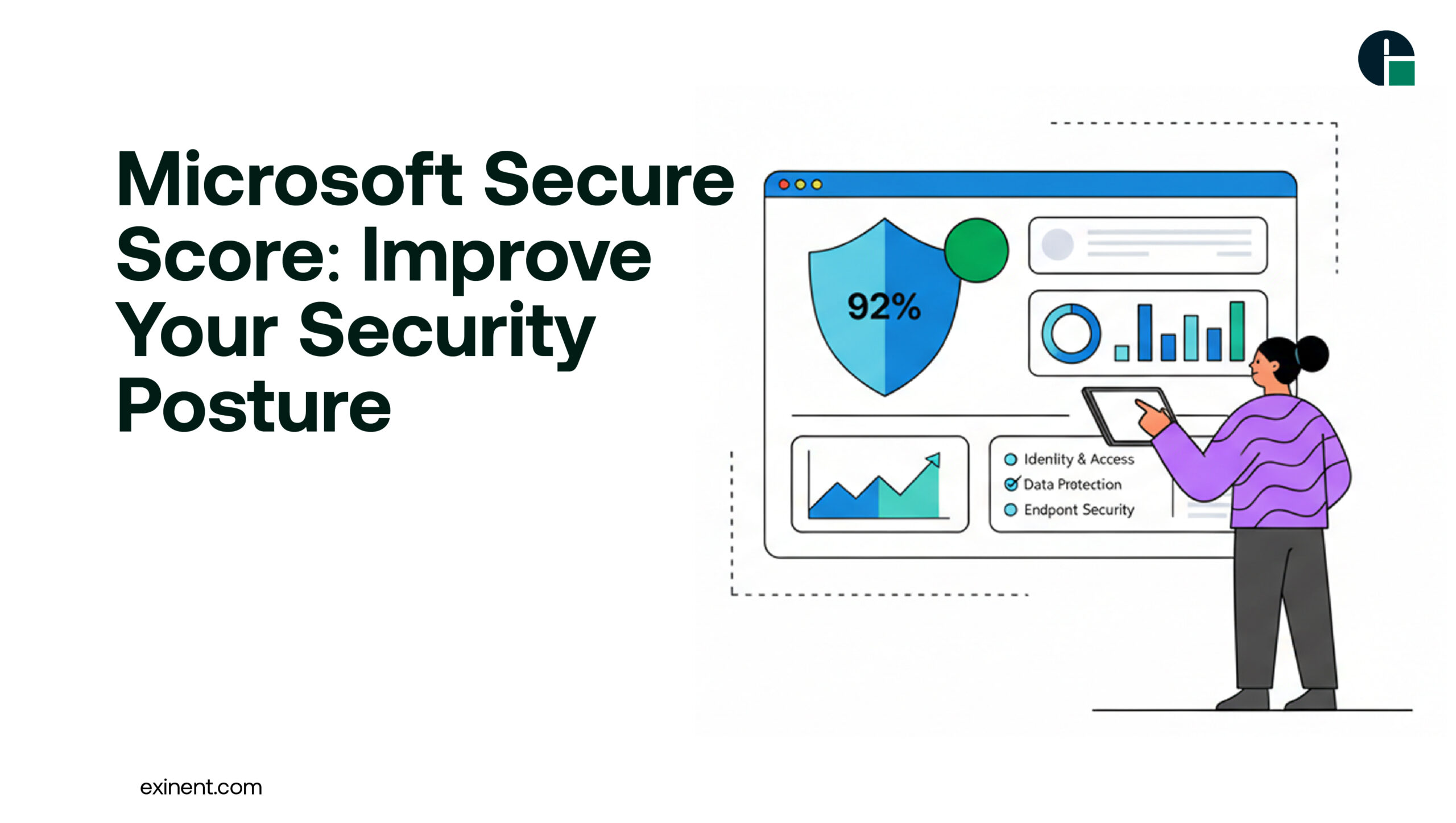
Secure Score provides dashboards that visualize:
- Current score and historical trends
- Completed actions
- Remaining recommended actions
- Impact potential for each improvement
This visibility helps security leaders communicate risks and progress to stakeholders more effectively. It also builds accountability by assigning responsibility for specific recommendations.
3. Continuous Security Monitoring
Threat landscapes are constantly shifting, and compliance requirements evolve alongside them. Secure Score helps organizations maintain vigilance through continuous monitoring, making it easier to react to new vulnerabilities, misconfigurations, or risks.
Key Secure Score Improvement Areas
Here are some of the most impactful improvement categories within Microsoft Secure Score:
1. Identity and Access Management
Identity compromise is one of the most common ways attackers breach systems. Secure Score prioritizes controls such as:
- Enabling MFA for all users
- Using Conditional Access policies
- Blocking legacy authentication protocols
These measures reduce credential abuse and protect against unauthorized access.
2. Device Security
Secure Score assesses endpoint protection settings such as:
- Requiring BitLocker encryption on devices
- Ensuring devices are compliant with security policies
- Using Microsoft Defender for Endpoint
Secure devices are less likely to be compromised, which in turn protects the broader network.
3. Data Protection
Data leakage and accidental exposure are major concerns. Secure Score recommends safeguards such as:
- Configuring Data Loss Prevention (DLP) policies
- Encrypting sensitive information
- Controlling external sharing permissions
These measures ensure critical data stays protected from both internal and external threats.
4. Threat Protection
Threat detection capabilities are central to blocking attacks before they escalate. Secure Score includes recommendations to enable:
- Microsoft Defender for Office 365
- Advanced hunting and automated investigation features
- Anti-phishing and anti-malware policies
These add layers of defense against sophisticated threats like business email compromise and ransomware.
Linking Secure Score With Broader Security Practices
While Microsoft Secure Score is powerful on its own, it becomes even more effective when integrated into a comprehensive security strategy. Many organizations partner with service providers to manage and optimize their security and productivity environments.
For example, when adopting Microsoft technologies, aligning with providers offering Microsoft 365 Managed Services can ensure that Secure Score improvements are executed properly and maintained over time. Managed services can support regular monitoring, policy management, incident response, and user training, maximizing your security outcomes.
Additionally, integrating Secure Score insights with broader threat intelligence, compliance tracking, and risk management frameworks can help align technical improvements with business risk priorities.
Continuous Improvement: The Secure Score Cycle
Improving your Secure Score isn’t a one-time effort—it’s an ongoing cycle:
- Assess: Review your current Secure Score and existing security configurations.
- Prioritize: Identify high-impact actions aligned with your organizational risk tolerance.
- Implement: Deploy recommended controls and configurations across your environment.
- Monitor: Use Secure Score and other monitoring tools to track changes and detect issues.
- Review: Adjust your security posture as needs evolve and as Microsoft updates recommendations.
This continuous loop ensures that your security environment remains resilient and adaptive.
Best Practices for Using Microsoft Secure Score
To make the most of Secure Score:
- Set realistic improvement goals: Start with high-impact actions that are easiest to implement.
- Engage cross-functional teams: Collaboration among IT, security, and compliance teams ensures better execution.
- Educate users: Many security gaps originate from human behavior—so combine technology controls with user training.
- Leverage automation: Many Secure Score recommendations can be automated through policies and configuration templates.
- Regularly review score progression: Make Secure Score part of your quarterly or monthly security review processes.
Conclusion
Microsoft Secure Score is not just a metric—it’s a strategic ally that helps you visualize, prioritize, and enhance your security posture. By turning complex security scenarios into clear, actionable steps, Secure Score empowers organizations to reduce risk and protect digital environments more effectively.
Whether you’re just starting your security journey or maturing your enterprise defenses, integrating Secure Score improvements into your broader IT and security strategy is essential. With the right approach, you can not only increase your Secure Score but also build a more resilient and secure organization capable of withstanding evolving cyber threats.