
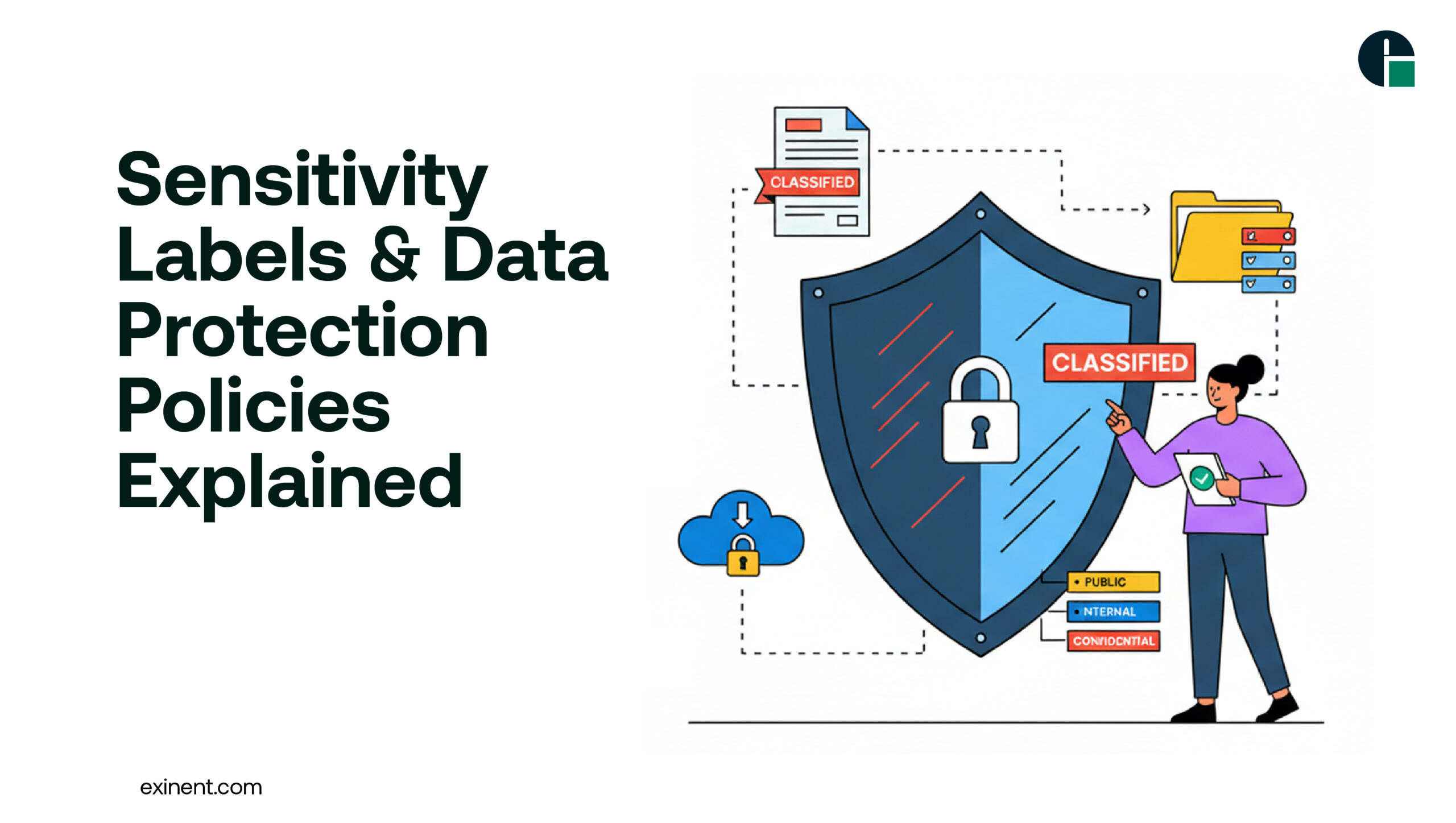
In today’s digital world, data is one of the most valuable assets any organization possesses. Whether it’s customer information, financial records, intellectual property, or employee data, the need to manage and protect information has never been greater. With cyber threats evolving daily and regulatory requirements becoming more stringent, businesses must adopt comprehensive strategies to safeguard their data. Two major components of a successful data protection strategy are sensitivity labels and data protection policies.
What Are Sensitivity Labels?
Sensitivity labels are classification tags that you apply to data — such as emails, documents, and files — based on how sensitive or critical that information is. These labels help organizations identify and manage data according to predefined levels of confidentiality. The purpose of labeling is more than just categorization; it influences how data is treated, accessed, shared, and stored.
Typical sensitivity labels may include:
- Public – Information intended for unrestricted public consumption.
- Internal – Data for internal use only, not meant for external sharing.
- Confidential – Sensitive information that could harm the organization if disclosed.
- Highly Confidential – Critical or regulated data requiring the highest levels of protection.
These labels can be manually applied by users or automatically enforced through policies based on content inspection and pattern recognition.
The Role of Data Protection Policies
While sensitivity labels classify and tag data, data protection policies define the rules and actions applied to that data. These policies are enforced at multiple layers — from endpoint devices to cloud services — ensuring consistent application of security controls.
Data protection policies can dictate:
- Who can access specific types of data.
- How data is encrypted at rest and in transit.
- Whether files can be shared externally.
- What happens when a sensitive document is downloaded to a personal device.
- Automated responses to suspicious access or behavior.
Together, sensitivity labels and data protection policies form a comprehensive framework for data governance.
Why Organizations Need This Framework
1. Regulatory Compliance
With regulations such as GDPR, HIPAA, CCPA, and industry-specific mandates, organizations must prove they are handling personal and sensitive data responsibly. Sensitivity labels make it easier to identify regulated data, while protection policies ensure compliance by enforcing encryption, access controls, and audit logging.
Failure to comply can lead to significant financial penalties and reputational damage, making an effective labeling and policy strategy not just best practice — but essential.
2. Enhanced Security Posture
Threats such as insider leaks, ransomware, and unauthorised access are everyday risks. Sensitivity labels act as a first line of defense by clearly marking what must be protected. Coupled with policies that:
- Block risky sharing,
- Require multi-factor authentication,
- Encrypt sensitive content,
organizations can significantly reduce their attack surface and improve resilience.
3. Simplified Data Management
As businesses scale, data proliferates across devices, applications, and cloud platforms. Without proper labeling, it’s nearly impossible to understand what data exists and where it resides. Sensitivity labels bring structure to this chaos, enabling better data discovery, lifecycle management, and risk assessment.
Real-World Application: Consistency Across Platforms
Modern workplaces are increasingly hybrid and distributed. Employees collaborate using tools like Microsoft 365, Google Workspace, cloud storage services, and enterprise applications. A unified labeling and protection strategy ensures that regardless of where data travels, the rules governing it stay consistent.
For example, a document marked as “Highly Confidential” remains encrypted and restricted whether it’s stored in a corporate server or shared via cloud. This end-to-end protection is crucial to avoiding accidental data exposure.
Best Practices for Implementing Sensitivity Labels and Policies
Implementing sensitivity labels and policies isn’t a one-off project; it’s an ongoing journey. Here are some best practices:
1. Start With a Clear Data Classification Strategy
Before you label anything, understand your data landscape. Ask:
- What types of data do we hold?
- Which data is regulated?
- Who needs access to what?
This foundational step ensures that labels are meaningful and relevant.
2. Educate and Empower Employees
Employees are often the first line of defense — and risk. Training users on the importance of labeling and how to apply labels correctly helps reduce misclassification and accidental data exposure. Awareness programs should include:
- Why certain data needs protection,
- How to recognize sensitive content,
- What happens if policies prevent certain actions.
3. Use Automation and Smart Tools
Manual labeling is error-prone and hard to scale. Use technologies that can automatically apply labels based on content patterns, keywords, and context. For example, if a file contains credit card numbers or personal identification numbers, it can be automatically flagged as sensitive.
Applying automation reduces manual effort and improves accuracy.
4. Integrate With Broader IT Strategy
Sensitivity labeling and data protection are part of overall information security. Align them with your broader IT initiatives — including endpoint protection, threat detection, user behavior analytics, and disaster recovery planning.
This holistic approach strengthens the entire security posture.
5. Partner With Experts in Managed IT Services
For many organizations, data protection can be complex and resource-intensive. Partnering with experienced providers can ease implementation and ongoing management. Managed IT Services providers bring the expertise, tools, and monitoring capabilities needed to enforce policies effectively while freeing internal teams to focus on core business activities.
Learn more about how managed providers support comprehensive data security here: Managed IT Services.
The Business Value of a Proactive Approach
Investing in sensitivity labeling and robust data protection policies offers tangible business benefits beyond security:
- Builds customer trust by demonstrating accountability.
- Reduces risk of financial loss due to breaches or fines.
- Improves operational efficiency with better data visibility.
- Supports digital transformation by enabling secure collaboration.
Organizations that take a proactive approach are better positioned to innovate securely and compete effectively.
Conclusion
In a data-driven world, sensitive information must be managed with precision, care, and foresight. Sensitivity labels and data protection policies are not optional — they are fundamental components of any modern cybersecurity and compliance framework. By classifying data accurately and enforcing smart protection rules, businesses can secure their most valuable asset: information. And when paired with strategic support from Managed IT Services providers, organizations gain peace of mind knowing that their data — and their reputation — is safeguarded.