
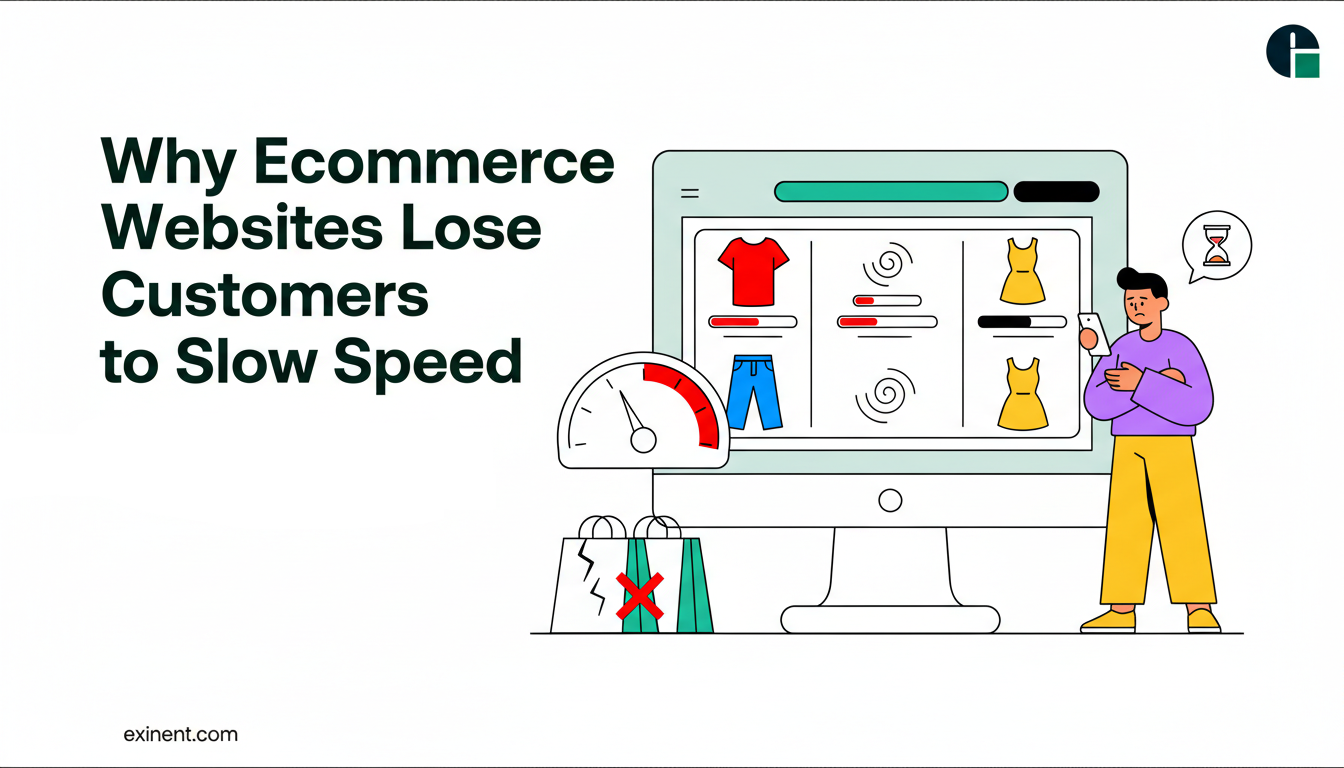
In today’s competitive digital marketplace, speed is not a luxury — it’s a necessity. Customers expect eCommerce websites to load instantly, function smoothly, and provide a seamless shopping experience. When a website loads slowly, users leave — often permanently.
Research consistently shows that even a one-second delay in page load time can significantly reduce conversions, increase bounce rates, and hurt revenue. For online retailers, slow speed is one of the most expensive hidden problems.
This article explores why slow eCommerce websites lose customers, the business impact, key challenges, practical solutions, and how to prevent revenue loss.
The Importance of Website Speed in eCommerce
Website speed directly affects:
- User experience (UX)
- Conversion rates
- Search engine rankings
- Customer trust
- Brand reputation
Modern shoppers compare experiences across platforms. If your store loads slower than competitors, customers simply move on.
Search engines like Google also prioritize fast-loading websites in rankings. Core Web Vitals, including Largest Contentful Paint (LCP) and Interaction to Next Paint (INP), are now ranking factors. A slow site doesn’t just lose customers — it loses visibility.
Why Slow Speed Drives Customers Away
1. Short Attention Spans
Online shoppers expect pages to load within 2–3 seconds. If a page takes longer:
- Users abandon the session
- Cart abandonment increases
- Bounce rates spike
A delay during checkout is even more damaging, as it disrupts buying intent at the final step.
2. Mobile Performance Issues
More than half of eCommerce traffic comes from mobile devices. Slow mobile load times caused by:
- Heavy images
- Unoptimized code
- Poor hosting
lead to frustrated users and lost sales.
3. Trust and Credibility Concerns
A slow website signals poor quality. Customers may question:
- Payment security
- Website reliability
- Brand professionalism
Speed is directly linked to perceived trustworthiness.
4. SEO and Visibility Impact
Google’s algorithm rewards fast, user-friendly websites. Slow speed results in:
- Lower rankings
- Reduced organic traffic
- Higher ad costs
Less visibility means fewer customers entering your sales funnel.
Business Impact of Slow eCommerce Websites
Slow website performance affects more than just user satisfaction.
Revenue Loss
- Lower conversion rates
- Fewer completed checkouts
- Reduced average order value
Even small delays can cost thousands in monthly revenue.
Increased Customer Acquisition Cost (CAC)
If visitors leave before converting, businesses must spend more on ads and marketing to replace lost traffic.
Brand Damage
Customers remember negative experiences. A slow website can:
- Reduce repeat purchases
- Harm customer loyalty
- Increase negative reviews
Common Causes of Slow eCommerce Websites
Understanding the root causes is essential.
1. Large, Unoptimized Images
High-resolution images without compression significantly slow down page load time.
2. Poor Hosting Infrastructure
Shared or low-performance hosting environments struggle to handle traffic spikes.
3. Excessive Plugins and Extensions
Too many third-party integrations increase script execution time.
4. Unoptimized Code
Heavy JavaScript, CSS, and unused code slow rendering.
5. Lack of Caching and CDN
Without caching or a Content Delivery Network (CDN), websites load resources inefficiently.
Best Practices to Improve eCommerce Website Speed
Optimize Images
- Compress images without quality loss
- Use next-gen formats (WebP, AVIF)
- Implement lazy loading
Upgrade Hosting
Choose scalable cloud hosting with:
- High uptime guarantees
- Automatic scaling
- Dedicated resources
Use a CDN
A CDN distributes content globally, reducing latency and improving load speed for international customers.
Minify and Combine Files
- Reduce JavaScript and CSS size
- Remove unused code
- Defer non-critical scripts
Enable Caching
- Browser caching
- Server-side caching
- Object caching
Optimize Checkout Flow
Simplify checkout steps and reduce scripts on payment pages to avoid friction.
Real-World Benefits of Faster Sites
Faster eCommerce sites deliver measurable benefits:
- Higher Conversion Rates: Every second shaved off load time increases the likelihood a visitor completes a purchase.
- Lower Bounce Rates: Visitors are more likely to explore further when pages load quickly.
- Improved Customer Loyalty: Shoppers return to sites they trust and enjoy using.
- Better SEO Rankings: Speed boosts your visibility on search results, driving more organic traffic.
- Reduced Operational Costs: Optimized sites often consume fewer server resources, reducing hosting costs.
These benefits compound over time. A site that loads in under two seconds consistently performs better — not just once, but every time a customer returns.
The Role of Professional Development
Many businesses attempt quick fixes but overlook long-term optimization strategies. A well-architected eCommerce platform ensures:
- Clean code structure
- Scalable infrastructure
- Performance monitoring
- Mobile-first optimization
Investing in professional E-commerce Development Services helps businesses build fast, scalable, and secure online stores that convert consistently.
Challenges in Speed Optimization
Despite its importance, improving website speed presents challenges:
- Balancing design with performance
- Managing third-party scripts (analytics, ads, chatbots)
- Scaling during peak traffic
- Maintaining speed after updates
Continuous monitoring and technical expertise are essential to sustain performance gains.
Final Thoughts
In the competitive world of eCommerce, every advantage counts — and speed matters more than most retailers realize. Slow websites don’t just frustrate users; they erode trust, reduce conversions, and harm long-term growth. Unlike a physical store, where ambiance and layout can compensate for minor inconveniences, online shoppers have zero tolerance for lag.
Improving performance isn’t optional — it’s essential. Whether you’re launching a new store or scaling an existing one, prioritizing site speed should be part of your core strategy. With a combination of professional expertise, modern technologies, and continuous monitoring, you can deliver a fast, reliable experience that keeps customers coming back.
Don’t let slow speed be the reason you lose customers. Act now, optimize your store, and watch your engagement and revenue grow.
FAQ’S :
Why do eCommerce websites lose customers because of slow loading speed?
eCommerce websites lose customers when pages take more than 2–3 seconds to load. Studies show that even a 1-second delay can reduce conversions by up to 7%. Slow speed increases bounce rates, meaning visitors leave before viewing products. Customers expect fast, smooth shopping experiences.
How does slow website speed affect online sales and conversion rates?
Slow speed directly lowers conversion rates and average order value. If checkout pages lag, shoppers abandon their carts. Research shows nearly 40% of users leave a site that takes more than 3 seconds to load. Faster websites typically see higher engagement and repeat purchases.
What is considered a slow loading time for an eCommerce website?
A loading time above 3 seconds is considered slow for eCommerce websites. Top-performing stores aim for 1–2 seconds. Google also recommends keeping Largest Contentful Paint (LCP) under 2.5 seconds. Anything beyond this increases bounce rates and reduces SEO rankings.
Why does a slow checkout process cause cart abandonment?
A slow checkout creates frustration and reduces trust. If payment pages freeze or load slowly, customers worry about transaction errors. About 17% of users abandon carts due to complicated or slow checkout. Speed and simplicity are critical for completing purchases.
How does slow website speed impact SEO and Google rankings?
Google uses page speed as a ranking factor. Slow websites often rank lower in search results. Lower rankings mean less organic traffic and fewer sales opportunities. Faster websites improve crawl efficiency, user engagement, and search visibility.
What are the main causes of slow speed on eCommerce websites?
Common causes include large image files, too many plugins, poor hosting, and unoptimized code. Lack of caching and slow third-party scripts also add delay. Heavy product pages with multiple high-resolution images can significantly slow load times.
Is investing in website speed optimization worth it for online stores?
Yes, speed optimization often delivers high ROI. Improving load time by even 1 second can increase conversions and revenue. Faster websites also reduce bounce rates and improve customer satisfaction. The cost of optimization is usually lower than lost sales from slow performance.
How can I improve my eCommerce website speed quickly?
Start by compressing images and enabling browser caching. Use a Content Delivery Network (CDN) to reduce latency. Minimize JavaScript and remove unused plugins. Upgrade to reliable hosting if server response time is high.
Does mobile page speed matter more for eCommerce businesses?
Yes, mobile speed is critical because over 60% of eCommerce traffic comes from mobile devices. Mobile users often leave if a site loads slowly on 4G or 5G networks. Google also uses mobile-first indexing, so slow mobile speed can hurt rankings and sales.