
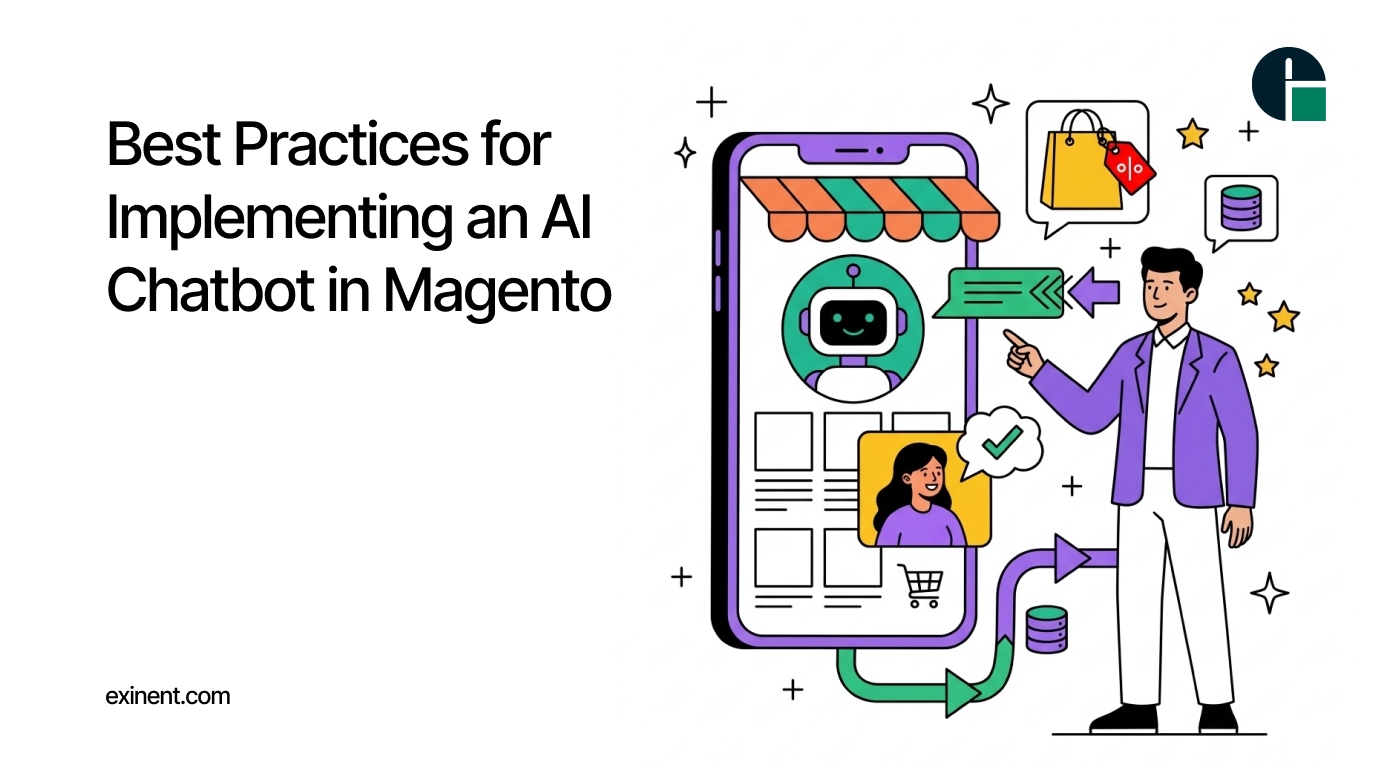
Artificial intelligence has transformed how eCommerce businesses interact with customers, and Magento stores are no exception. An AI chatbot can handle customer inquiries, recommend products, assist with order tracking, and provide instant support around the clock. However, simply installing a chatbot is not enough to achieve meaningful business results. Success depends on thoughtful planning, proper implementation, and continuous optimization.
If you’re planning to deploy a Magento AI Chatbot, following proven best practices will help improve customer experience, increase conversions, and reduce support costs. In this guide, we’ll explore the most effective strategies for implementing an AI chatbot in your Magento store.
Why Magento Stores Need an AI Chatbot
Modern online shoppers expect instant answers. Waiting hours for customer support can lead to abandoned carts and lost sales. AI chatbots bridge this gap by providing immediate assistance anytime customers visit your website.
A well-designed chatbot can:
- Answer frequently asked questions
- Recommend products based on customer preferences
- Help customers find products quickly
- Track orders and delivery status
- Recover abandoned carts
- Assist during checkout
- Reduce workload for support teams
When integrated properly, AI chatbots become valuable sales assistants instead of simple automated response systems. Research and industry guidance consistently show that well-trained chatbots improve response times, reduce repetitive support requests, and contribute to higher customer satisfaction when paired with clear escalation paths to human agents.
1. Define Clear Objectives Before Implementation
Before choosing any chatbot solution, identify what you want it to accomplish.
Common objectives include:
- Increasing online sales
- Reducing customer support tickets
- Improving product discovery
- Boosting customer engagement
- Providing multilingual support
- Automating order-related queries
Avoid trying to automate every customer interaction immediately. Start with high-volume, low-risk use cases, measure results, and expand gradually.
2. Choose the Right Magento AI Chatbot
Not every chatbot is built specifically for Magento. Select one that offers deep Magento integration instead of relying solely on generic website widgets.
Look for features such as:
- Product catalog synchronization
- Order management integration
- Customer account access
- Shopping cart support
- AI-powered product recommendations
- Multi-language capabilities
- CRM integration
- Analytics dashboard
A purpose-built Magento AI Chatbot delivers more accurate responses because it understands your store’s products, inventory, pricing, and customer information.
3. Train the Chatbot with Accurate Data
Even advanced AI performs poorly when trained on outdated or incomplete information.
Provide your chatbot with:
- Product descriptions
- Categories
- FAQs
- Shipping policies
- Return policies
- Payment information
- Warranty details
- Store policies
Update the chatbot regularly whenever products, promotions, or policies change. Accurate knowledge is one of the biggest factors influencing chatbot performance.
4. Create Natural Conversations
Customers expect conversations—not robotic scripts.
Instead of forcing users through rigid menus, allow natural language interactions.
For example:
Customer:
“I need running shoes under $100.”
Better chatbot response:
“Here are our top-rated running shoes below $100. Would you prefer men’s or women’s styles?”
Natural conversations create a smoother shopping experience and increase engagement.
5. Personalize Customer Interactions
AI becomes significantly more effective when it understands customer behavior.
Use Magento customer data to personalize conversations:
- Purchase history
- Browsing behavior
- Wishlist items
- Previous searches
- Customer location
- Preferred language
Personalized recommendations often lead to higher conversion rates because customers receive products relevant to their interests.
6. Make Human Handoff Easy
AI cannot solve every customer issue.
Complex problems involving refunds, complaints, or technical support should transfer seamlessly to human agents.
Customers should never feel trapped in an endless chatbot loop.
Best practices include:
- Live chat escalation
- Ticket creation
- Callback requests
- Email forwarding
- Agent availability indicators
A hybrid support model typically delivers the best customer experience.
7. Optimize for Mobile Users
A significant percentage of Magento traffic comes from smartphones.
Ensure your chatbot:
- Loads quickly
- Fits smaller screens
- Uses large buttons
- Supports voice input if available
- Doesn’t block important page elements
Mobile-friendly chatbot experiences help reduce friction during shopping.
8. Support Multiple Languages
If your Magento store serves international customers, multilingual support becomes essential.
AI chatbots can automatically detect customer language and provide localized conversations.
Benefits include:
- Better customer satisfaction
- Increased trust
- Higher international sales
- Reduced language barriers
This feature is particularly valuable for Magento stores operating across multiple countries.
9. Track Performance Metrics
Implementation isn’t complete after launch.
Monitor chatbot performance using metrics such as:
- Conversation completion rate
- Customer satisfaction (CSAT)
- Response time
- Cart recovery rate
- Conversion rate
- Escalation rate
- Support ticket reduction
Analytics reveal what customers ask most often and where the chatbot needs improvement.
10. Continuously Improve the Chatbot
AI chatbots learn over time, but they still require regular maintenance.
Review conversations weekly to identify:
- Unanswered questions
- Customer frustrations
- Failed searches
- New FAQ opportunities
- Product recommendation improvements
Small improvements made consistently can significantly enhance chatbot performance.
11. Protect Customer Data and Privacy
Security should never be overlooked.
Ensure your chatbot:
- Uses secure API connections
- Protects customer information
- Complies with privacy regulations
- Avoids exposing sensitive payment data
- Clearly informs users about data usage
Customers are more likely to trust AI when businesses are transparent about how conversations and personal information are handled.
12. Integrate with Other Business Tools
The best AI chatbot isn’t isolated—it connects with your existing business systems.
Useful integrations include:
- CRM software
- ERP systems
- Email marketing platforms
- Inventory management
- Helpdesk software
- Payment systems
- Shipping providers
These integrations enable the chatbot to deliver real-time information and automate routine tasks.
Common Mistakes to Avoid
Many Magento merchants encounter similar issues when deploying AI chatbots.
Avoid these common mistakes:
- Launching without clear goals
- Using outdated product information
- Ignoring chatbot analytics
- Making conversations overly complex
- Not providing human support options
- Failing to test before going live
- Neglecting mobile optimization
- Over-automating every customer interaction
Learning from these pitfalls can save time and improve customer satisfaction.
Final Thoughts
Implementing an AI chatbot in a Magento store is more than adding another customer support tool—it’s about creating a smarter, faster, and more personalized shopping experience. By defining clear objectives, training the chatbot with accurate data, personalizing conversations, integrating with Magento and other business tools, and continuously optimizing performance, you can maximize the value of your AI investment.
As customer expectations continue to evolve, businesses that adopt AI thoughtfully will be better positioned to improve customer satisfaction, streamline operations, and drive higher sales. A well-implemented Magento AI chatbot can become a powerful digital assistant that supports both your customers and your business around the clock.
FAQ’S :
What are the best practices for implementing an AI chatbot in a Magento store?
Start by defining clear goals, such as reducing support tickets or increasing sales. Train the chatbot with accurate product and store information, integrate it with Magento, and test it before launch. Regularly review conversations and update responses based on customer feedback.
How do I integrate an AI chatbot with my Magento store?
Most AI chatbots connect through Magento extensions or APIs. The process usually includes installing the chatbot, connecting it to your Magento database, configuring workflows, and testing customer interactions. A typical setup can take a few hours to several days, depending on complexity.
Why should I train my Magento AI chatbot with product data?
Training the chatbot with product catalogs, FAQs, shipping details, and return policies helps it provide accurate answers. This reduces incorrect responses and improves customer satisfaction. Regular updates ensure the chatbot reflects new products and policy changes.
What are the common mistakes to avoid when implementing a Magento AI chatbot?
Common mistakes include launching without testing, using outdated product information, ignoring customer feedback, and failing to provide a human support option. Another mistake is trying to automate every conversation instead of handling only suitable tasks. Continuous monitoring helps prevent these issues.
How much does it cost to implement an AI chatbot for a Magento store?
Costs vary depending on the chatbot platform, customization, and integrations. Basic solutions may start at around $20–$100 per month, while advanced AI chatbots with custom features can cost several thousand dollars for setup and ongoing maintenance. Always consider long-term support costs.
Can an AI chatbot improve sales and conversions in a Magento store?
Yes. AI chatbots can recommend products, answer buying questions instantly, recover abandoned carts, and guide shoppers through checkout. Studies show that faster customer support and personalized recommendations can increase conversion rates and average order value.
Is it important to connect a Magento AI chatbot with CRM and other business tools?
Yes. Integrating the chatbot with CRM, ERP, inventory, and order management systems allows it to provide personalized and real-time responses. Customers can check order status, product availability, and account details without waiting for support agents.
How do I measure the success of an AI chatbot in Magento?
Track key metrics such as chatbot resolution rate, response time, customer satisfaction (CSAT), conversion rate, and support ticket reduction. Compare these metrics before and after implementation. Regular performance reviews help identify areas for improvement.
Should a Magento AI chatbot replace human customer support?
No. An AI chatbot works best as the first level of support by handling repetitive questions and simple tasks. Complex issues, complaints, or technical problems should be transferred to human agents. This hybrid approach improves both efficiency and customer experience.
How often should I update and optimize my Magento AI chatbot?
Review chatbot performance at least once a month. Update product information, pricing, promotions, FAQs, and conversation flows whenever your store changes. Regular optimization improves response accuracy and keeps the chatbot relevant to customer needs.