
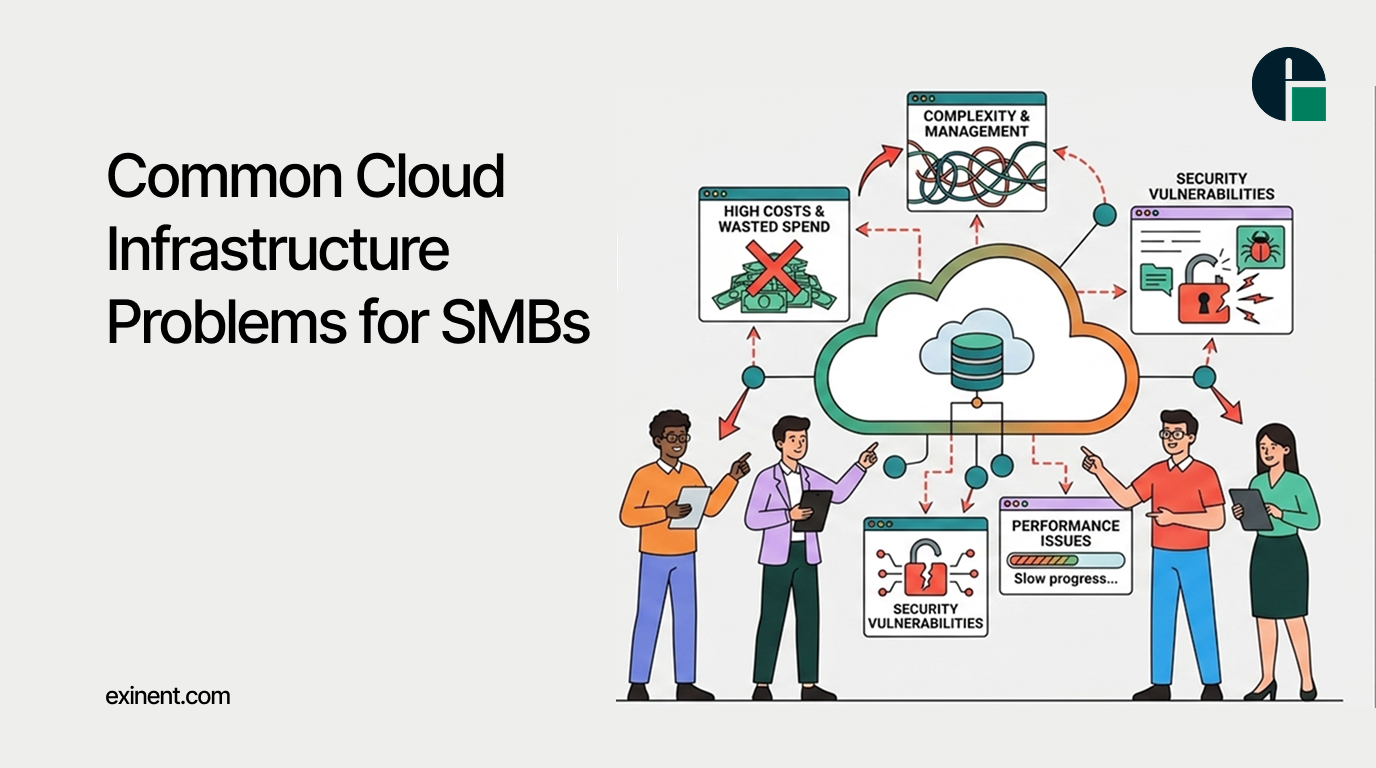
Cloud computing has transformed how small and medium-sized businesses (SMBs) operate, offering scalability, flexibility, and cost-efficiency. However, while the cloud promises many advantages, SMBs often face significant infrastructure challenges that can impact performance, security, and overall business growth.
In this blog, we’ll explore the most common cloud infrastructure problems for SMBs, their impact, and practical solutions based on industry best practices—aligned
What Is Cloud Infrastructure?
Cloud infrastructure refers to the virtual components—servers, storage, networking, and software—that are hosted and managed in cloud environments such as AWS, Azure, or Google Cloud.
For SMBs, cloud infrastructure eliminates the need for expensive on-premise hardware and provides on-demand access to resources. However, managing this infrastructure effectively requires expertise and planning.
Key Benefits of Cloud Infrastructure for SMBs
Before diving into the challenges, it’s important to understand why SMBs adopt cloud solutions:
- Cost Efficiency: Pay-as-you-go pricing reduces upfront investment
- Scalability: Easily scale resources up or down based on demand
- Remote Accessibility: Access systems from anywhere
- Improved Collaboration: Teams can work seamlessly across locations
- Business Continuity: Built-in disaster recovery options
Despite these benefits, improper implementation can lead to serious issues.
Also Read :
What is IT Infrastructure Managed Services? Benefits for Businesses
Managed IT Services for Small Businesses: Benefits, Features, and Importance
Common Cloud Infrastructure Problems for SMBs
1. Poor Cloud Cost Management
Many SMBs underestimate cloud costs. Without proper monitoring, expenses can quickly spiral out of control due to unused resources, over-provisioning, or inefficient configurations.
Solution:
- Implement cost monitoring tools
- Use auto-scaling and right-sizing strategies
- Regularly audit cloud usage
2. Security Vulnerabilities
Cloud environments are frequent targets for cyberattacks. Misconfigured storage, weak access controls, and lack of encryption can expose sensitive business data.
Solution:
- Use multi-factor authentication (MFA)
- Encrypt data at rest and in transit
- Conduct regular security audits
- Partner with experts like Managed IT Services to ensure compliance and protection
3. Lack of Skilled IT Resources
Many SMBs lack in-house expertise to manage cloud infrastructure effectively. This leads to misconfigurations, downtime, and inefficiencies.
Solution:
- Train internal teams on cloud technologies
- Outsource to experienced providers
- Leverage automation tools to reduce manual effort
4. Downtime and Reliability Issues
Even minor downtime can impact SMB operations, leading to lost revenue and customer dissatisfaction.
Solution:
- Choose reliable cloud providers with strong SLAs
- Implement redundancy and failover systems
- Monitor performance in real-time
5. Data Loss and Backup Failures
Without proper backup strategies, SMBs risk losing critical data due to accidental deletion, cyberattacks, or system failures.
Solution:
- Implement automated backups
- Use multi-region storage
- Regularly test disaster recovery plans
6. Integration Challenges
SMBs often use multiple tools and platfor ms. Integrating them into a cloud environment can be complex and time-consuming.
Solution:
- Use APIs and integration platforms
- Standardize tools where possible
- Work with cloud specialists to streamline processes
7. Compliance and Regulatory Issues
Different industries require strict compliance with data protection regulations. Failure to comply can result in penalties and legal issues.
Solution:
- Understand industry-specific regulations
- Maintain proper documentation
- Use trusted providers like Managed IT Services to stay compliant
Best Practices for SMB Cloud Infrastructure
To overcome these challenges, SMBs should adopt the following best practices:
1. Develop a Clear Cloud Strategy
Define your business goals, workload requirements, and budget before migrating to the cloud.
2. Choose the Right Cloud Model
Decide between public, private, or hybrid cloud based on your needs.
3. Implement Strong Security Measures
Security should be a top priority from day one.
4. Monitor and Optimize Performance
Use analytics tools to track performance and identify inefficiencies.
5. Partner with Experts
Working with experienced IT providers ensures better management, security, and scalability.
Conclusion
Cloud infrastructure offers tremendous opportunities for SMBs, but it also comes with challenges that cannot be ignored. From cost overruns to security vulnerabilities, these issues can hinder business growth if not addressed properly.
By adopting best practices, investing in the right tools, and partnering with trusted providers, SMBs can fully leverage the power of the cloud while minimizing risks.
For businesses looking to simplify cloud management and improve performance, leveraging professional Managed IT Services is a smart and scalable solution.
FAQ’S :
What are the most common cloud infrastructure problems for SMBs?
Small and medium-sized businesses often face cloud issues like high costs, downtime, security risks, poor performance, and limited in-house expertise. Many SMBs also struggle with data migration and managing multiple cloud platforms. These problems can slow business operations and reduce productivity.
Why do SMBs face cloud security issues?
SMBs commonly face cloud security problems because of weak access controls, outdated software, or poor configuration settings. Cyberattacks like ransomware and phishing also target smaller businesses. Using multi-factor authentication and regular security audits can reduce risks significantly.
How can poor cloud management affect small business growth?
Poor cloud management can increase downtime, slow application performance, and create unnecessary costs. It may also cause data loss or compliance issues. These problems make it harder for SMBs to scale operations efficiently and serve customers effectively.
What causes unexpected cloud computing costs for SMBs?
Unexpected cloud costs often come from unused resources, overprovisioned storage, or lack of monitoring tools. SMBs may also pay extra for data transfers and premium services. Regular cost audits and automated scaling help control cloud spending.
How do SMBs solve cloud downtime and performance issues?
SMBs can reduce downtime by using reliable cloud providers, backup systems, and performance monitoring tools. Load balancing and content delivery networks also improve speed and reliability. Regular maintenance helps prevent outages and service interruptions.
Is multi-cloud management difficult for small businesses?
Yes, managing multiple cloud platforms can be challenging for SMBs without dedicated IT teams. Different providers may use separate tools, pricing models, and security settings. Centralized cloud management platforms can simplify operations and improve visibility.
What are the biggest cloud migration challenges for SMBs?
Common cloud migration problems include data loss risks, application compatibility issues, and downtime during transfer. Many SMBs also underestimate migration costs and timelines. A planned migration strategy with testing and backups reduces these risks.
How can SMBs improve cloud infrastructure security?
SMBs can strengthen cloud security by enabling multi-factor authentication, encrypting data, and limiting user access. Regular software updates and employee cybersecurity training are also important. Many businesses also use managed security services for added protection.
What are the best practices for managing cloud infrastructure in SMBs?
Best practices include monitoring cloud usage, automating backups, and optimizing resource allocation regularly. SMBs should also review security settings and update compliance policies frequently. Working with experienced cloud consultants can improve long-term performance and scalability.
Are cloud infrastructure problems expensive for small businesses?
Yes, cloud infrastructure issues can become costly if ignored. Downtime, security breaches, and inefficient resource usage may lead to revenue loss and higher operational expenses. Preventive maintenance and proper cloud planning usually cost less than fixing major failures later.