
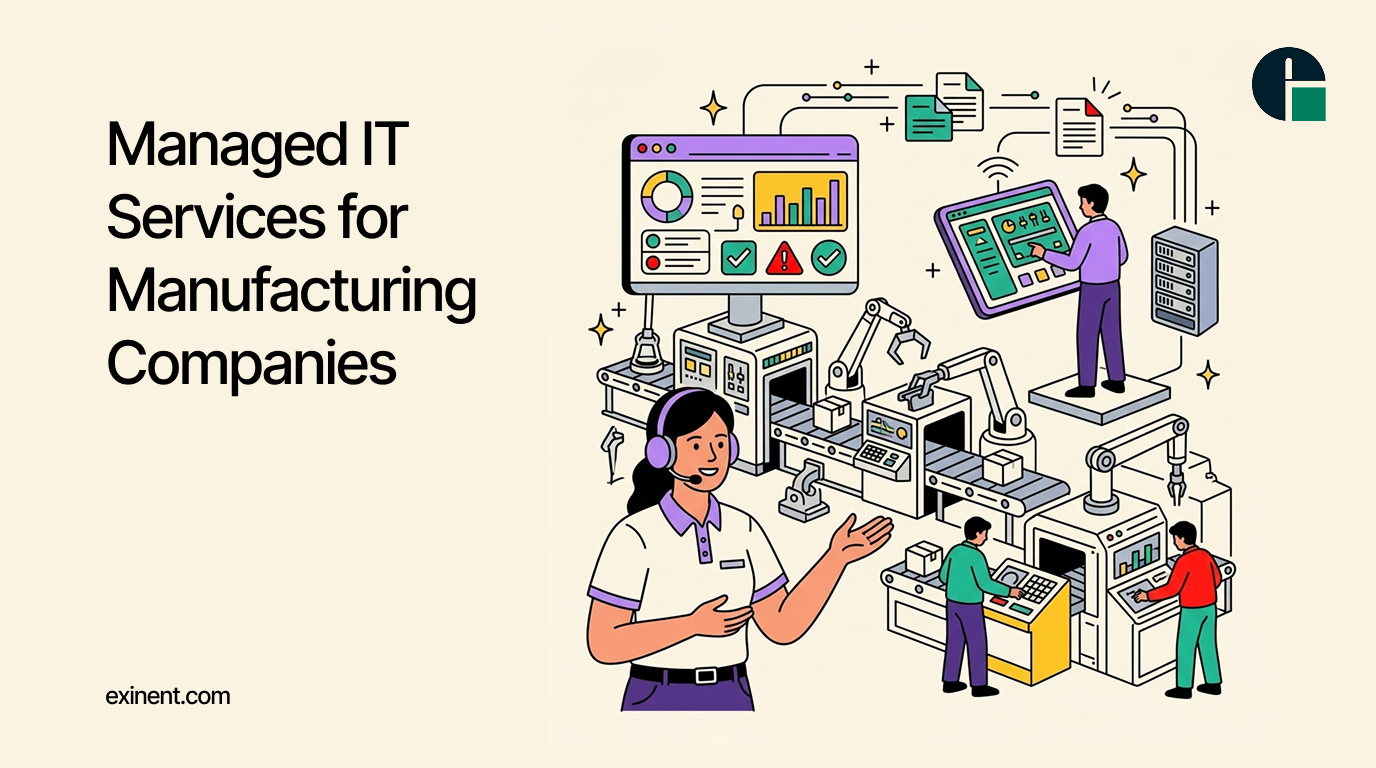
The manufacturing industry is evolving rapidly with the adoption of automation, Industrial IoT (IIoT), cloud technologies, and data-driven decision-making. As manufacturers embrace digital transformation, managing complex IT environments has become increasingly challenging. This is where Managed IT Services play a critical role in helping manufacturing companies maintain operational efficiency, improve cybersecurity, and reduce downtime.
Modern manufacturing facilities rely heavily on interconnected systems, production software, enterprise resource planning (ERP) platforms, and smart devices. Any disruption to these technologies can lead to production delays, revenue losses, and customer dissatisfaction. Partnering with a reliable managed service provider (MSP) allows manufacturers to focus on production and innovation while experts handle their IT infrastructure. Manufacturing companies increasingly use managed services to address challenges such as cybersecurity, network stability, compliance requirements, and technology integration.
Why Manufacturing Companies Need Managed IT Services
Manufacturing organizations face unique IT challenges that differ from other industries. Production lines often operate around the clock, making system availability a top priority. Even a brief outage can disrupt operations and impact profitability.
Managed IT service providers offer proactive monitoring, maintenance, and support to ensure critical systems remain operational. Rather than waiting for issues to occur, MSPs identify and resolve potential problems before they affect production. This proactive approach significantly reduces downtime and improves overall productivity. Continuous monitoring and preventive maintenance are widely recognized benefits of managed services in manufacturing environments.
Key Benefits of Managed IT Services for Manufacturers
1. Reduced Downtime and Increased Productivity
Downtime is one of the most expensive challenges manufacturers face. Production interruptions can affect delivery schedules, customer satisfaction, and revenue generation.
Managed IT services provide 24/7 monitoring of networks, servers, applications, and production-related systems. Potential issues are detected early, minimizing disruptions and ensuring smoother operations. Around-the-clock monitoring and support help manufacturing businesses maintain continuous operations and reduce costly interruptions.
2. Enhanced Cybersecurity Protection
Manufacturing companies are increasingly targeted by cybercriminals because they store valuable intellectual property, production data, and customer information. Cyberattacks can halt production and result in significant financial losses.
MSPs implement comprehensive cybersecurity measures, including threat detection, endpoint protection, vulnerability management, security monitoring, and incident response. They also help manufacturers stay ahead of evolving cyber threats by continuously updating security controls and policies. Stronger cybersecurity is one of the primary reasons manufacturers invest in managed IT services.
3. Predictable IT Costs
Building and maintaining an in-house IT team can be expensive. Recruiting skilled professionals, investing in training, and purchasing specialized tools often place a significant burden on manufacturing companies.
Managed IT services provide access to a team of experts for a predictable monthly fee. This subscription-based model helps manufacturers control costs while benefiting from enterprise-grade IT support and expertise. Predictable budgeting and reduced staffing costs are among the major advantages of managed service partnerships.
4. Support for Industry 4.0 Initiatives
Industry 4.0 technologies such as IoT devices, automation systems, artificial intelligence, and advanced analytics are transforming manufacturing operations. However, integrating and managing these technologies requires specialized expertise.
MSPs help manufacturers implement and maintain smart manufacturing solutions, ensuring reliable connectivity, secure data exchange, and optimized performance. Managed IT services support digital transformation efforts by enabling the adoption of advanced technologies while minimizing operational risks.
5. Compliance and Risk Management
Many manufacturing companies must comply with industry regulations, cybersecurity standards, and customer requirements. Managing compliance can be complex and time-consuming.
Managed service providers help organizations implement security controls, maintain documentation, and prepare for audits. This reduces compliance risks and ensures businesses meet industry-specific requirements without diverting resources from core operations. Compliance support is increasingly becoming a critical component of managed IT services.
Essential Managed IT Services for Manufacturing Companies
Manufacturers should look for service providers that offer a comprehensive suite of IT solutions, including:
- Network monitoring and management
- Cybersecurity services
- Cloud infrastructure management
- Data backup and disaster recovery
- Help desk and technical support
- ERP and manufacturing software support
- Infrastructure maintenance
- Compliance and risk management
- IoT device management
- Business continuity planning
A reliable MSP should customize these services to align with the specific needs of the manufacturing environment and production processes. Manufacturing-focused managed services often include cloud support, cybersecurity, disaster recovery, and operational technology integration.
Choosing the Right Managed IT Service Provider
Not all MSPs have experience working with manufacturing organizations. When selecting a provider, manufacturers should evaluate industry expertise, service-level agreements (SLAs), response times, cybersecurity capabilities, and scalability.
Look for a provider that understands manufacturing workflows and can support both IT and operational technology (OT) environments. The right partner should act as a strategic advisor, helping your organization leverage technology to achieve long-term business goals.
For manufacturers seeking a trusted technology partner, investing in professional Managed IT Services can significantly improve operational resilience and business performance. Additionally, organizations should prioritize providers offering comprehensive IT Support Services that align with manufacturing-specific requirements and future growth objectives.
Also Read :
Managed IT Services for Small Businesses – Benefits, Features, and Importance
Why Managed IT Services Are a Smart Investment for Small Businesses?
Conclusion
As manufacturing continues to embrace digital transformation, reliable IT infrastructure has become a business necessity. Managed IT services help manufacturers reduce downtime, strengthen cybersecurity, optimize costs, and support innovation. By partnering with an experienced MSP, manufacturing companies can focus on production excellence while ensuring their technology environment remains secure, scalable, and efficient.
In an increasingly competitive market, managed IT services are no longer just a support function—they are a strategic investment that enables manufacturing companies to achieve sustainable growth and operational success.
FAQ’S :
What are Managed IT Services for manufacturing companies?
Managed IT Services for manufacturing companies are outsourced IT support solutions that help manage networks, cybersecurity, cloud systems, devices, and software. A managed service provider (MSP) monitors and maintains IT infrastructure to reduce downtime and improve operational efficiency.
How do Managed IT Services help manufacturing businesses?
Managed IT Services help manufacturers improve system reliability, strengthen cybersecurity, and reduce unexpected downtime. They also provide proactive monitoring, software updates, and technical support to keep production systems running smoothly.
What are the benefits of Managed IT Services for manufacturing companies?
Key benefits include improved cybersecurity, predictable IT costs, 24/7 monitoring, faster issue resolution, and reduced downtime. Manufacturers can focus on production while IT experts handle technology management and support.
How much do Managed IT Services cost for a manufacturing company?
Costs vary based on company size, number of users, devices, and service requirements. Many providers charge a monthly fee ranging from $100 to $300 per user, while larger manufacturing environments may require custom pricing.
Are Managed IT Services worth it for small and mid-sized manufacturers?
Yes, Managed IT Services can be cost-effective for small and mid-sized manufacturers. They provide access to experienced IT professionals without the expense of hiring a full in-house IT team, helping businesses control costs and improve security.
How do Managed IT Services improve cybersecurity in manufacturing?
Managed IT providers implement firewalls, endpoint protection, multi-factor authentication, security monitoring, and regular updates. These measures help protect manufacturing systems from ransomware, phishing attacks, and other cyber threats.
Can Managed IT Services support manufacturing software and ERP systems?
Yes, many Managed IT providers support ERP platforms, inventory management software, production systems, and other manufacturing applications. They help ensure these systems remain updated, secure, and optimized for performance.
What should manufacturers look for in a Managed IT Services provider?
Manufacturers should look for industry experience, 24/7 support, cybersecurity expertise, proactive monitoring, disaster recovery planning, and clear service-level agreements (SLAs). A provider familiar with manufacturing operations can better address industry-specific challenges.
How do Managed IT Services reduce downtime in manufacturing operations?
Managed IT providers use proactive monitoring to detect and resolve issues before they become major problems. Regular maintenance, backups, and rapid response support help minimize disruptions and keep production lines operational.
What are the risks of not using Managed IT Services in manufacturing?
Without managed IT support, manufacturers may face increased downtime, security vulnerabilities, data loss, and higher repair costs. Unmanaged systems are more likely to experience outages that can impact production schedules and revenue.