
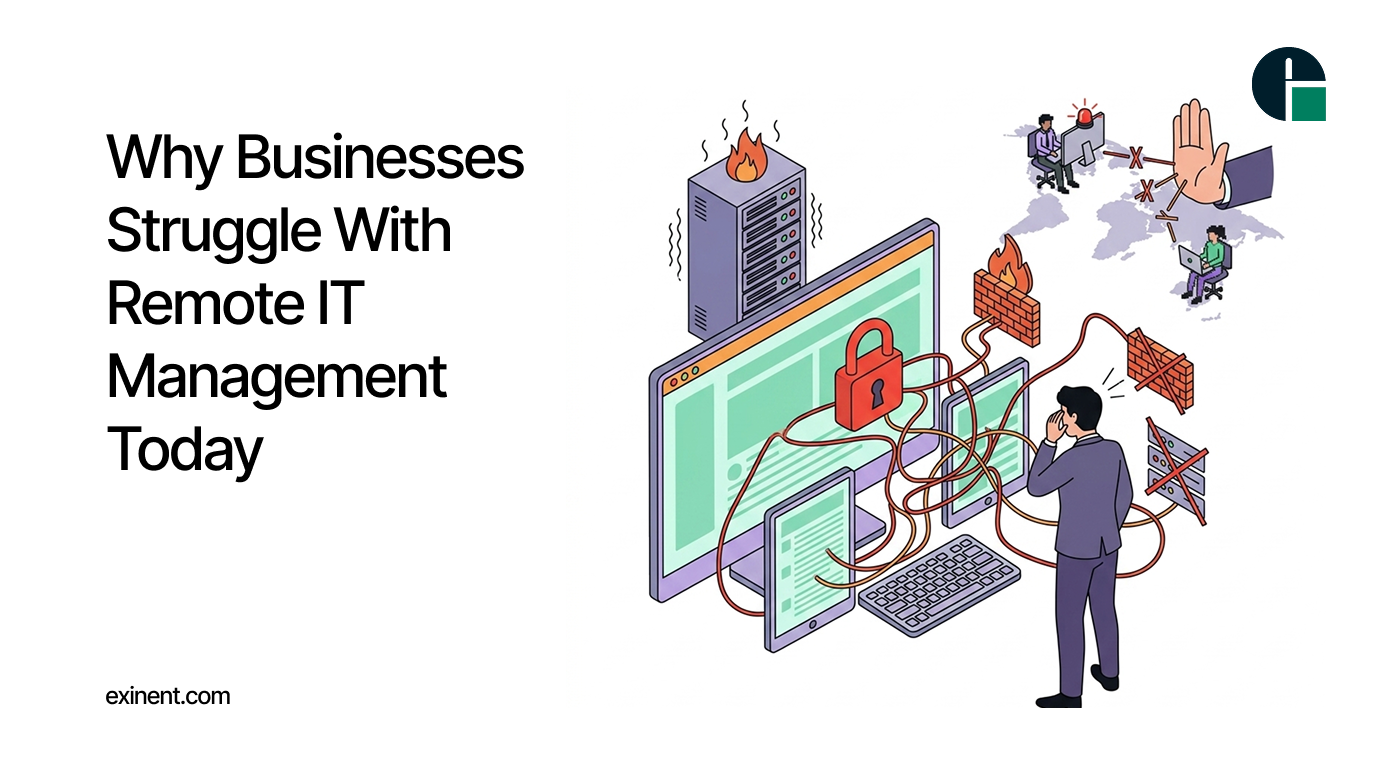
In today’s digital-first world, remote work is no longer a trend—it’s the norm. Companies across industries are adopting distributed teams to improve flexibility, reduce costs, and access global talent. However, while remote work offers many advantages, managing IT infrastructure remotely has introduced a new set of challenges. Many businesses struggle to maintain efficiency, security, and performance when their IT systems are no longer centralized.
This blog explores why businesses face difficulties with remote IT management, the impact on operations, and how adopting the right strategies—such as leveraging Managed IT Services—can help overcome these obstacles.
What Is Remote IT Management?
Remote IT management refers to the process of monitoring, maintaining, and supporting an organization’s IT systems, networks, and devices from a remote location. This includes tasks such as:
- Network monitoring
- Cybersecurity management
- Software updates and patching
- Helpdesk support
- Data backup and recovery
While this model supports remote work environments, it also requires robust tools, processes, and expertise to function effectively.
Benefits of Remote IT Management
Despite its challenges, remote IT management provides several advantages:
1. Cost Efficiency
- Reduces the need for on-site IT staff
- Minimizes infrastructure and maintenance costs
2. Flexibility and Scalability
- Supports remote and global teams
- Easily scales with business growth
3. Faster Issue Resolution
- Enables quick troubleshooting through remote access
- Reduces downtime and improves productivity
4. Access to Global Talent
- Businesses can hire IT experts from anywhere
- Improves service quality and innovation
Key Challenges Businesses Face
1. Lack of Visibility and Control
One of the biggest issues is the lack of real-time visibility into IT systems. When devices and networks are spread across multiple locations, it becomes difficult to monitor performance and identify issues quickly.
- Limited oversight of employee devices
- Difficulty tracking system updates
- Delayed response to technical problems
Without proper monitoring tools, small issues can escalate into major disruptions.
2. Cybersecurity Risks
Remote work environments are more vulnerable to cyber threats. Employees often use personal devices or unsecured networks, increasing the risk of data breaches.
Common security challenges include:
- Weak passwords and poor authentication practices
- Unsecured Wi-Fi connections
- Phishing and malware attacks
- Lack of endpoint protection
Businesses must invest in strong cybersecurity measures or risk losing sensitive data and customer trust.
3. Inconsistent IT Support
Providing timely IT support to a distributed workforce can be challenging. Employees working in different time zones may face delays in resolving technical issues.
- Slow response times
- Communication gaps
- Limited access to on-site troubleshooting
This can lead to reduced productivity and frustration among employees.
4. Integration and Compatibility Issues
Remote environments often involve a mix of devices, operating systems, and software tools. Ensuring compatibility and seamless integration across platforms can be complex.
- Legacy systems may not support remote access
- Software conflicts can disrupt workflows
- Difficulty in maintaining standardization
Without a unified IT strategy, businesses may face operational inefficiencies.
5. Data Management and Backup Challenges
Managing data remotely requires secure storage, regular backups, and compliance with data protection regulations.
Key concerns include:
- Data loss due to system failures
- Lack of centralized backup systems
- Compliance with regulations like GDPR
Organizations need reliable data management solutions to ensure business continuity.
6. Limited IT Expertise
Many small and medium-sized businesses lack the in-house expertise required to manage remote IT systems effectively.
- Difficulty hiring skilled IT professionals
- High costs of maintaining an internal IT team
- Limited knowledge of advanced technologies
This often results in reactive rather than proactive IT management.
Also Read :
Why Cybersecurity Is Essential for Remote Work Environments
Cloud Migration Best Practices for Growing Businesses
How Managed IT Services Improve Business Productivity
Best Practices to Overcome Remote IT Challenges
Businesses can overcome these challenges by adopting the right strategies:
1. Invest in Managed IT Services
Partnering with experts can simplify remote IT management. Professional providers offer proactive monitoring, security, and support.
Learn more about Managed IT Services by Exinent. Explore benefits of Managed IT Services for your business.
2. Strengthen Cybersecurity
- Implement multi-factor authentication (MFA)
- Use endpoint protection tools
- Encrypt sensitive data
- Apply zero-trust security models
3. Use Centralized IT Management Tools
Adopt platforms that provide:
- Real-time monitoring
- Remote troubleshooting
- Automated alerts
This improves visibility and control over systems.
4. Automate Routine Tasks
Automation helps reduce manual workload:
- Automatic patch updates
- Scheduled system checks
- AI-driven monitoring
This allows IT teams to focus on strategic tasks.
5. Improve Communication
- Use collaboration tools
- Provide clear reporting guidelines
- Enable screen-sharing for troubleshooting
Better communication speeds up issue resolution.
6. Provide Employee Training
Educate employees on:
- Cybersecurity best practices
- Remote tools usage
- Basic troubleshooting steps
This reduces IT dependency and improves efficiency.
Conclusion
Remote IT management is essential for modern businesses, but it comes with significant challenges. From cybersecurity risks to lack of visibility and limited expertise, these issues can hinder growth and efficiency.
However, with the right strategies and support systems in place, businesses can overcome these obstacles. Leveraging professional solutions like Managed IT Services not only simplifies IT operations but also ensures long-term success.
By adopting a proactive and strategic approach, organizations can turn remote IT management from a struggle into a competitive advantage—building a secure, scalable, and future-ready business.
FAQ’S :
Why do businesses struggle with remote IT management?
Many businesses struggle with remote IT management because teams work across different locations, devices, and networks. This makes it harder to monitor systems, manage updates, and fix issues quickly. Limited visibility and inconsistent security policies also increase operational risks.
What are the biggest challenges of managing remote IT teams?
The biggest challenges include cybersecurity threats, communication gaps, device management, and system downtime. Businesses also face difficulties tracking employee productivity and maintaining secure access to company data. Poor coordination can slow down IT support response times.
How does poor remote IT management affect business productivity?
Poor remote IT management can reduce productivity by causing network issues, software failures, and delayed technical support. Employees may lose hours waiting for access or troubleshooting problems. Frequent downtime can also disrupt customer service and daily operations.
Why is cybersecurity harder in remote IT environments?
Cybersecurity is harder because remote employees often use personal devices and home networks that may not be fully secure. This increases the risk of phishing attacks, ransomware, and unauthorized access. Businesses must manage multiple endpoints outside the office network.
What tools help businesses improve remote IT management?
Businesses commonly use remote monitoring tools, cloud management platforms, VPNs, help desk software, and endpoint security solutions. These tools help IT teams monitor devices, deploy updates, and resolve issues remotely. Automation also improves response time and reduces manual tasks.
How much does remote IT management cost for small businesses?
Remote IT management costs vary based on company size, devices, and support requirements. Small businesses typically spend between $100 and $250 per user monthly for managed IT services. Costs may increase with advanced cybersecurity or 24/7 monitoring support.
Can managed IT services solve remote IT management problems?
Yes, managed IT services can help businesses handle remote IT challenges more effectively. Providers offer continuous monitoring, cybersecurity protection, software updates, and remote support. This reduces downtime and allows internal teams to focus on core business operations.
What are the risks of not having a remote IT management strategy?
Without a clear strategy, businesses face higher risks of data breaches, system outages, and compliance issues. Poor IT management can also lead to lost productivity and increased operational costs. Inconsistent support may negatively impact employee and customer experience.
How can businesses make remote IT management more efficient?
Businesses can improve efficiency by standardizing devices, using cloud-based systems, and automating software updates. Regular cybersecurity training and clear IT policies also help reduce risks. Centralized monitoring tools make it easier to manage remote teams and systems.
Is remote IT management important for business scalability?
Yes, remote IT management is essential for scaling modern businesses. It allows companies to support remote employees, expand operations, and manage systems from multiple locations. Efficient IT infrastructure helps businesses grow without major disruptions or excessive costs.