
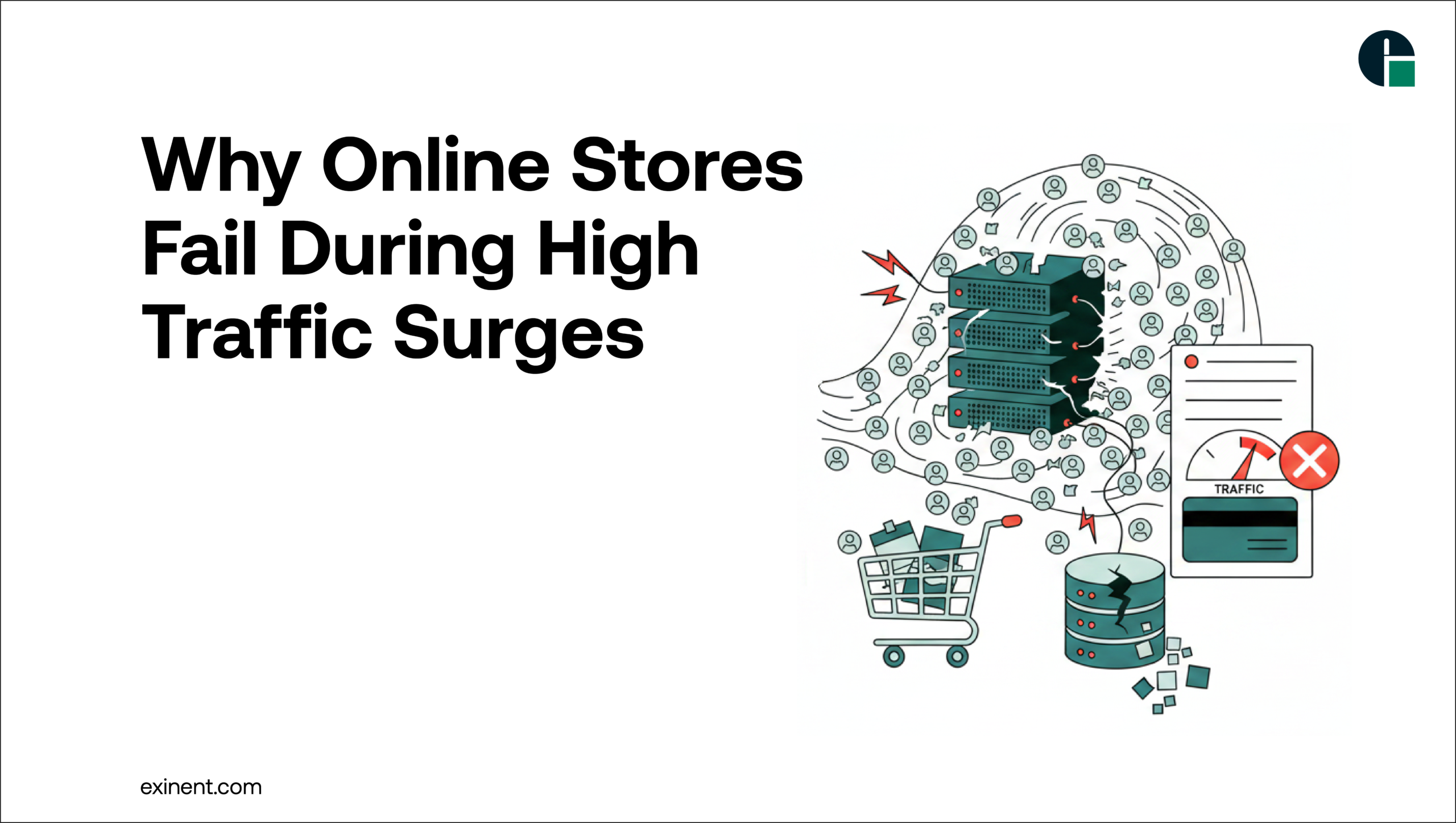
Online stores often fail during high-traffic events because their infrastructure, hosting, and website optimization are not prepared to handle sudden spikes in visitors. Issues such as slow servers, poor scalability, weak security, and unoptimized code can cause downtime or extremely slow performance. Businesses can prevent these failures by using scalable cloud hosting, performance optimization, and professional E-commerce Development Services.
Introduction
High-traffic events such as holiday sales, product launches, flash sales, and promotional campaigns are major opportunities for online retailers. However, these moments can also expose technical weaknesses in an eCommerce website.
When thousands or even millions of users visit an online store at the same time, the website must process large numbers of requests, handle transactions, and maintain fast page load speeds. If the system is not prepared, the result can be website crashes, slow loading pages, or failed checkouts.
These failures can lead to lost revenue, frustrated customers, and long-term damage to brand reputation. Understanding why online stores fail during peak traffic events and how to prevent it is essential for every digital business.
Understanding High Traffic Events in eCommerce
High traffic events occur when a website receives a sudden surge of visitors within a short period of time. Common examples include:
- Black Friday and Cyber Monday sales
- Flash sales and limited-time offers
- New product launches
- Influencer promotions or viral marketing campaigns
- Holiday shopping seasons
While increased traffic is a positive sign of customer interest, it can overwhelm poorly optimized eCommerce platforms.
Common Reasons Online Stores Fail During High Traffic
1. Insufficient Server Capacity
One of the most common reasons online stores fail is limited server resources. Shared hosting environments or low-capacity servers cannot handle thousands of simultaneous users.
When server resources such as CPU, RAM, and bandwidth are exceeded, websites slow down or completely crash.
Solution:
Use scalable cloud hosting or load-balanced infrastructure that can automatically handle traffic spikes.
2. Poor Website Performance Optimization
Large images, heavy scripts, unoptimized code, and inefficient database queries can slow down a website significantly.
During high traffic, these inefficiencies multiply, resulting in slow page loads and checkout failures.
Best Practices:
- Compress images
- Minify CSS and JavaScript
- Use caching mechanisms
- Optimize database queries
Professional E-commerce Development Services can help ensure the platform is optimized for performance and scalability.
3. Lack of Scalable Infrastructure
Many online stores are built without planning for future growth. When traffic suddenly increases, the infrastructure cannot scale quickly enough.
For example, static hosting setups without auto-scaling capabilities may fail during sudden demand spikes.
Solution:
- Use cloud platforms with auto-scaling
- Implement Content Delivery Networks (CDNs)
- Use containerized environments for better scalability
4. Database Overload
eCommerce websites rely heavily on databases for product information, user accounts, and transaction processing.
During peak traffic, a large number of simultaneous queries can overload the database server. This can lead to slow product searches, delayed checkouts, or complete service outages.
Solutions include:
- Database indexing
- Query optimization
- Database caching
- Using distributed databases
These improvements are often implemented by experienced developers offering E-commerce Development Services to ensure high-performance online stores.
5. Inefficient Checkout Processes
Checkout pages require multiple processes such as cart validation, payment processing, inventory updates, and order confirmations.
If the checkout system is not optimized, high traffic can cause payment failures, transaction delays, or incomplete orders.
Best practices include:
- Simplifying checkout steps
- Using optimized payment gateways
- Implementing queue systems during peak demand
6. Security Attacks During Traffic Spikes
High-traffic events often attract cyberattacks such as Distributed Denial of Service (DDoS) attacks.
Hackers may attempt to overwhelm servers with malicious traffic during major sales events, leading to downtime or performance issues.
Prevention measures include:
- Web Application Firewalls (WAF)
- DDoS protection services
- Security monitoring systems
Security preparation is a key part of reliable E-commerce Development Services.
7. Lack of Load Testing
Many businesses launch promotional campaigns without testing how their website performs under heavy traffic conditions.
Without load testing, it is difficult to predict how the website will behave when thousands of users access it simultaneously.
Load testing tools help businesses:
- Simulate high traffic scenarios
- Identify performance bottlenecks
- Optimize server infrastructure before major events
Impact of Website Failures During High Traffic
When an online store fails during peak demand, the consequences can be significant.
Revenue Loss
Every minute of downtime during major sales events can result in thousands of dollars in lost sales.
Poor Customer Experience
Slow or unresponsive websites frustrate customers and may push them to competitors.
Brand Reputation Damage
Repeated failures during promotions can reduce customer trust and loyalty.
Reduced Search Engine Rankings
Search engines may lower rankings for websites with poor performance and high bounce rates.
How Businesses Can Prevent Website Failures
To ensure reliability during traffic spikes, businesses should adopt the following strategies:
Use Scalable Hosting Infrastructure
Cloud hosting platforms can automatically scale server resources based on demand.
Implement Content Delivery Networks
CDNs distribute website content across global servers, reducing load on the main server.
Optimize Website Performance
Regular performance optimization ensures faster page load speeds even during peak traffic.
Conduct Load Testing
Simulating traffic spikes helps identify potential issues before real customers experience them.
Work with Experienced Developers
Partnering with experts in E-commerce Development Services ensures the website is built with performance, scalability, and security in mind.
Conclusion
High-traffic events represent huge revenue opportunities for online businesses, but they also test the strength of an eCommerce platform. Without proper infrastructure, performance optimization, and security measures, online stores can quickly fail when demand increases.
Businesses that invest in scalable technology, performance optimization, and professional development support can successfully handle traffic spikes and deliver a smooth shopping experience to customers.
By preparing your online store for peak demand with reliable E-commerce Development Services, you can transform high-traffic events into profitable and successful sales opportunities.
FAQ’S :
What causes online stores to crash during high traffic events?
Online stores usually fail due to server overload, poor hosting infrastructure, or lack of scalability. When traffic spikes beyond capacity, servers can’t process requests fast enough. This leads to slow loading or complete downtime. Proper load balancing and cloud scaling can prevent this.
How does high traffic affect website performance in eCommerce?
High traffic increases server requests, database queries, and bandwidth usage. If not optimized, it slows down page speed and checkout processes. Even a 1–2 second delay can reduce conversions significantly. Performance optimization and caching help handle this load.
Why do some eCommerce websites slow down instead of crashing?
Some sites don’t crash but become very slow due to limited resources. This happens when servers try to handle traffic without proper scaling. Slow performance still hurts user experience and sales. It often leads to cart abandonment rates increasing by 20–40%.
What are the biggest technical issues during peak traffic sales?
Common issues include server downtime, database overload, payment gateway failures, and unoptimized code. Poor caching and lack of CDN usage also contribute. These problems create bottlenecks under heavy traffic. Regular stress testing helps identify and fix them.
How can I prepare my online store for high traffic events like sales?
You should use scalable cloud hosting, enable CDN, and optimize images and code. Load testing before events helps simulate real traffic conditions. Also, ensure your checkout and payment systems are optimized. Monitoring tools can alert you to issues in real time.
Is shared hosting a reason for eCommerce site failure during traffic spikes?
Yes, shared hosting limits resources because multiple websites use the same server. During traffic spikes, your store may not get enough CPU or memory. This leads to slow performance or downtime. Switching to VPS or cloud hosting improves reliability.
How do payment gateway failures impact online stores during peak sales?
If the payment gateway fails, customers cannot complete transactions. This directly leads to lost revenue and poor user experience. Even a few minutes of downtime can result in significant losses. Using multiple payment options reduces this risk.
What role does website optimization play in handling high traffic?
Optimization reduces server load and improves speed. Techniques like caching, minifying code, and image compression help websites perform better. A well-optimized site can handle 2–3x more traffic. It also improves SEO and user experience.
Are slow-loading pages a major reason for losing customers during high traffic?
Yes, slow pages frustrate users and increase bounce rates. Studies show that 40% of users leave if a page takes more than 3 seconds to load. During high traffic, this problem becomes worse. Faster load times directly improve conversions.
What are the best practices to prevent eCommerce site failure during big sales?
Use cloud hosting, CDN, load balancing, and perform stress testing. Optimize your database and enable caching. Monitor performance continuously during the event. Having a backup plan ensures minimal downtime if issues occur.