
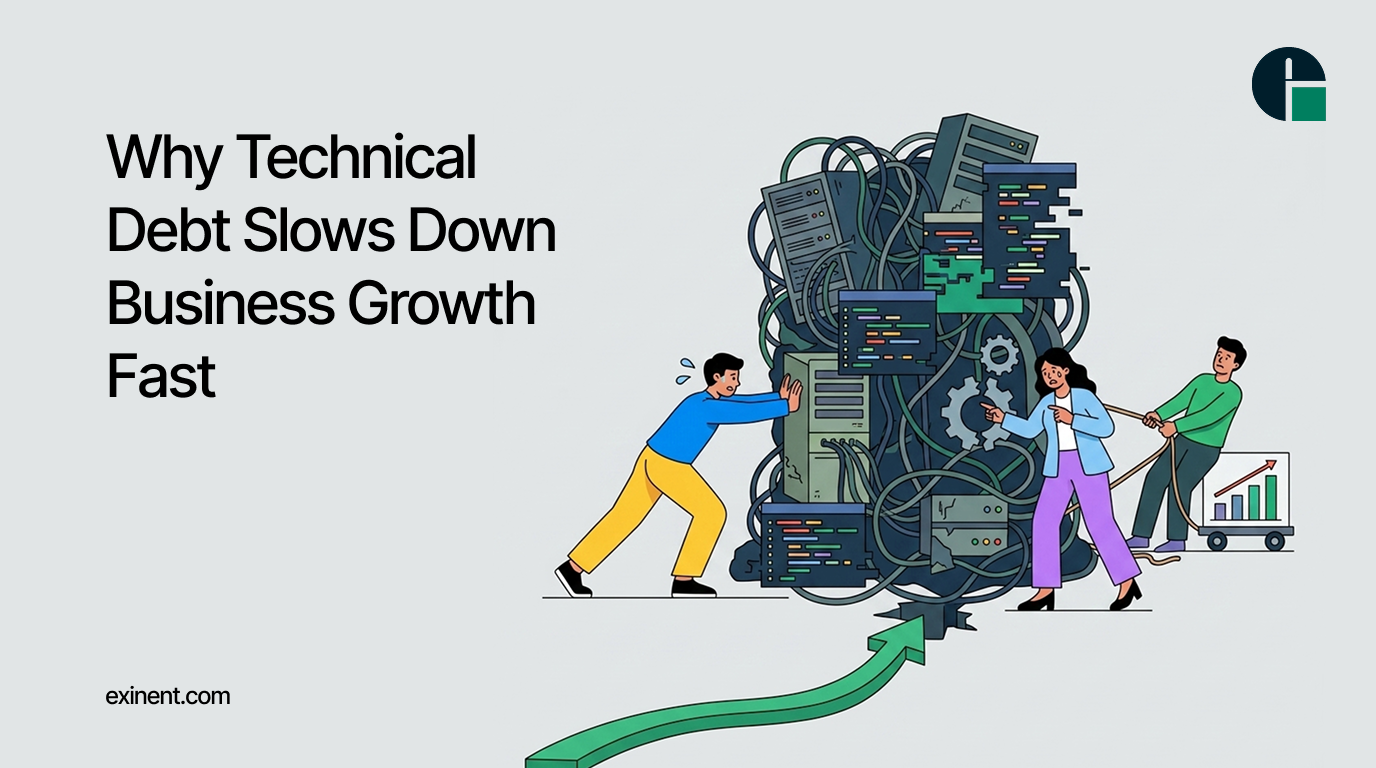
In today’s fast-paced digital economy, businesses rely heavily on technology to scale, innovate, and compete. However, many organizations unknowingly accumulate technical debt—a hidden cost that gradually slows down progress and impacts long-term growth.
Technical debt occurs when teams take shortcuts in software development to meet deadlines, often sacrificing code quality, documentation, or scalability. While this may provide short-term gains, it creates long-term challenges that hinder business performance.
What Is Technical Debt?
Technical debt refers to the compromises made during software development to deliver projects quickly. Instead of implementing optimal solutions, developers may choose shortcuts to meet deadlines or budget constraints. While this approach can speed up initial delivery, it often results in inefficient, outdated, or poorly structured systems that require future rework.
Think of technical debt like financial debt: the longer you ignore it, the more “interest” you pay in the form of increased maintenance costs, slower development, and higher risk of failure.
How Technical Debt Impacts Business Growth
Technical debt doesn’t just affect developers—it impacts the entire business.
1. Slower Development Cycles
When systems are cluttered with outdated or poorly written code:
- Developers spend more time fixing bugs
- New features take longer to build
- Releases get delayed
2. Reduced Innovation
Teams bogged down with maintenance work have less time to:
- Experiment with new ideas
- Build competitive features
- Improve customer experience
3. Increased Operational Costs
Technical debt leads to:
- Higher maintenance costs
- Frequent system failures
- Increased need for specialized fixes
4. Poor Customer Experience
Outdated systems can result in:
- Slow website/app performance
- Downtime or crashes
- Security vulnerabilities
All of these directly impact customer trust and retention.
5. Scalability Challenges
As your business grows, systems must handle increased demand. Technical debt:
- Limits scalability
- Causes integration issues
- Slows expansion into new markets
Benefits of Managing Technical Debt
Addressing technical debt is not just about fixing problems—it’s about enabling growth.
- Improved system performance
- Faster time-to-market for new features
- Reduced maintenance costs
- Enhanced customer experience
- Better team productivity
Businesses that actively manage technical debt are more agile and better positioned to adapt to market changes.
Also Read :
Signs Your Business Needs Managed IT Services Now
Why Managed IT Services Are a Smart Investment for Small Businesses?
Key Challenges of Managing Technical Debt
Managing technical debt is not easy, especially for growing organizations.
1. Lack of Visibility
Many businesses don’t even realize how much technical debt they have.
2. Prioritization Issues
Teams often prioritize new features over fixing underlying issues.
3. Resource Constraints
Limited budgets and skilled developers make it difficult to address debt.
4. Resistance to Change
Stakeholders may hesitate to invest in unseen improvements.
Best Practices to Reduce Technical Debt
To ensure sustainable growth, businesses must proactively manage technical debt.
1. Conduct Regular Code Reviews
- Identify inefficiencies early
- Maintain consistent coding standards
2. Invest in Scalable Architecture
- Use modern frameworks
- Design systems for future growth
3. Prioritize Refactoring
- Allocate time in every sprint for improvements
- Break large fixes into smaller tasks
4. Maintain Proper Documentation
- Helps teams understand systems quickly
- Reduces onboarding time
5. Use Automation Tools
- Automated testing reduces errors
- CI/CD pipelines improve deployment speed
6. Partner with Experts
Working with professionals can significantly reduce technical debt risks. Businesses often rely on Managed IT Services to:
- Monitor systems proactively
- Improve infrastructure
- Ensure long-term scalability
How to Build a Technical Debt Strategy
A strong strategy ensures technical debt doesn’t spiral out of control.
Step-by-Step Approach
- Audit systems regularly
- Measure technical debt impact
- Prioritize high-risk areas
- Set timelines for fixes
- Align IT and business goals
Conclusion
Technical debt is not just an IT issue—it’s a business growth challenge. While it may offer short-term speed, it creates long-term barriers that slow innovation, increase costs, and reduce competitiveness.
To stay ahead, businesses must treat technical debt as a strategic priority. By investing in modern systems, maintaining code quality, and leveraging solutions like Managed IT Services, organizations can eliminate inefficiencies and unlock sustainable growth.
FAQ’S :
What is technical debt in software development?
Technical debt refers to shortcuts taken during software development that make future updates harder and slower. It often happens when businesses prioritize quick releases over clean code and long-term scalability. Over time, technical debt increases maintenance costs and reduces development speed.
How does technical debt slow down business growth?
Technical debt slows business growth by reducing system performance, delaying product updates, and increasing downtime risks. Development teams spend more time fixing old issues instead of building new features. This can impact customer experience and limit scalability.
Why is technical debt bad for growing businesses?
Growing businesses need flexible and scalable systems. Technical debt creates outdated code, inefficient processes, and integration issues that make scaling difficult. It can also increase operational costs by 20–40% due to repeated fixes and maintenance.
What are the common causes of technical debt?
Common causes include rushed development, lack of documentation, outdated technology, poor testing, and skipping code reviews. Businesses often accumulate technical debt when they focus only on short-term goals without planning for future growth.
Can technical debt affect customer experience?
Yes, technical debt can directly impact customer experience. Slow website performance, software bugs, system crashes, and delayed updates frustrate users and reduce trust. Poor digital experiences can lead to lower customer retention and lost revenue.
How do you identify technical debt in a business?
Signs of technical debt include slow development cycles, frequent software errors, rising maintenance costs, and difficulty adding new features. Businesses may also notice repeated downtime or teams spending more time fixing problems than innovating.
What are the long-term risks of ignoring technical debt?
Ignoring technical debt can lead to security vulnerabilities, higher operational expenses, reduced productivity, and system instability. Over time, businesses may need expensive system rebuilds instead of simple upgrades, which slows overall growth.
How can businesses reduce technical debt effectively?
Businesses can reduce technical debt by conducting regular code reviews, updating outdated systems, improving documentation, and investing in scalable architecture. Prioritizing refactoring and automated testing also helps maintain long-term software quality.
Is fixing technical debt worth the investment?
Yes, fixing technical debt improves system efficiency, development speed, and scalability. Businesses that address technical debt early often reduce maintenance costs and improve software reliability. This creates a stronger foundation for future growth.
What is the difference between technical debt and bad coding?
Technical debt is a broader concept that includes shortcuts, outdated systems, and incomplete processes. Bad coding is one possible cause of technical debt. Not all technical debt comes from poor coding, but unresolved bad code often increases it over time.