
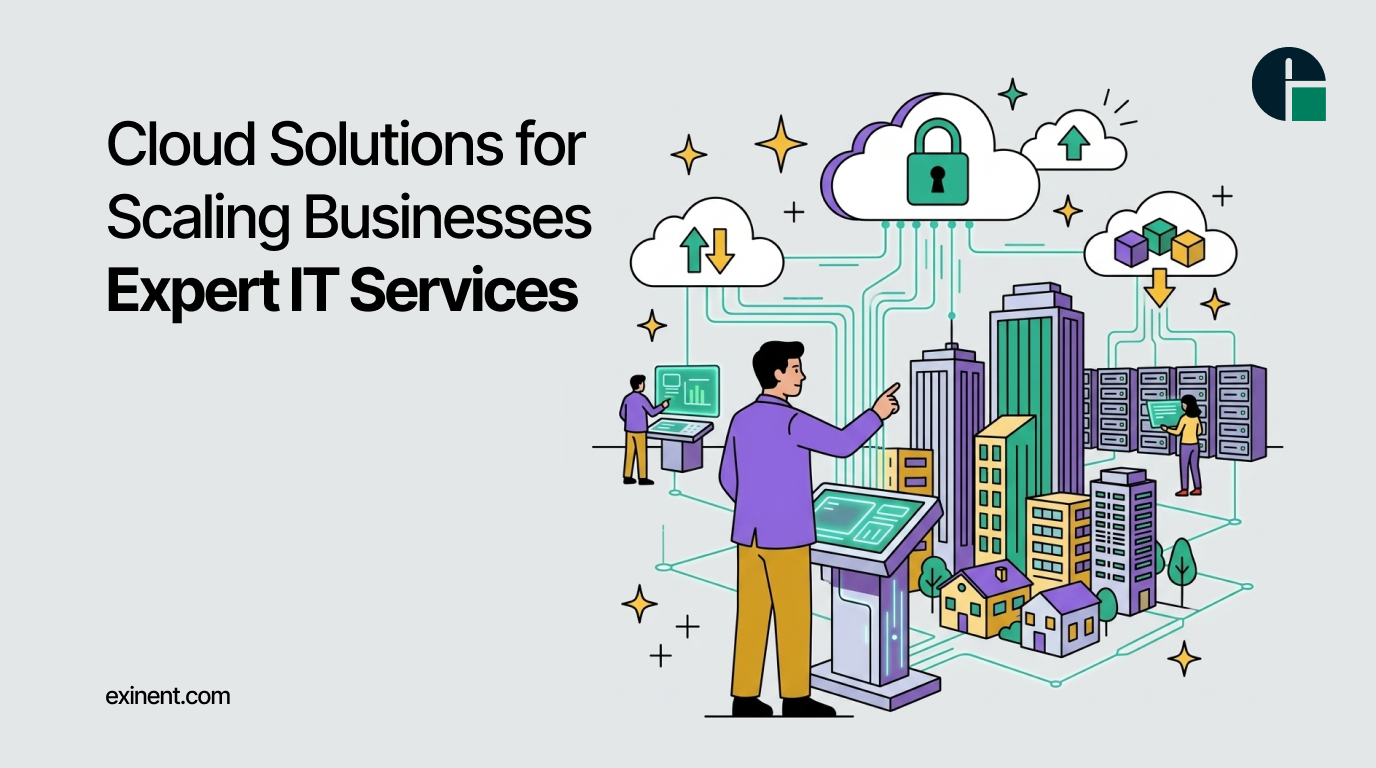
In today’s fast-paced digital landscape, businesses must be able to scale quickly while maintaining efficiency, security, and operational control. Traditional IT infrastructure often struggles to keep up with rapid growth, increasing customer demands, and evolving technology requirements. This is where cloud solutions have become a game-changer for businesses of all sizes.
Cloud computing provides organizations with flexible, secure, and cost-effective technology resources that can grow alongside their operations. Whether you’re a startup experiencing rapid expansion or an established enterprise seeking improved efficiency, cloud solutions offer the foundation needed for sustainable business growth.
Why Cloud Solutions Matter for Growing Businesses
Business growth brings new challenges. As organizations expand, they often face increased data storage needs, higher application workloads, remote workforce requirements, and growing cybersecurity concerns. Traditional on-premises infrastructure typically requires significant capital investments and ongoing maintenance, making scalability difficult and expensive.
Cloud solutions eliminate many of these barriers by providing on-demand access to computing resources, storage, applications, and advanced technologies. Companies can scale resources up or down based on actual business requirements, ensuring they only pay for what they use.
This flexibility enables businesses to respond quickly to market changes, customer demands, and new opportunities without lengthy infrastructure upgrades or costly hardware purchases.
Key Benefits of Cloud Solutions for Scaling Businesses
1. Enhanced Scalability
One of the most significant advantages of cloud computing is its ability to scale effortlessly. Businesses can add storage, processing power, and users within minutes rather than weeks or months.
For example, an eCommerce business experiencing seasonal traffic spikes can automatically increase server capacity during peak shopping periods and reduce resources afterward. This dynamic scalability helps maintain performance while controlling costs.
2. Cost Efficiency
Cloud solutions reduce the need for large upfront investments in hardware, software licenses, and data center infrastructure. Instead, businesses typically operate on a subscription or pay-as-you-go model.
This approach allows organizations to allocate resources more effectively and focus investments on strategic growth initiatives rather than IT maintenance. Many businesses also reduce expenses related to energy consumption, equipment replacement, and internal IT management.
Partnering with professional Managed IT Services providers can further optimize cloud environments and ensure businesses maximize their return on investment.
3. Improved Business Continuity
Downtime can be costly for growing businesses. Cloud platforms provide built-in redundancy, backup solutions, and disaster recovery capabilities that help maintain business operations during unexpected disruptions.
With data stored across multiple secure locations, organizations can recover quickly from hardware failures, cyberattacks, or natural disasters. This resilience helps protect revenue, customer trust, and operational stability.
4. Increased Collaboration and Remote Work Support
Modern businesses rely heavily on collaboration between distributed teams. Cloud-based applications enable employees to access files, communicate, and collaborate from virtually anywhere with an internet connection.
This accessibility supports hybrid and remote work models while improving productivity and employee satisfaction. Teams can work on shared documents in real time, reducing delays and enhancing operational efficiency.
5. Stronger Security and Compliance
Many business leaders worry about security when moving to the cloud. However, leading cloud providers invest heavily in advanced cybersecurity measures, including encryption, threat monitoring, identity management, and compliance certifications.
Cloud environments often provide security capabilities that exceed what many small and medium-sized businesses can implement independently. When combined with expert Managed IT Services, organizations can strengthen their overall cybersecurity posture and reduce risk.
Types of Cloud Solutions for Scaling Businesses
Infrastructure as a Service (IaaS)
IaaS provides virtualized computing resources such as servers, storage, and networking. Businesses can deploy and manage applications without purchasing physical hardware.
Benefits include:
- Rapid scalability
- Reduced infrastructure costs
- Greater flexibility
- Improved resource management
Platform as a Service (PaaS)
PaaS offers a complete development environment that enables businesses to build, test, and deploy applications efficiently.
Advantages include:
- Faster application development
- Simplified infrastructure management
- Enhanced developer productivity
Software as a Service (SaaS)
SaaS delivers software applications through the cloud, eliminating the need for local installation and maintenance.
Popular SaaS solutions include:
- Customer relationship management (CRM) systems
- Collaboration tools
- Accounting software
- Project management platforms
These applications help businesses streamline operations while supporting growth initiatives.
Cloud Solutions and Digital Transformation
Cloud technology serves as a foundation for digital transformation. Businesses adopting cloud solutions gain access to advanced technologies such as:
- Artificial intelligence (AI)
- Machine learning
- Data analytics
- Automation
- Internet of Things (IoT)
These capabilities help organizations make informed decisions, improve customer experiences, and identify new opportunities for growth.
For example, cloud-based analytics platforms can process large volumes of data to uncover trends, optimize operations, and enhance strategic planning.
Choosing the Right Cloud Strategy
Every business has unique requirements, making it important to choose the right cloud approach. Organizations should evaluate factors such as:
- Business objectives
- Security requirements
- Compliance obligations
- Budget constraints
- Future growth projections
Many businesses benefit from hybrid or multi-cloud strategies that combine the advantages of different cloud environments while maintaining flexibility and control.
Partnering with experienced Managed It Services, IT professionals can help organizations design and implement cloud solutions that align with their long-term goals.
Conclusion
Cloud solutions have become essential for businesses seeking sustainable growth in a competitive marketplace. By providing scalability, cost efficiency, enhanced security, and improved collaboration, cloud technology enables organizations to adapt quickly to changing demands while supporting innovation and expansion.
As businesses continue to grow and evolve, investing in the right cloud strategy can create a strong foundation for long-term success. Organizations that embrace cloud solutions today will be better positioned to meet future challenges, seize new opportunities, and achieve their growth objectives with confidence.
FAQ’S :
What are cloud solutions for scaling businesses?
Cloud solutions are IT services delivered over the internet that help businesses grow without investing heavily in physical infrastructure. They provide computing power, storage, applications, and networking resources that can be scaled up or down as needed.
How do cloud solutions help businesses scale quickly?
Cloud platforms allow businesses to add resources instantly based on demand. Instead of purchasing new servers or hardware, companies can increase storage, computing capacity, or users within minutes, reducing delays and operational costs.
Are cloud solutions worth it for small and growing businesses?
Yes, cloud solutions are often cost-effective for small and growing businesses. They eliminate large upfront hardware investments and provide flexible pricing models, allowing companies to pay only for the resources they use.
What are the main benefits of cloud solutions for business growth?
Key benefits include scalability, lower IT costs, improved collaboration, enhanced security, automatic updates, and disaster recovery. These advantages help businesses operate efficiently while supporting growth and changing workloads.
How much do cloud solutions cost for scaling businesses?
Cloud costs vary depending on storage, computing power, users, and services required. Many providers offer pay-as-you-go pricing, which can range from a few dollars per month for small businesses to thousands for enterprise environments.
What types of cloud solutions are best for expanding companies?
Expanding companies often use Infrastructure as a Service (IaaS), Platform as a Service (PaaS), and Software as a Service (SaaS). The best option depends on business goals, technical requirements, and the level of control needed over resources.
What are the risks of using cloud solutions for business scaling?
Potential risks include data security concerns, service outages, compliance challenges, and vendor lock-in. These risks can be minimized through strong security policies, backups, multi-cloud strategies, and choosing reputable providers.
How long does it take to migrate business operations to the cloud?
Migration timelines vary based on data volume, applications, and complexity. Small projects may take a few days or weeks, while large-scale migrations can take several months with planning, testing, and deployment phases.
How secure are cloud solutions for growing businesses?
Most cloud providers offer advanced security features such as encryption, multi-factor authentication, firewalls, and continuous monitoring. Businesses should also implement access controls and regular security audits to strengthen protection.
What are the best practices for implementing cloud solutions at scale?
Businesses should assess their requirements, create a migration plan, monitor costs, automate resource management, and maintain strong security measures. Regular performance reviews and employee training also help ensure successful cloud adoption.