
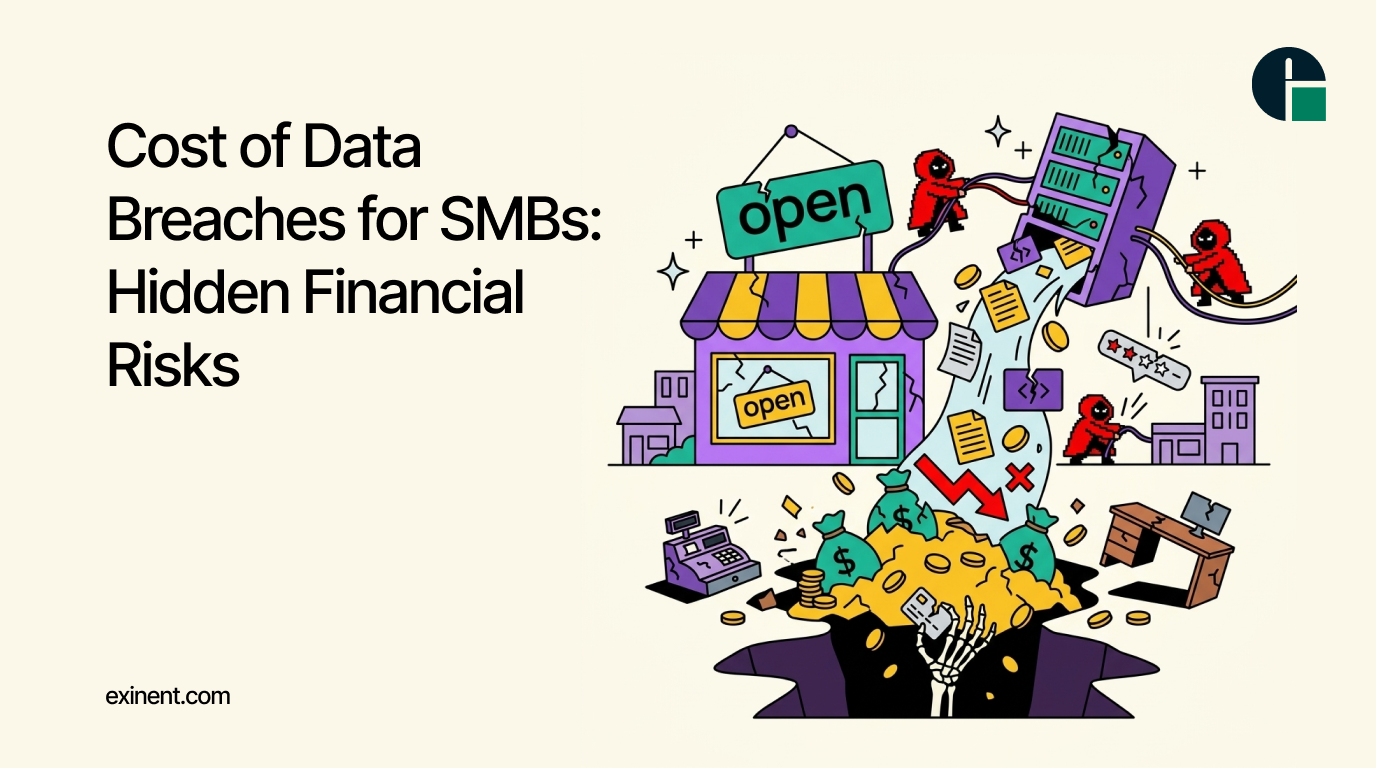
In today’s digital-first business environment, data is one of the most valuable assets a company owns. Customer records, financial information, employee details, and proprietary business data all play a critical role in daily operations. Unfortunately, cybercriminals understand this value as well, making small and mid-sized businesses (SMBs) prime targets for cyberattacks.
Many business owners assume hackers only focus on large enterprises. However, research consistently shows that SMBs are increasingly targeted because they often lack the sophisticated security infrastructure of larger organizations. A single data breach can result in devastating financial losses, operational disruption, and long-term reputational damage.
Understanding the True Cost of a Data Breach
The cost of a data breach extends far beyond recovering lost files or restoring systems. Organizations must deal with multiple direct and indirect expenses, including:
- Incident investigation and forensic analysis
- Legal and regulatory penalties
- Customer notification costs
- Business interruption and downtime
- Data recovery and system restoration
- Reputation management and public relations
- Loss of customer trust and future revenue
According to IBM’s Cost of a Data Breach Report, the global average cost of a data breach reached approximately $4.44 million in 2025, while breaches involving smaller organizations can still result in losses reaching hundreds of thousands or even millions of dollars depending on severity.
For many SMBs, such financial losses can be difficult to absorb and may threaten the survival of the business itself.
Direct Financial Impacts
1. Downtime and Lost Productivity
When a breach occurs, normal business operations often come to a halt. Employees may lose access to critical applications, customer databases, email systems, or cloud services.
Even a few hours of downtime can significantly impact productivity, customer service, and revenue generation. For businesses that depend on digital platforms, every minute of disruption translates into lost opportunities and dissatisfied customers.
2. Recovery and Remediation Costs
After a breach, organizations must identify vulnerabilities, remove malicious software, restore affected systems, and implement stronger security controls.
These activities often require external cybersecurity consultants, legal advisors, and IT specialists. Recovery costs can quickly escalate, particularly if the organization lacks an internal security team.
3. Regulatory Fines and Compliance Penalties
Businesses that handle customer data must comply with privacy regulations and industry standards. Failure to adequately protect sensitive information can result in penalties, investigations, and compliance audits.
Depending on the industry and geographic location, regulatory fines can become a substantial financial burden for SMBs.
Hidden Costs That Many Businesses Overlook
Loss of Customer Trust
Customers expect organizations to protect their personal information. When a breach occurs, confidence in the business can decline rapidly.
Many customers choose to stop doing business with organizations that fail to secure their data. Rebuilding trust often requires extensive communication, improved security measures, and significant marketing efforts.
Brand Reputation Damage
News of a breach can spread quickly through social media, online reviews, and industry publications. Even if systems are restored quickly, reputational damage can persist for years.
For small and mid-sized businesses that rely heavily on referrals and local reputation, this impact can be particularly severe.
Increased Cyber Insurance Premiums
Following a breach, cyber insurance providers may increase premiums or impose stricter security requirements. Organizations with a history of incidents often face higher long-term operating costs.
Why SMBs Are Frequent Targets
Cybercriminals often view SMBs as easier targets than large enterprises. Many smaller organizations operate with limited IT budgets and fewer dedicated security professionals.
Common vulnerabilities include:
- Weak passwords
- Unpatched software
- Lack of employee security training
- Inadequate access controls
- Misconfigured cloud environments
- Insufficient backup and recovery processes
Attackers frequently exploit these weaknesses through phishing emails, ransomware, credential theft, and third-party vendor compromises. Phishing continues to be one of the most common attack vectors associated with data breaches.
How Managed IT Services Reduce Breach Risks
Proactive cybersecurity is significantly less expensive than recovering from a breach. Many SMBs are turning to Managed IT Services to strengthen their security posture without the expense of building a large in-house IT department.
Managed service providers help organizations:
- Monitor networks 24/7
- Detect threats early
- Apply security patches promptly
- Manage backups and disaster recovery
- Implement endpoint protection
- Enforce access controls
- Conduct security assessments
By continuously monitoring systems and responding to potential threats before they escalate, businesses can dramatically reduce both the likelihood and impact of a breach.
Building a Strong Cybersecurity Strategy
Preventing data breaches requires a combination of technology, processes, and employee awareness. SMBs should focus on:
- Regular software updates and patch management
- Multi-factor authentication (MFA)
- Security awareness training
- Data encryption
- Regular backups
- Access control policies
- Continuous monitoring and threat detection
Partnering with experienced Managed IT Services providers can help organizations implement these best practices while ensuring ongoing protection against evolving cyber threats.
Conclusion
The financial consequences of a data breach can be devastating for small and mid-sized businesses. Beyond immediate recovery expenses, organizations may face lost revenue, reputational damage, regulatory penalties, and reduced customer confidence. As cyberattacks continue to increase in sophistication, proactive cybersecurity investment is no longer optional.
By implementing strong security controls, educating employees, and leveraging professional IT support, SMBs can significantly reduce their risk exposure and protect the data that keeps their business running. In today’s threat landscape, prevention is not only more effective than recovery—it is also far more affordable.
FAQ’S :
What is the average cost of a data breach for a small or mid-sized business?
The cost of a data breach for a small or mid-sized business can range from $50,000 to over $500,000, depending on the size and severity of the incident. Costs often include recovery, legal fees, downtime, customer notification, and lost revenue.
Why are data breaches so expensive for small businesses?
Data breaches create both direct and indirect expenses. Businesses may need to pay for forensic investigations, regulatory fines, legal support, system restoration, and reputation management. Lost customer trust can also reduce future sales.
What hidden costs are involved in a small business data breach?
Hidden costs often include employee productivity loss, customer churn, increased cyber insurance premiums, and business interruption. These expenses can continue for months or even years after the breach is resolved.
How much does ransomware cost a small business?
A ransomware attack can cost anywhere from a few thousand dollars to hundreds of thousands. Expenses may include ransom payments, system recovery, data restoration, operational downtime, and cybersecurity improvements after the incident.
Can a data breach cause a small business to shut down?
Yes. Many small businesses struggle to recover financially after a major cyberattack. High recovery costs, legal liabilities, and customer loss can create long-term financial pressure that threatens business continuity.
What factors affect the cost of a data breach?
Several factors influence breach costs, including the number of records exposed, response speed, regulatory requirements, industry type, and existing security measures. Businesses with strong security controls often experience lower recovery costs.
How can small businesses reduce the cost of a data breach?
Businesses can reduce costs by implementing cybersecurity best practices such as multi-factor authentication, employee security training, regular backups, and continuous monitoring. Early detection often limits financial damage.
Is cyber insurance worth it for small and mid-sized businesses?
Cyber insurance can help cover expenses related to data breaches, ransomware attacks, legal claims, and business interruptions. While premiums vary, insurance may significantly reduce the financial impact of a cyber incident.
What industries face the highest data breach costs?
Healthcare, financial services, legal firms, and eCommerce businesses often face higher breach costs due to sensitive customer data and regulatory requirements. The more valuable the data, the greater the potential financial impact.
How long does it take to recover from a data breach?
Recovery timelines vary depending on the complexity of the breach. Small businesses may recover within weeks, while larger incidents can take several months to fully resolve, restore systems, and rebuild customer trust.